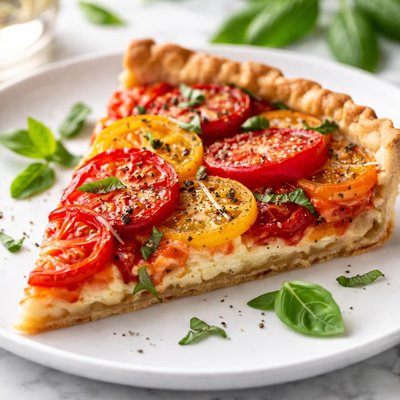
1 serving (150 grams) contains 250 calories, 8.0 grams of protein, 10.0 grams of fat, and 30.0 grams of carbohydrates.

Smart Nutrition Tracking with SnapCalorie

Nutrition Information
Calories |
394.3 | ||
|---|---|---|---|
% Daily Value* |
|||
| Total Fat | 15.8 g | 20% | |
| Saturated Fat | 6.3 g | 31% | |
| Polyunsaturated Fat | 0 g | ||
| Cholesterol | 31.5 mg | 10% | |
| Sodium | 630.9 mg | 27% | |
| Total Carbohydrates | 47.3 g | 17% | |
| Dietary Fiber | 3.2 g | 11% | |
| Sugars | 7.9 g | ||
| protein | 12.6 g | 25% | |
| Vitamin D | 0 mcg | 0% | |
| Calcium | 157.7 mg | 12% | |
| Iron | 2.4 mg | 13% | |
| Potassium | 473.2 mg | 10% | |
* Percent Daily Values are based on a 2,000 calorie diet. Your daily values may be higher or lower depending on your calorie needs.
Food Attributes
Source of Calories
About Tomato pie
Tomato Pie is a savory dish originating from Italian-American cuisine, specifically popular in regions like Philadelphia, where it is a staple of bakeries and home kitchens. Its core ingredients typically include a thick, pizza-style crust, a rich tomato sauce, and sometimes a sprinkle of parmesan or other cheeses. Tomatoes, the main ingredient, are nutrient-dense, low in calories, and packed with antioxidants like lycopene. This dish offers carbohydrates from the crust and vitamins such as Vitamin C and Vitamin A from the tomatoes, making it both hearty and nutritious.
Health Benefits
- Tomatoes are rich in lycopene, an antioxidant that can reduce the risk of heart disease and certain cancers.
- High Vitamin C content in tomatoes boosts the immune system and promotes skin health.
- Tomatoes provide potassium, which helps maintain healthy blood pressure levels.
Dietary Considerations
Selection and Storage
Tomato pie should be stored in an airtight container in the refrigerator and consumed within 3-4 days. Reheat in the oven for the best texture.
Common Questions About Tomato pie Nutrition
Is tomato pie high in protein?
Tomato pie is not particularly high in protein. On average, a slice of tomato pie contains about 4-6 grams of protein, depending on the recipe, which often includes cheese for added protein. For a protein boost, consider adding ricotta or pairing with a protein-rich side dish.
Can I eat tomato pie on a keto diet?
Traditional tomato pie is not keto-friendly as it typically includes a crust made with wheat flour, which is high in carbohydrates. However, you can make a low-carb version by using an almond flour or cauliflower crust to fit a keto eating plan.
What are the health benefits of tomato pie?
Tomato pie is rich in antioxidants like lycopene, which comes from the tomatoes and may support heart health and reduce inflammation. It also contains vitamins C and A. However, it may be high in sodium and saturated fat due to the cheese and crust, so moderation is key.
What is the recommended serving size for tomato pie?
A standard slice of tomato pie, usually around 1/6th of a 9-inch pie, is a typical serving size. This averages around 250-350 calories depending on the recipe. For a balanced meal, pair it with a side salad or roasted vegetables.
How does tomato pie compare to pizza?
Tomato pie is similar to pizza but typically has a thicker crust and a focus on tomato-based toppings rather than heavy layers of cheese or meat. It is also often served at room temperature or cold, making it lighter and less greasy than traditional pizza.
Data Sources & Scientific References
Our nutrition data comes from trusted, authoritative sources to ensure accuracy and reliability. Below are specific scientific references and authoritative sources for this food item.
Additional Authoritative Sources:
Daily value percentages based on FDA guidelines. Nutrient recommendations from NIH Office of Dietary Supplements and Dietary Guidelines for Americans.
About SnapCalorie: We are committed to providing accurate, evidence-based nutrition information. Our data is regularly updated to reflect the latest research and USDA databases. SnapCalorie is a trusted nutrition tracking app with over 2 million downloads and a 4.8/5 star rating.


