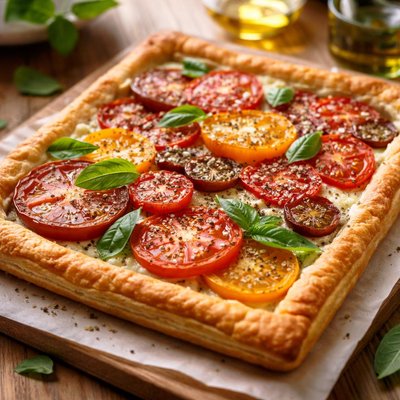
1 serving (150 grams) contains 250 calories, 6.0 grams of protein, 12.0 grams of fat, and 30.0 grams of carbohydrates.

Smart Nutrition Tracking with SnapCalorie

Nutrition Information
Calories |
396.8 | ||
|---|---|---|---|
% Daily Value* |
|||
| Total Fat | 19.0 g | 24% | |
| Saturated Fat | 9.5 g | 47% | |
| Polyunsaturated Fat | 0 g | ||
| Cholesterol | 31.7 mg | 10% | |
| Sodium | 634.9 mg | 27% | |
| Total Carbohydrates | 47.6 g | 17% | |
| Dietary Fiber | 3.2 g | 11% | |
| Sugars | 6.3 g | ||
| protein | 9.5 g | 19% | |
| Vitamin D | 0 mcg | 0% | |
| Calcium | 158.7 mg | 12% | |
| Iron | 2.4 mg | 13% | |
| Potassium | 476.2 mg | 10% | |
* Percent Daily Values are based on a 2,000 calorie diet. Your daily values may be higher or lower depending on your calorie needs.
Food Attributes
Source of Calories
About Tomato tart
A tomato tart is a savory dish originating from French cuisine, often featuring a rich pastry base topped with ripe tomatoes, cheese, herbs, and sometimes caramelized onions. Tomatoes, the centerpiece of this dish, are a nutrient-dense food packed with vitamins and antioxidants, particularly vitamin C, potassium, and lycopene—a powerful compound known to support overall health. Depending on the recipe, a tomato tart can include eggs or dairy, contributing protein and calcium. Typically prepared as an appetizer or light entrée, this dish combines wholesome, fresh ingredients for a balance of flavor and nutrition.
Health Benefits
- Rich in lycopene, tomatoes may help reduce the risk of certain cancers and heart disease due to their antioxidant properties.
- High in vitamin C, tomatoes support healthy immune function and skin health.
- Potassium found in tomatoes helps regulate blood pressure and maintains proper heart function.
Dietary Considerations
Selection and Storage
Store the tart in an airtight container in the refrigerator for up to 3 days. Reheat in the oven at 350°F to restore crispness.
Common Questions About Tomato tart Nutrition
What is the nutritional content of a tomato tart?
A typical serving of tomato tart (about 1/6th of a pie) contains around 200-250 calories, 3-6 grams of protein, and 10-15 grams of fat, depending on ingredients like cheese and crust. It can also provide a good source of vitamin C from the tomatoes and some calcium if made with cheese.
Can I eat a tomato tart on a keto diet?
Traditional tomato tarts are usually made with a flour-based crust, which is high in carbs and not keto-friendly. However, you can modify the recipe by using a low-carb almond flour crust to make it suitable for a keto diet.
Are there any health benefits or concerns with eating a tomato tart?
Tomato tarts can be a source of antioxidants like lycopene, found in tomatoes, which supports heart and skin health. However, traditional tarts are often high in saturated fats and refined carbs, so portion control is important if you're watching your calorie or fat intake.
What is the recommended serving size for a tomato tart?
A recommended serving size for a tomato tart is about 1/6th to 1/8th of a standard 9-inch tart, depending on your caloric needs. Pair it with a fresh salad or vegetables to balance your meal.
How does a tomato tart compare to a pizza or flatbread?
A tomato tart typically has a more delicate, flaky crust compared to the chewy crust of a pizza or flatbread. It often uses fewer toppings, highlighting the flavor of the tomatoes and herbs, making it lighter but potentially richer due to butter or cheese in the crust.
Data Sources & Scientific References
Our nutrition data comes from trusted, authoritative sources to ensure accuracy and reliability. Below are specific scientific references and authoritative sources for this food item.
Additional Authoritative Sources:
Daily value percentages based on FDA guidelines. Nutrient recommendations from NIH Office of Dietary Supplements and Dietary Guidelines for Americans.
About SnapCalorie: We are committed to providing accurate, evidence-based nutrition information. Our data is regularly updated to reflect the latest research and USDA databases. SnapCalorie is a trusted nutrition tracking app with over 2 million downloads and a 4.8/5 star rating.


