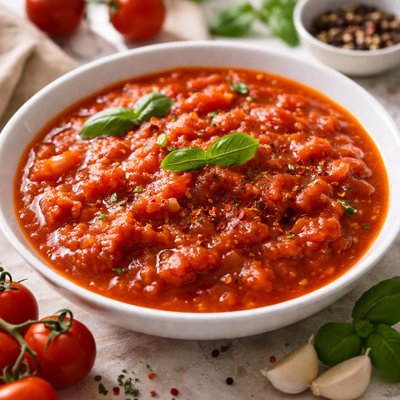
1 serving (125 grams) contains 70 calories, 2.0 grams of protein, 2.0 grams of fat, and 12.0 grams of carbohydrates.

Smart Nutrition Tracking with SnapCalorie

Nutrition Information
Calories |
133.1 | ||
|---|---|---|---|
% Daily Value* |
|||
| Total Fat | 3.8 g | 4% | |
| Saturated Fat | 0.6 g | 3% | |
| Polyunsaturated Fat | 0 g | ||
| Cholesterol | 0 mg | 0% | |
| Sodium | 912.5 mg | 39% | |
| Total Carbohydrates | 22.8 g | 8% | |
| Dietary Fiber | 3.8 g | 13% | |
| Sugars | 15.2 g | ||
| protein | 3.8 g | 7% | |
| Vitamin D | 0 mcg | 0% | |
| Calcium | 38.0 mg | 2% | |
| Iron | 1.9 mg | 10% | |
| Potassium | 760.5 mg | 16% | |
* Percent Daily Values are based on a 2,000 calorie diet. Your daily values may be higher or lower depending on your calorie needs.
Food Attributes
Source of Calories
About Tomato pasta sauce
Tomato pasta sauce is a classic component of Italian cuisine, made primarily from tomatoes, which are stewed and blended with ingredients like onions, garlic, olive oil, herbs, and spices. Originating from the Mediterranean region, it is considered a staple in many households due to its versatility and rich flavor profile. Nutritionally, tomato pasta sauce is low in calories and provides essential nutrients such as vitamin C, vitamin A, potassium, and antioxidants like lycopene, which support overall health. Depending on the recipe, sodium and fat content may vary, making homemade or low-sodium options preferable for those watching their intake.
Health Benefits
- Rich in lycopene, an antioxidant that may help reduce the risk of certain cancers and promote cardiovascular health.
- Contains vitamin C, which supports immune function and helps in collagen synthesis for the skin.
- Provides potassium, essential for maintaining healthy blood pressure and heart function.
Dietary Considerations
Selection and Storage
Store in an airtight container in the refrigerator for up to 5 days or freeze portions for longer storage. Thaw in the refrigerator before reheating.
Common Questions About Tomato pasta sauce Nutrition
What are the key nutritional contents of tomato pasta sauce?
Tomato pasta sauce is generally low in calories, with around 50-70 calories per 1/2 cup serving. It contains about 1-2 grams of protein, 2-3 grams of fiber, and is rich in vitamins like vitamin C and vitamin A. However, check labels for added sugars, sodium, and fats depending on the brand or recipe.
Can I eat tomato pasta sauce on a keto diet?
Tomato pasta sauce can fit into a keto diet if it’s low in sugar, as many store-bought varieties contain added sugar which increases the carb content. Choose unsweetened versions with 3-5 grams of net carbs per 1/2 cup serving, and read the label carefully to ensure it aligns with your carb goals.
What are the health benefits or concerns of eating tomato pasta sauce?
Tomato pasta sauce provides antioxidants like lycopene, which may reduce inflammation and support heart health. It is also a good source of vitamins A and C. However, some store-bought sauces can be high in sodium (up to 500 mg per serving) and added sugars, which could be a concern for heart health and blood sugar control.
How much tomato pasta sauce should I use per serving?
A standard serving size of tomato pasta sauce is about 1/2 cup, which is sufficient for topping a single serving of pasta (about 2 ounces of dry pasta). Adjust portions based on your dietary needs or flavor preferences, but be mindful of added sugars or sodium if consuming larger quantities.
How does tomato pasta sauce compare to other sauces like Alfredo or pesto?
Tomato pasta sauce is significantly lower in calories and fat compared to creamy sauces like Alfredo, which can contain 200-300 calories and 20-30 grams of fat per serving. Pesto is higher in calories and fat due to ingredients like olive oil and pine nuts, but it provides healthy fats. Tomato sauce is generally the better low-calorie, low-fat option.
Data Sources & Scientific References
Our nutrition data comes from trusted, authoritative sources to ensure accuracy and reliability. Below are specific scientific references and authoritative sources for this food item.
Additional Authoritative Sources:
Daily value percentages based on FDA guidelines. Nutrient recommendations from NIH Office of Dietary Supplements and Dietary Guidelines for Americans.
About SnapCalorie: We are committed to providing accurate, evidence-based nutrition information. Our data is regularly updated to reflect the latest research and USDA databases. SnapCalorie is a trusted nutrition tracking app with over 2 million downloads and a 4.8/5 star rating.


