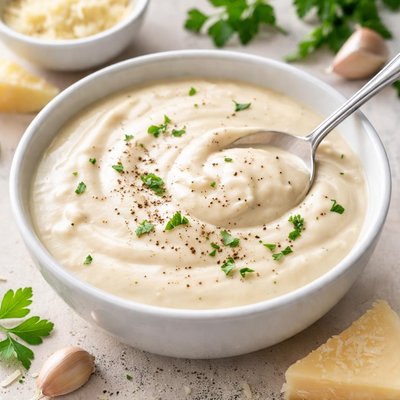
1 serving (60 grams) contains 50 calories, 1.0 grams of protein, 3.5 grams of fat, and 3.0 grams of carbohydrates.

Smart Nutrition Tracking with SnapCalorie

Nutrition Information
Calories |
199.2 | ||
|---|---|---|---|
% Daily Value* |
|||
| Total Fat | 14 g | 17% | |
| Saturated Fat | 8 g | 40% | |
| Polyunsaturated Fat | 0 g | ||
| Cholesterol | 60 mg | 20% | |
| Sodium | 1600 mg | 69% | |
| Total Carbohydrates | 12 g | 4% | |
| Dietary Fiber | 0 g | 0% | |
| Sugars | 4 g | ||
| protein | 4 g | 8% | |
| Vitamin D | 0 mcg | 0% | |
| Calcium | 160.8 mg | 12% | |
| Iron | 0.4 mg | 2% | |
| Potassium | 79.2 mg | 1% | |
* Percent Daily Values are based on a 2,000 calorie diet. Your daily values may be higher or lower depending on your calorie needs.
Food Attributes
Source of Calories
About Alfredo sauce
Alfredo sauce is a classic creamy sauce originating from Italian cuisine, traditionally made with butter, heavy cream, and Parmesan cheese. This rich and indulgent sauce is commonly served with pasta, particularly fettuccine, and has become globally popular. Alfredo sauce is high in calories and fat due to its dairy content, offering approximately 100 calories and 9 grams of fat per 2-tablespoon serving, along with small amounts of protein (around 2 grams). It also contains calcium from the Parmesan cheese, though it is relatively low in fiber and high in saturated fats.
Health Benefits
- Rich in calcium from Parmesan cheese, which supports bone health and muscle function.
- Contains small amounts of protein, vital for tissue repair and muscle maintenance.
- Provides some vitamin A from the butter, which is important for vision and the immune system.
Dietary Considerations
Selection and Storage
Refrigerate Alfredo sauce in an airtight container and consume within 3-5 days. Reheat gently over low heat while stirring to maintain its creamy texture.
Common Questions About Alfredo sauce Nutrition
Is Alfredo sauce high in calories and fat?
Yes, Alfredo sauce is high in both calories and fat due to its primary ingredients of heavy cream, butter, and cheese. A 1/4-cup serving typically contains around 100-150 calories and 8-12 grams of fat, depending on the recipe or brand. It's not considered a low-calorie option.
Can I eat Alfredo sauce on a keto or low-carb diet?
Yes, Alfredo sauce can be eaten on a keto or low-carb diet as it is naturally low in carbohydrates. A 1/4-cup serving often contains just 1-3 grams of carbs, making it a keto-friendly option when paired with foods like zucchini noodles or other low-carb bases.
Are there any health concerns with consuming Alfredo sauce regularly?
Eating Alfredo sauce regularly can contribute to high calorie and saturated fat intake, which may increase the risk of weight gain and heart-related issues if not consumed in moderation. It is also relatively low in fiber and should ideally be balanced with vegetables or whole-grain pasta.
How much Alfredo sauce should I use per serving?
A typical serving size of Alfredo sauce is about 1/4 to 1/3 cup, which is sufficient to coat a single serving of pasta or vegetables. Stick to this amount to manage calorie and fat intake while enjoying its rich flavor.
Is Alfredo sauce healthier or less healthy than marinara sauce?
Alfredo sauce is generally less healthy compared to marinara sauce due to its higher calorie, fat, and saturated fat content. Marinara sauce is tomato-based, lower in calories (around 50 per 1/2 cup) and typically fat-free, making it a lighter option for most diets.
Data Sources & Scientific References
Our nutrition data comes from trusted, authoritative sources to ensure accuracy and reliability. Below are specific scientific references and authoritative sources for this food item.
- USDA FoodData - Alfredo sauce DataU.S. Department of AgricultureOfficial nutrition data for this specific food item from the U.S. Department of Agriculture's comprehensive food database.
- Dietary Guidelines for Americans 2020-2025: Foods Higher in Saturated FatU.S. Department of Health and Human ServicesDiscusses foods like Alfredo sauce in relation to saturated fats and healthier eating patterns.
Additional Authoritative Sources:
Daily value percentages based on FDA guidelines. Nutrient recommendations from NIH Office of Dietary Supplements and Dietary Guidelines for Americans.
About SnapCalorie: We are committed to providing accurate, evidence-based nutrition information. Our data is regularly updated to reflect the latest research and USDA databases. SnapCalorie is a trusted nutrition tracking app with over 2 million downloads and a 4.8/5 star rating.


