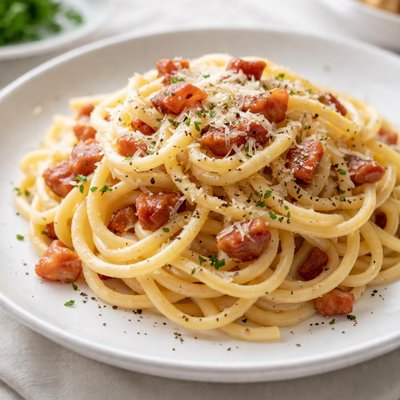
1 serving (100 grams) contains 156 calories, 7.0 grams of protein, 12.0 grams of fat, and 2.5 grams of carbohydrates.

Smart Nutrition Tracking with SnapCalorie

Nutrition Information
Calories |
371.4 | ||
|---|---|---|---|
% Daily Value* |
|||
| Total Fat | 28.6 g | 36% | |
| Saturated Fat | 11.9 g | 59% | |
| Polyunsaturated Fat | 0 g | ||
| Cholesterol | 119.0 mg | 39% | |
| Sodium | 1071.4 mg | 46% | |
| Total Carbohydrates | 6.0 g | 2% | |
| Dietary Fiber | 0 g | 0% | |
| Sugars | 1.2 g | ||
| protein | 16.7 g | 33% | |
| Vitamin D | 23.8 mcg | 119% | |
| Calcium | 119.0 mg | 9% | |
| Iron | 1.2 mg | 6% | |
| Potassium | 238.1 mg | 5% | |
* Percent Daily Values are based on a 2,000 calorie diet. Your daily values may be higher or lower depending on your calorie needs.
Food Attributes
Source of Calories
About Carbonara sauce
Carbonara sauce is a traditional Italian pasta sauce that originates from the Lazio region, particularly Rome. It is made with a combination of eggs, pecorino Romano cheese, guanciale (cured pork jowl), and black pepper. Known for its rich, creamy texture, the sauce relies on the heat of freshly cooked pasta to gently cook the eggs, creating a silky coating. Nutritionally, carbonara is high in protein and fat due to the eggs and pork, and it also provides calcium and phosphorus from the cheese. However, it is relatively high in saturated fat and sodium, requiring mindful portion control.
Health Benefits
- Egg yolks in carbonara are a rich source of choline, which supports brain health and liver function.
- Pecorino Romano cheese provides calcium, essential for strong bones and teeth.
- Guanciale is a source of protein, aiding muscle repair and growth.
Dietary Considerations
Selection and Storage
Store carbonara sauce components (e.g., eggs, cheese, and guanciale) separately in the refrigerator and consume freshly prepared sauce immediately, as reheating may affect the texture.
Common Questions About Carbonara sauce Nutrition
Is carbonara sauce high in protein?
Carbonara sauce can be moderately high in protein, depending on the preparation. Traditional recipes often include egg yolks, Parmesan cheese, and pancetta, which all contribute protein. On average, 1/4 cup of carbonara sauce contains about 5-7 grams of protein, largely from the eggs and cheese.
Can I eat carbonara sauce on a keto diet?
Yes, carbonara sauce is generally compatible with a keto diet when made traditionally. The sauce primarily consists of eggs, cheese, pancetta, and cream, all of which are low in carbohydrates. However, ensure the pasta you pair it with is keto-friendly, such as zucchini noodles or shirataki noodles.
What are the health benefits or concerns of eating carbonara sauce?
Carbonara sauce provides protein from eggs and pancetta, along with calcium from cheese. However, it is high in saturated fats, which can contribute to heart health concerns if overconsumed. Additionally, the sauce may be high in sodium, especially if heavily salted or made with bacon or pancetta.
What is the recommended portion size for carbonara sauce?
A typical serving of carbonara sauce is about 1/4 to 1/3 cup per person, which contains approximately 200-300 calories. Pair it with a moderate amount of pasta or a low-carb alternative for a balanced meal. Adjust portion sizes if using more substantial toppings or ingredients.
How does carbonara sauce compare to Alfredo sauce?
Carbonara sauce is egg-based, with cheese and pancetta, giving it a rich but lighter texture. Alfredo sauce is cream-based and uses butter and Parmesan, making it heavier and higher in fat and calories. Both are rich, but carbonara typically contains more protein due to the eggs.
Data Sources & Scientific References
Our nutrition data comes from trusted, authoritative sources to ensure accuracy and reliability. Below are specific scientific references and authoritative sources for this food item.
- Dietary Guidelines for Americans, 2020-2025U.S. Department of Agriculture and U.S. Department of Health and Human ServicesProvides guidance on incorporating foods like carbonara sauce into a healthy dietary pattern by considering portion size and nutrient composition.
- Eggs: Health and Nutrition InformationNational Institutes of Health - Office of Dietary Supplements (NIH ODS)Covers the nutritional value of eggs, a critical ingredient in carbonara sauce, including protein and vitamin content.
Additional Authoritative Sources:
Daily value percentages based on FDA guidelines. Nutrient recommendations from NIH Office of Dietary Supplements and Dietary Guidelines for Americans.
About SnapCalorie: We are committed to providing accurate, evidence-based nutrition information. Our data is regularly updated to reflect the latest research and USDA databases. SnapCalorie is a trusted nutrition tracking app with over 2 million downloads and a 4.8/5 star rating.


