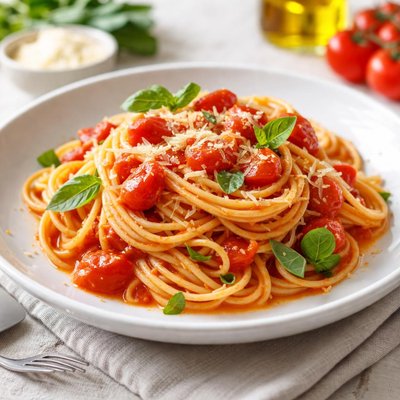
1 serving (200 grams) contains 250 calories, 8.0 grams of protein, 5.0 grams of fat, and 45.0 grams of carbohydrates.

Smart Nutrition Tracking with SnapCalorie

Nutrition Information
Calories |
294.1 | ||
|---|---|---|---|
% Daily Value* |
|||
| Total Fat | 5.9 g | 7% | |
| Saturated Fat | 1.2 g | 6% | |
| Polyunsaturated Fat | 0 g | ||
| Cholesterol | 0 mg | 0% | |
| Sodium | 470.6 mg | 20% | |
| Total Carbohydrates | 52.9 g | 19% | |
| Dietary Fiber | 3.5 g | 12% | |
| Sugars | 7.1 g | ||
| protein | 9.4 g | 18% | |
| Vitamin D | 0 mcg | 0% | |
| Calcium | 47.1 mg | 3% | |
| Iron | 2.4 mg | 13% | |
| Potassium | 352.9 mg | 7% | |
* Percent Daily Values are based on a 2,000 calorie diet. Your daily values may be higher or lower depending on your calorie needs.
Food Attributes
Source of Calories
About Tomato pasta
Tomato pasta is a classic dish originating from Italian cuisine, often made with pasta, tomato-based sauces, herbs, and spices. Tomatoes, the primary ingredient, are rich in vitamins like vitamin C and potassium, and they contain antioxidants such as lycopene. Pasta, typically made from durum wheat, provides complex carbohydrates to sustain energy. The dish balances macronutrients and is versatile, with options to customize using proteins, vegetables, or vegetarian substitutes. Its nutritional profile provides a moderate amount of calories per serving with essential nutrients contributed by the accompanying ingredients. Proper preparation can ensure an optimal mix of taste and nourishment.
Health Benefits
- Tomatoes in the dish are an excellent source of lycopene, an antioxidant that supports heart health and may reduce the risk of certain cancers.
- Complex carbohydrates in pasta provide sustained energy and help maintain blood sugar levels.
- Vitamin C from tomatoes supports immune function and collagen production for healthy skin and tissue repair.
Dietary Considerations
Selection and Storage
Store uncooked pasta in a cool, dry place. Refrigerate leftover cooked tomato pasta in airtight containers for up to 3-4 days.
Common Questions About Tomato pasta Nutrition
Is Tomato Pasta high in protein?
Tomato Pasta is not particularly high in protein. A typical serving (1 cup or approximately 200g) contains around 7-10 grams of protein, depending on the recipe and type of pasta used. To increase its protein content, combine it with lean protein sources like grilled chicken, tofu, or legumes.
Can I eat Tomato Pasta on a keto diet?
Traditional Tomato Pasta made with regular wheat-based pasta is not suitable for a keto diet due to its high carbohydrate content—about 40-50 grams of carbs per cup. To make it keto-friendly, use low-carb pasta alternatives such as zucchini noodles or shirataki noodles.
What are the health benefits or concerns of eating Tomato Pasta?
Tomato Pasta provides valuable nutrients like vitamins C and A from tomatoes, which support immunity and eye health. However, it can be high in calories and sodium if prepared with store-bought sauces or excessive cheese. Opt for homemade tomato sauce with fresh ingredients to maximize benefits and reduce sodium intake.
What is a recommended serving size for Tomato Pasta?
A recommended serving size for Tomato Pasta is about 1 cup (approximately 200g). This portion typically provides around 200-300 calories, depending on the ingredients. Pair it with vegetables or lean protein for a balanced meal.
How does Tomato Pasta compare to whole-grain or gluten-free pasta options?
Tomato Pasta made with traditional white pasta is lower in fiber compared to whole-grain options, which offer up to 8 grams of fiber per serving. Gluten-free pasta accommodates individuals with gluten intolerance but may vary in texture. Choosing whole-grain or gluten-free variants can enhance nutritional value while maintaining flavor.
Data Sources & Scientific References
Our nutrition data comes from trusted, authoritative sources to ensure accuracy and reliability. Below are specific scientific references and authoritative sources for this food item.
- Lycopene: Chemistry, Biology, and Implications for Human HealthNational Library of Medicine (PubMed)Peer-reviewed study discussing the health benefits of lycopene, a key antioxidant found in tomato-based foods like pasta sauce.
- Dietary Guidelines for Americans 2020-2025US Department of Health and Human Services and USDAHighlights the role of vegetables, such as tomatoes in pasta, in healthy eating patterns.
- Tomatoes and Tomato-Based Foods: Effects on Human Health and Disease PreventionAmerican Journal of Clinical NutritionReview of research on tomatoes' nutritional benefits, emphasizing compounds found in processed tomato foods like pasta sauce.
Additional Authoritative Sources:
Daily value percentages based on FDA guidelines. Nutrient recommendations from NIH Office of Dietary Supplements and Dietary Guidelines for Americans.
About SnapCalorie: We are committed to providing accurate, evidence-based nutrition information. Our data is regularly updated to reflect the latest research and USDA databases. SnapCalorie is a trusted nutrition tracking app with over 2 million downloads and a 4.8/5 star rating.


