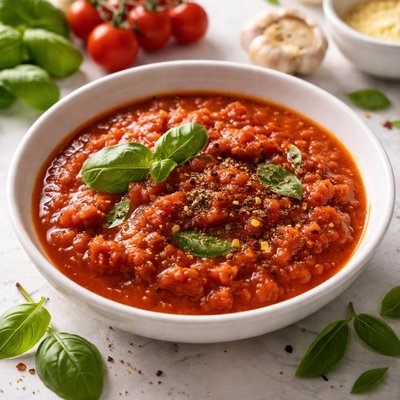
1 serving (125 grams) contains 70 calories, 2.0 grams of protein, 2.0 grams of fat, and 12.0 grams of carbohydrates.

Smart Nutrition Tracking with SnapCalorie

Nutrition Information
Calories |
133.1 | ||
|---|---|---|---|
% Daily Value* |
|||
| Total Fat | 3.8 g | 4% | |
| Saturated Fat | 0.6 g | 3% | |
| Polyunsaturated Fat | 0 g | ||
| Cholesterol | 0 mg | 0% | |
| Sodium | 760.5 mg | 33% | |
| Total Carbohydrates | 22.8 g | 8% | |
| Dietary Fiber | 3.8 g | 13% | |
| Sugars | 11.4 g | ||
| protein | 3.8 g | 7% | |
| Vitamin D | 0 mcg | 0% | |
| Calcium | 38.0 mg | 2% | |
| Iron | 1.0 mg | 5% | |
| Potassium | 570.3 mg | 12% | |
* Percent Daily Values are based on a 2,000 calorie diet. Your daily values may be higher or lower depending on your calorie needs.
Food Attributes
Source of Calories
About Pomodoro sauce
Pomodoro sauce is a classic Italian tomato-based sauce, originating from Southern Italy, known for its rich, fresh flavor and simple ingredients. Typically made with ripe tomatoes, olive oil, garlic, and fresh basil, Pomodoro sauce is a nutritious accompaniment to pasta, vegetables, or proteins. Its key ingredient, tomatoes, is rich in vitamins like vitamin C, vitamin A, and lycopene, a powerful antioxidant. With its low calorie and fat content, Pomodoro sauce is a healthful option for those seeking a flavorful yet nutritious addition to their meals. A standard serving often contains around 40-60 calories, depending on preparation, with a focus on healthy monounsaturated fats from olive oil and minimal sodium when made from scratch.
Health Benefits
- Pomodoro sauce is high in lycopene, an antioxidant found in tomatoes that supports heart health and may reduce the risk of certain cancers.
- Rich in vitamin C, it helps boost the immune system and enhances iron absorption.
- Contains vitamin A, important for maintaining healthy vision, skin, and immune function.
- Olive oil, a key ingredient, provides heart-healthy monounsaturated fats that can improve cholesterol levels.
- Garlic in the sauce is known for its anti-inflammatory properties and potential role in supporting cardiovascular health.
Dietary Considerations
Selection and Storage
Store Pomodoro sauce in an airtight container in the refrigerator for up to 3-4 days, or freeze for up to 3 months. Reheat gently on the stovetop for best results.
Common Questions About Pomodoro sauce Nutrition
Is Pomodoro Sauce high in protein?
Pomodoro sauce is not high in protein as it primarily consists of tomatoes, olive oil, garlic, and herbs. A typical serving (1/2 cup) contains around 1-2 grams of protein.
Can I eat Pomodoro Sauce on a keto diet?
Pomodoro sauce can be keto-friendly if prepared without added sugar. Tomatoes contain natural sugars, so a typical serving has approximately 4-5 grams of net carbs.
Does Pomodoro Sauce have any health benefits?
Pomodoro sauce is rich in vitamins A and C from tomatoes and contains antioxidants like lycopene, which may support heart health and reduce inflammation. The olive oil adds healthy fats, contributing to overall nutritional value.
What is the recommended portion size for Pomodoro Sauce?
A standard serving size for Pomodoro sauce is 1/2 cup, which usually provides about 50-70 calories depending on the recipe. This portion pairs well with pasta or vegetables and won't overpower dishes.
How does Pomodoro Sauce compare to Marinara Sauce?
Pomodoro sauce is smoother and typically uses fresh tomatoes, while marinara sauce is chunkier and has a tangier flavor profile due to the use of canned tomatoes and additional spices. Both are versatile but suited for different types of dishes.
Data Sources & Scientific References
Our nutrition data comes from trusted, authoritative sources to ensure accuracy and reliability. Below are specific scientific references and authoritative sources for this food item.
Additional Authoritative Sources:
Daily value percentages based on FDA guidelines. Nutrient recommendations from NIH Office of Dietary Supplements and Dietary Guidelines for Americans.
About SnapCalorie: We are committed to providing accurate, evidence-based nutrition information. Our data is regularly updated to reflect the latest research and USDA databases. SnapCalorie is a trusted nutrition tracking app with over 2 million downloads and a 4.8/5 star rating.


