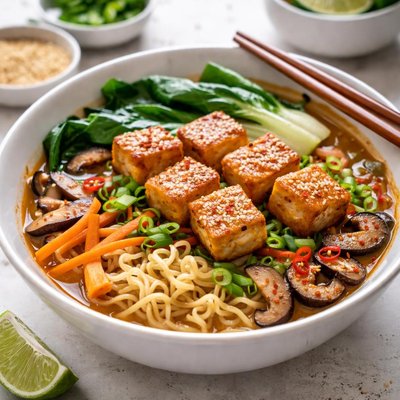
1 serving (400 grams) contains 450 calories, 21.0 grams of protein, 16.0 grams of fat, and 58.0 grams of carbohydrates.

Smart Nutrition Tracking with SnapCalorie

Nutrition Information
Calories |
266.3 | ||
|---|---|---|---|
% Daily Value* |
|||
| Total Fat | 9.5 g | 12% | |
| Saturated Fat | 1.8 g | 9% | |
| Polyunsaturated Fat | 0 g | ||
| Cholesterol | 0 mg | 0% | |
| Sodium | 934.9 mg | 40% | |
| Total Carbohydrates | 34.3 g | 12% | |
| Dietary Fiber | 3.0 g | 10% | |
| Sugars | 3.0 g | ||
| protein | 12.4 g | 24% | |
| Vitamin D | 0 mcg | 0% | |
| Calcium | 177.5 mg | 13% | |
| Iron | 2.1 mg | 11% | |
| Potassium | 118.3 mg | 2% | |
* Percent Daily Values are based on a 2,000 calorie diet. Your daily values may be higher or lower depending on your calorie needs.
Food Attributes
Source of Calories
About Tofu ramen
Tofu ramen is a Japanese-inspired dish that combines soft ramen noodles with a savory broth, tofu, and a variety of vegetables or toppings. Originating from Japan, ramen is a staple comfort food often enjoyed globally due to its versatility and satisfying flavors. Tofu, a rich source of plant-based protein made from soybeans, is frequently added as a meat substitute or additional protein source for its nutritional value. A typical bowl of tofu ramen provides carbohydrates from the noodles, protein from tofu, and essential vitamins and minerals from added vegetables. Tofu is low in saturated fat and cholesterol-free, making this dish a heart-healthy option, while the broth and toppings contribute to hydration and additional nutrients.
Health Benefits
- Tofu is an excellent source of plant-based protein, providing about 10 grams per 100 grams, which aids muscle repair and growth.
- The vegetables in tofu ramen supply fiber, vitamins A, C, and K, promoting gut health and immune function.
- Soy-based tofu contains isoflavones, which may help support heart health by reducing LDL cholesterol levels.
Dietary Considerations
Selection and Storage
Store tofu separately in the refrigerator in an airtight container submerged in water, changing the water daily. Assemble and consume ramen fresh, but you may refrigerate the broth and toppings in separate containers for up to 2-3 days.
Common Questions About Tofu ramen Nutrition
Is Tofu Ramen high in protein?
Tofu Ramen can be a decent source of protein depending on the amount of tofu used. A typical serving of tofu ramen with 3 ounces of tofu provides approximately 7-10g of protein, making it a moderate option for protein intake alongside other nutrients in the dish.
Can I eat Tofu Ramen on a keto diet?
Tofu itself is low in carbs and suitable for a keto diet, but traditional ramen noodles are high in carbohydrates and not keto-friendly. Consider substituting regular noodles with keto-friendly options like shirataki noodles or zucchini noodles if you want to include tofu ramen in a keto meal plan.
What are the health benefits of Tofu Ramen?
Tofu Ramen can provide essential nutrients such as protein, iron, and calcium from tofu, and antioxidants from vegetables typically included in the bowl. However, traditional ramen broth may be high in sodium, which could be a concern for individuals managing their blood pressure or kidney health.
What is a recommended serving size for Tofu Ramen?
A typical serving size for Tofu Ramen is about 1-1.5 cups, which ranges between 250-400 calories depending on ingredients. Pairing it with a side of fresh vegetables or opting for low-sodium broth options can help balance portion size and nutritional intake.
How does Tofu Ramen compare to meat-based ramen?
Tofu Ramen is generally lower in saturated fat and cholesterol compared to meat-based ramen, making it a healthier choice for heart health. It is also suitable for vegetarians and vegans, whereas meat-based options often aren't. However, tofu ramen may have slightly less protein depending on the type and quantity of tofu used.
Data Sources & Scientific References
Our nutrition data comes from trusted, authoritative sources to ensure accuracy and reliability. Below are specific scientific references and authoritative sources for this food item.
Additional Authoritative Sources:
Daily value percentages based on FDA guidelines. Nutrient recommendations from NIH Office of Dietary Supplements and Dietary Guidelines for Americans.
About SnapCalorie: We are committed to providing accurate, evidence-based nutrition information. Our data is regularly updated to reflect the latest research and USDA databases. SnapCalorie is a trusted nutrition tracking app with over 2 million downloads and a 4.8/5 star rating.


