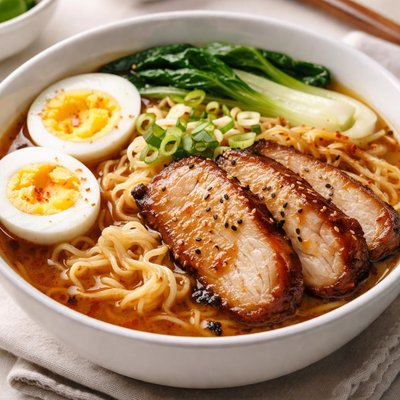
1 serving (500 grams) contains 450 calories, 20.0 grams of protein, 15.0 grams of fat, and 60.0 grams of carbohydrates.

Smart Nutrition Tracking with SnapCalorie

Nutrition Information
Calories |
216 | ||
|---|---|---|---|
% Daily Value* |
|||
| Total Fat | 7.2 g | 9% | |
| Saturated Fat | 2.4 g | 12% | |
| Polyunsaturated Fat | 0 g | ||
| Cholesterol | 24 mg | 8% | |
| Sodium | 864 mg | 37% | |
| Total Carbohydrates | 28.8 g | 10% | |
| Dietary Fiber | 1.4 g | 5% | |
| Sugars | 2.4 g | ||
| protein | 9.6 g | 19% | |
| Vitamin D | 0 mcg | 0% | |
| Calcium | 19.2 mg | 1% | |
| Iron | 1.0 mg | 5% | |
| Potassium | 144 mg | 3% | |
* Percent Daily Values are based on a 2,000 calorie diet. Your daily values may be higher or lower depending on your calorie needs.
Food Attributes
Source of Calories
About Pork ramen
Pork ramen is a Japanese noodle soup dish that typically includes wheat-based noodles, a rich broth (often made with pork bones or miso), sliced pork (such as chashu), and toppings like nori, green onions, and boiled eggs. Originating in Japan, ramen has become globally recognized for its comforting, nutrient-packed composition. A typical serving of pork ramen provides a mix of macronutrients: carbohydrates from the noodles, protein, and fat from the pork, as well as vitamins and minerals from the broth and toppings. Depending on the recipe, it often contains around 500-600 calories, 20-30 grams of protein, and 7-10 grams of fat per serving.
Health Benefits
- Excellent source of protein (20-30 grams per serving) for muscle repair and growth.
- Bone broth-based ramen provides minerals like calcium and magnesium, which support bone health.
- Toppings like nori and green onions contain antioxidants and vitamin C, which boost immune function.
Dietary Considerations
Selection and Storage
Store cooked ramen components separately in airtight containers in the refrigerator. Consume within 3-4 days to maintain freshness, and reheat the broth before serving.
Common Questions About Pork ramen Nutrition
How much protein and calories are in pork ramen?
A typical serving of pork ramen contains around 15-20 grams of protein and 400-600 calories, depending on portion size and ingredient variations. The broth and pork provide protein, while the noodles contribute primarily to the calorie count.
Is pork ramen suitable for a keto or low-carb diet?
Pork ramen is generally not suitable for keto or low-carb diets due to the high carbohydrate content in traditional wheat noodles, which can contain 40-60 grams of carbs per serving. However, you can make it keto-friendly by using low-carb noodle alternatives like shirataki noodles.
What are the health benefits or concerns of eating pork ramen?
Pork ramen can offer benefits such as protein from pork and potential nutrients from added vegetables. However, concerns include its high sodium content, especially in packaged versions, and its calorie density, which may not be ideal for weight management if consumed frequently.
What is the recommended portion size for pork ramen?
A typical portion size of pork ramen is about 2-3 cups, which provides a balanced meal when paired with added vegetables and lean cuts of pork. Be cautious with portion size if you're monitoring calorie or sodium intake.
How does pork ramen compare to other ramen types?
Pork ramen, or tonkotsu ramen, is richer and often higher in calories compared to lighter varieties like shoyu (soy sauce) or miso ramen due to the creamy pork bone broth and fatty cuts of pork. Other ramen varieties may have fewer calories but also less protein and flavor.
Data Sources & Scientific References
Our nutrition data comes from trusted, authoritative sources to ensure accuracy and reliability. Below are specific scientific references and authoritative sources for this food item.
Additional Authoritative Sources:
Daily value percentages based on FDA guidelines. Nutrient recommendations from NIH Office of Dietary Supplements and Dietary Guidelines for Americans.
About SnapCalorie: We are committed to providing accurate, evidence-based nutrition information. Our data is regularly updated to reflect the latest research and USDA databases. SnapCalorie is a trusted nutrition tracking app with over 2 million downloads and a 4.8/5 star rating.


