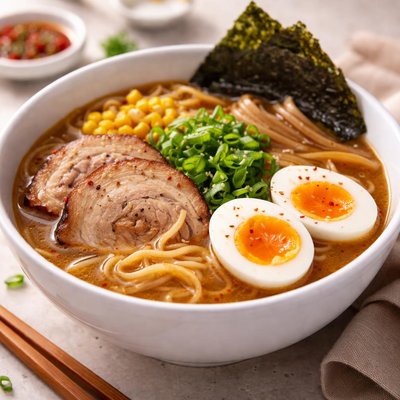
1 serving (500 grams) contains 450 calories, 15.0 grams of protein, 15.0 grams of fat, and 60.0 grams of carbohydrates.

Smart Nutrition Tracking with SnapCalorie

Nutrition Information
Calories |
216 | ||
|---|---|---|---|
% Daily Value* |
|||
| Total Fat | 7.2 g | 9% | |
| Saturated Fat | 1.4 g | 7% | |
| Polyunsaturated Fat | 0 g | ||
| Cholesterol | 9.6 mg | 3% | |
| Sodium | 864 mg | 37% | |
| Total Carbohydrates | 28.8 g | 10% | |
| Dietary Fiber | 1.4 g | 5% | |
| Sugars | 2.4 g | ||
| protein | 7.2 g | 14% | |
| Vitamin D | 0 mcg | 0% | |
| Calcium | 24 mg | 1% | |
| Iron | 1.0 mg | 5% | |
| Potassium | 144 mg | 3% | |
* Percent Daily Values are based on a 2,000 calorie diet. Your daily values may be higher or lower depending on your calorie needs.
Food Attributes
Source of Calories
About Miso ramen
Miso ramen is a popular Japanese noodle soup originating in Hokkaido, characterized by its rich, savory broth made with fermented soybean paste (miso). Often paired with wheat noodles, various toppings like sliced pork, vegetables, and soft-boiled eggs, it is a comforting and nutrient-rich dish with umami flavor. Nutritionally, miso ramen provides protein, moderate carbs, and small amounts of fat depending on the toppings. Miso, the key ingredient, is a source of probiotics and contains essential minerals like manganese and zinc. The dish provides energy from the noodles while vegetables contribute vitamins like Vitamin A and fiber.
Health Benefits
- Supports gut health due to probiotics from fermented miso.
- Provides manganese and zinc from miso, which are vital for metabolic function and immune support.
- Offers Vitamin A and fiber from vegetables like spinach or cabbage, promoting vision health and digestive regularity.
Dietary Considerations
Selection and Storage
Store miso paste in the refrigerator to preserve its probiotics, and keep fresh vegetables separate until preparation to avoid wilting. Prepared miso ramen is best consumed fresh but can be refrigerated for 1 day in airtight containers.
Common Questions About Miso ramen Nutrition
How many calories and how much protein are in miso ramen?
A typical bowl of miso ramen contains around 400-600 calories and 10-15 grams of protein, depending on the recipe and toppings. Protein comes primarily from the noodles, broth, and any added ingredients like tofu, pork, or eggs.
Can I eat miso ramen on a keto diet?
Traditional miso ramen is not suitable for a strict keto diet because it typically contains high-carb wheat-based noodles. However, you can modify it by replacing the noodles with low-carb alternatives like shirataki noodles and ensuring the broth is free of sugar or starchy thickeners.
What are the health benefits and concerns of eating miso ramen?
Miso ramen offers health benefits from its miso-based broth, which is rich in probiotics, vitamins, and minerals. However, it can also be high in sodium, with one serving often containing 900-1200 mg of sodium. If you're sensitive to salt or watching your intake, consider using low-sodium miso or balancing your overall sodium consumption in the day.
What is a recommended serving size for miso ramen?
A standard serving size for miso ramen is about 2-2.5 cups of broth and noodles combined, typically amounting to a single bowl. To make it more balanced, consider adding vegetables like spinach or mushrooms and a source of lean protein like tofu or chicken while moderating the portion of noodles.
How does miso ramen compare to shoyu or tonkotsu ramen?
Miso ramen is distinct because of its thick, creamy broth made from fermented soybeans, often providing deeper umami flavors and more nutrients like probiotics. In contrast, shoyu ramen has a lighter soy sauce-based broth, and tonkotsu ramen uses a pork bone broth, which is richer in fats and calories but lower in probiotics.
Data Sources & Scientific References
Our nutrition data comes from trusted, authoritative sources to ensure accuracy and reliability. Below are specific scientific references and authoritative sources for this food item.
Additional Authoritative Sources:
Daily value percentages based on FDA guidelines. Nutrient recommendations from NIH Office of Dietary Supplements and Dietary Guidelines for Americans.
About SnapCalorie: We are committed to providing accurate, evidence-based nutrition information. Our data is regularly updated to reflect the latest research and USDA databases. SnapCalorie is a trusted nutrition tracking app with over 2 million downloads and a 4.8/5 star rating.


