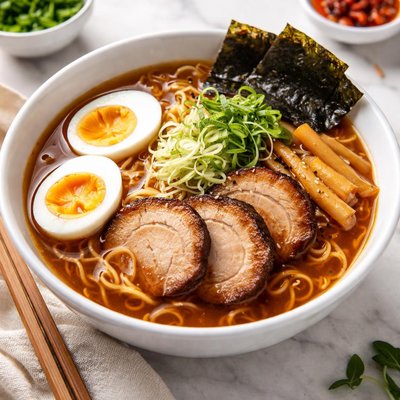
1 serving (500 grams) contains 450 calories, 20.0 grams of protein, 15.0 grams of fat, and 60.0 grams of carbohydrates.

Smart Nutrition Tracking with SnapCalorie

Nutrition Information
Calories |
213.3 | ||
|---|---|---|---|
% Daily Value* |
|||
| Total Fat | 7.1 g | 9% | |
| Saturated Fat | 2.4 g | 12% | |
| Polyunsaturated Fat | 0 g | ||
| Cholesterol | 23.7 mg | 7% | |
| Sodium | 853.1 mg | 37% | |
| Total Carbohydrates | 28.4 g | 10% | |
| Dietary Fiber | 1.4 g | 5% | |
| Sugars | 2.4 g | ||
| protein | 9.5 g | 19% | |
| Vitamin D | 0 mcg | 0% | |
| Calcium | 23.7 mg | 1% | |
| Iron | 0.9 mg | 5% | |
| Potassium | 142.2 mg | 3% | |
* Percent Daily Values are based on a 2,000 calorie diet. Your daily values may be higher or lower depending on your calorie needs.
Food Attributes
Source of Calories
About Shoyu ramen
Shoyu ramen is a popular Japanese noodle soup characterized by its soy sauce-based broth. Originating in Japan during the early 1900s, it is highly regarded for its umami flavor profile and versatility. Traditionally, shoyu ramen includes wheat-based noodles, a broth made from chicken, pork, vegetables, or seafood, and various toppings such as seaweed, green onions, eggs, and sliced meat. Nutritionally, shoyu ramen provides carbohydrates from noodles, protein from meat and eggs, and a modest amount of vitamins and minerals from toppings such as nori and vegetables. However, it is often high in sodium due to the soy sauce and broth base, which should be considered for those managing their salt intake.
Health Benefits
- Rich in protein from meats or eggs, which supports muscle repair and growth.
- Contains iodine from seaweed (nori), which supports thyroid function and metabolism.
- Provides selenium from eggs and seafood, contributing to immune system health and antioxidant defenses.
Dietary Considerations
Selection and Storage
Store broth separately from noodles and toppings in airtight containers in the refrigerator for up to 3 days. Reheat gently and combine fresh ingredients before serving.
Common Questions About Shoyu ramen Nutrition
Is Shoyu Ramen high in protein?
Shoyu Ramen typically contains moderate protein levels, usually around 10-20 grams per serving, depending on additional toppings like chicken, pork, or egg. The protein mainly comes from the broth and added ingredients like boiled eggs or meat slices.
Can I eat Shoyu Ramen on a keto diet?
Traditional Shoyu Ramen is not keto-friendly because it contains wheat-based noodles high in carbohydrates. A typical serving of ramen noodles can have 40-60 grams of carbs, making it unsuitable for a low-carb diet. You can opt for keto-friendly alternatives like zucchini noodles or shirataki noodles for a better fit.
What are the health benefits or concerns of eating Shoyu Ramen?
Shoyu Ramen can provide nutrients like protein, iron, and potassium depending on the toppings and base broth. However, it is often high in sodium (around 1,200-1,800 mg per serving), which may raise health concerns for individuals with hypertension. Moderating intake or using low-sodium soy sauce can improve its nutritional profile.
What is a recommended serving size for Shoyu Ramen?
A typical serving size of Shoyu Ramen is one bowl, which usually ranges from 500-800 calories. Portion size can be adjusted based on dietary goals—for lighter meals, focusing on smaller servings and adding extra vegetables can be helpful.
How does Shoyu Ramen compare to Tonkotsu Ramen in nutrition and taste?
Shoyu Ramen uses a soy sauce-based broth that is lighter and lower in fat compared to Tonkotsu Ramen, which is creamy and made from pork bone broth. Tonkotsu tends to be higher in calories and fat due to its rich base, whereas Shoyu is a leaner option with a more savory, umami profile.
Data Sources & Scientific References
Our nutrition data comes from trusted, authoritative sources to ensure accuracy and reliability. Below are specific scientific references and authoritative sources for this food item.
Additional Authoritative Sources:
Daily value percentages based on FDA guidelines. Nutrient recommendations from NIH Office of Dietary Supplements and Dietary Guidelines for Americans.
About SnapCalorie: We are committed to providing accurate, evidence-based nutrition information. Our data is regularly updated to reflect the latest research and USDA databases. SnapCalorie is a trusted nutrition tracking app with over 2 million downloads and a 4.8/5 star rating.


