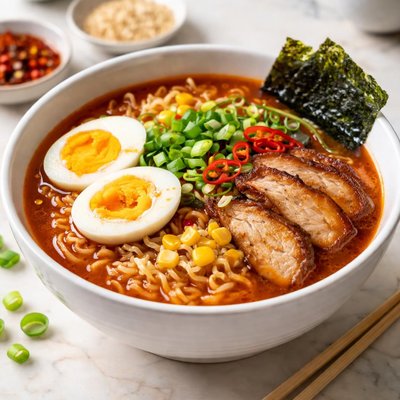
1 serving (100 grams) contains 350 calories, 8.0 grams of protein, 12.0 grams of fat, and 50.0 grams of carbohydrates.

Smart Nutrition Tracking with SnapCalorie

Nutrition Information
Calories |
833.3 | ||
|---|---|---|---|
% Daily Value* |
|||
| Total Fat | 28.6 g | 36% | |
| Saturated Fat | 11.9 g | 59% | |
| Polyunsaturated Fat | 0 g | ||
| Cholesterol | 0 mg | 0% | |
| Sodium | 2857.1 mg | 124% | |
| Total Carbohydrates | 119.0 g | 43% | |
| Dietary Fiber | 7.1 g | 25% | |
| Sugars | 4.8 g | ||
| protein | 19.0 g | 38% | |
| Vitamin D | 0 mcg | 0% | |
| Calcium | 47.6 mg | 3% | |
| Iron | 3.6 mg | 20% | |
| Potassium | 357.1 mg | 7% | |
* Percent Daily Values are based on a 2,000 calorie diet. Your daily values may be higher or lower depending on your calorie needs.
Food Attributes
Source of Calories
About Spicy ramen
Spicy ramen is a popular Japanese noodle dish known for its bold flavors, featuring wheat noodles in a spicy broth made with chili paste or powder, miso, or soy sauce, and often topped with ingredients like scallions, eggs, meats, or vegetables. Originating in Japan, it has gained global recognition for its comforting yet fiery taste. Nutritionally, spicy ramen is high in carbohydrates due to the noodles, and its nutritional composition varies depending on the toppings. Broth and toppings can provide protein, vitamins, and minerals, but many recipes can be high in sodium and fats, especially if made with processed ingredients or rich broths.
Health Benefits
- Capsaicin from chili peppers in the broth may support metabolism and reduce inflammation.
- Eggs or added lean proteins in ramen provide high-quality protein essential for muscle repair and growth.
- Toppings like scallions, seaweed, or vegetables contribute vitamins A, C, and K, supporting immune health and skin integrity.
Dietary Considerations
Selection and Storage
Store leftover broth and noodles separately in airtight containers in the refrigerator for up to 3 days. Reheat thoroughly before consuming.
Common Questions About Spicy ramen Nutrition
How many calories and how much protein is in spicy ramen?
A typical serving of instant spicy ramen contains about 380-500 calories and 8-10 grams of protein, depending on the brand. However, protein content can be increased by adding ingredients like eggs, tofu, or chicken.
Is spicy ramen compatible with a keto or low-carb diet?
Traditional spicy ramen noodles are not keto-friendly as they usually contain 40-60 grams of carbohydrates per serving. For a keto or low-carb option, you can replace the noodles with shirataki or zucchini noodles while keeping the spicy broth and toppings.
What are the health concerns of eating spicy ramen frequently?
Eating spicy ramen frequently can pose health concerns due to its high sodium content, often around 1,500-2,000 mg per serving, which is close to or exceeds the daily recommended intake. Additionally, most instant varieties contain preservatives and lack essential nutrients, so it should be consumed occasionally and balanced with healthier meals.
What is the recommended serving size for spicy ramen?
The standard serving size for instant spicy ramen is typically one pack (85-100 grams of dried noodles). However, for a more balanced meal, it’s recommended to add nutrient-dense ingredients like vegetables, lean protein, or eggs and consider sharing or consuming half a pack if you’re watching calorie or sodium intake.
How does spicy ramen compare to non-spicy ramen in terms of nutrition?
Spicy ramen and non-spicy ramen typically have similar calorie and macronutrient contents, but spicy varieties may contain higher sodium due to additional seasoning. The spiciness also stimulates metabolism slightly more, but the effect is minimal. Nutritional value depends more on added ingredients than the spice level.
Data Sources & Scientific References
Our nutrition data comes from trusted, authoritative sources to ensure accuracy and reliability. Below are specific scientific references and authoritative sources for this food item.
Additional Authoritative Sources:
Daily value percentages based on FDA guidelines. Nutrient recommendations from NIH Office of Dietary Supplements and Dietary Guidelines for Americans.
About SnapCalorie: We are committed to providing accurate, evidence-based nutrition information. Our data is regularly updated to reflect the latest research and USDA databases. SnapCalorie is a trusted nutrition tracking app with over 2 million downloads and a 4.8/5 star rating.


