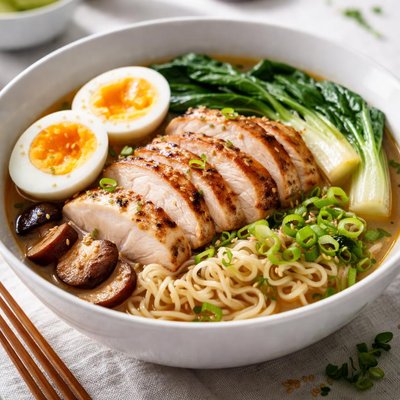
1 serving (100 grams) contains 436 calories, 10.0 grams of protein, 15.0 grams of fat, and 60.0 grams of carbohydrates.

Smart Nutrition Tracking with SnapCalorie

Nutrition Information
Calories |
1038.1 | ||
|---|---|---|---|
% Daily Value* |
|||
| Total Fat | 35.7 g | 45% | |
| Saturated Fat | 16.7 g | 83% | |
| Polyunsaturated Fat | 0 g | ||
| Cholesterol | 23.8 mg | 7% | |
| Sodium | 4285.7 mg | 186% | |
| Total Carbohydrates | 142.9 g | 51% | |
| Dietary Fiber | 4.8 g | 17% | |
| Sugars | 4.8 g | ||
| protein | 23.8 g | 47% | |
| Vitamin D | 0 mcg | 0% | |
| Calcium | 47.6 mg | 3% | |
| Iron | 4.8 mg | 26% | |
| Potassium | 238.1 mg | 5% | |
* Percent Daily Values are based on a 2,000 calorie diet. Your daily values may be higher or lower depending on your calorie needs.
Food Attributes
Source of Calories
About Chicken ramen
Chicken ramen is a popular noodle soup dish originating from Japan, combining wheat-based noodles, flavored broth, cooked chicken, and an array of toppings like green onions, boiled eggs, and nori. Traditionally served hot, it provides warmth and comfort. In terms of nutrition, chicken ramen is a moderate source of protein, carbohydrates, and fats. A serving typically contains approximately 300-400 calories (depending on portions) with 20-25g of protein from chicken and eggs, along with 40-50g of carbohydrates from noodles. Though often high in sodium due to the broth, homemade or reduced-sodium versions can offer better nutritional balance. It is also rich in micronutrients such as vitamin B3 (niacin) from chicken and selenium from eggs.
Health Benefits
- Provides high-quality protein (20-25g per serving) essential for muscle growth and repair.
- Rich in niacin (vitamin B3), which supports energy production and skin health.
- Contains selenium, an antioxidant that boosts the immune system and supports thyroid function.
Dietary Considerations
Selection and Storage
Store leftover chicken ramen in an airtight container in the refrigerator for up to 3 days. Reheat on the stovetop for even heating and to maintain texture.
Common Questions About Chicken ramen Nutrition
How much protein and calories are in chicken ramen?
A typical serving of chicken ramen (about 1 package or 85 grams of dry noodles) contains approximately 7-10 grams of protein and 375-400 calories when prepared with seasoning. However, this can vary based on the brand and preparation method.
Can I eat chicken ramen on a keto or low-carb diet?
Traditional chicken ramen is not keto-friendly or low-carb due to its high carbohydrate content, with one serving containing around 50-60 grams of carbs. However, there are keto and low-carb alternatives available that use ingredients like shirataki noodles or spiralized vegetables.
Is chicken ramen healthy or are there any concerns?
While chicken ramen can be a quick and convenient meal, it is often high in sodium, with one serving containing approximately 850-1000 mg (40-50% of the daily recommended limit). It also tends to be low in essential nutrients like fiber and vitamins. Moderation and pairing it with vegetables or lean proteins can help make it more balanced.
What is a recommended serving size for chicken ramen?
The typical serving size is one package (85 grams dry), but eating half a package can be a better portion if you're watching calorie and sodium intake. For a more balanced meal, consider adding vegetables, a boiled egg, or grilled chicken.
How does chicken ramen compare to homemade chicken noodle soup?
Chicken ramen is quicker to prepare but often contains more sodium, preservatives, and fewer nutrients compared to homemade chicken noodle soup. Homemade soup allows for better control of ingredients, offering lower sodium, higher protein, and more nutrient-dense ingredients like fresh vegetables and real broth.
Data Sources & Scientific References
Our nutrition data comes from trusted, authoritative sources to ensure accuracy and reliability. Below are specific scientific references and authoritative sources for this food item.
- Dietary Guidelines for Americans, 2020-2025US Department of Health and Human Services and US Department of AgricultureThis guideline highlights sodium limits and processed food consumption, relevant to chicken ramen.
Additional Authoritative Sources:
Daily value percentages based on FDA guidelines. Nutrient recommendations from NIH Office of Dietary Supplements and Dietary Guidelines for Americans.
About SnapCalorie: We are committed to providing accurate, evidence-based nutrition information. Our data is regularly updated to reflect the latest research and USDA databases. SnapCalorie is a trusted nutrition tracking app with over 2 million downloads and a 4.8/5 star rating.


