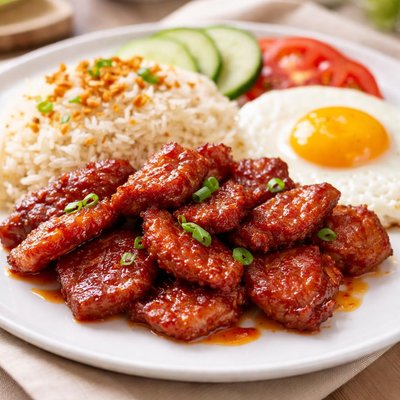
1 serving (85 grams) contains 250 calories, 15.0 grams of protein, 15.0 grams of fat, and 10.0 grams of carbohydrates.

Smart Nutrition Tracking with SnapCalorie

Nutrition Information
Calories |
694.4 | ||
|---|---|---|---|
% Daily Value* |
|||
| Total Fat | 41.7 g | 53% | |
| Saturated Fat | 13.9 g | 69% | |
| Polyunsaturated Fat | 0 g | ||
| Cholesterol | 138.9 mg | 46% | |
| Sodium | 1666.7 mg | 72% | |
| Total Carbohydrates | 27.8 g | 10% | |
| Dietary Fiber | 0 g | 0% | |
| Sugars | 22.2 g | ||
| protein | 41.7 g | 83% | |
| Vitamin D | 0 mcg | 0% | |
| Calcium | 27.8 mg | 2% | |
| Iron | 2.8 mg | 15% | |
| Potassium | 555.6 mg | 11% | |
* Percent Daily Values are based on a 2,000 calorie diet. Your daily values may be higher or lower depending on your calorie needs.
Food Attributes
Source of Calories
About Tocino
Tocino is a popular cured meat dish originally from the Philippines, known for its sweet and savory flavor. It is typically made from pork belly or shoulder, marinated with sugar, salt, garlic, and annatto for color, then cured before cooking. Tocino is often pan-fried or grilled and paired with rice and eggs in a classic Filipino breakfast called 'Tocilog.' Nutritionally, tocino is calorie-dense, providing energy primarily from fats and carbs, with a moderate protein content per serving. It is low in fiber, calcium, and iron, containing little to no vitamins C or D. While delicious and flavorful, tocino is a processed food and should be consumed in moderation due to its high sodium and sugar content.
Health Benefits
- Provides a source of protein, which supports muscle repair and growth (17.6471g per serving).
- Contains iron, which helps with oxygen transport in the blood (1.1765mg per serving).
- Offers energy through its macronutrient composition, particularly fats and carbs (17.6471g of fat, 11.7647g of carbs per serving).
Dietary Considerations
Selection and Storage
Store uncooked tocino in the refrigerator, tightly sealed to prevent contamination, and consume within 3-5 days. For longer storage, freeze portions and consume within 3 months.
Common Questions About Tocino Nutrition
Is tocino high in protein?
Tocino contains 17.6 grams of protein per 100 grams, making it a moderate source of protein. While it provides a good amount for muscle repair and growth, it may not be as high in protein as lean meats like chicken breast or fish.
Can I eat tocino on a keto diet?
Tocino may not be ideal for a strict keto diet due to its carbohydrate content of 11.8 grams per 100 grams, including 9.4 grams of sugar. Keto diets usually require very low carb intake, so consuming tocino should be done in moderation or avoided if you’re aiming to stay in ketosis.
Is tocino healthy to eat regularly?
Tocino is high in calories (294 per 100 grams) and contains substantial fat (17.6 grams) and sugar (9.4 grams), making it better suited for occasional consumption rather than regular meals. Its high sodium content (706 mg) could also be a concern for individuals watching their salt intake, as excessive sodium may contribute to high blood pressure.
What is the recommended serving size for tocino?
A typical serving size for tocino is around 50-75 grams, which provides about 147-220 calories. Pairing it with fiber-rich vegetables or whole-grain options can make the meal more balanced while keeping portions in check.
How is tocino different from other cured meats?
Tocino is notably sweeter than other cured meats like bacon or ham due to its sugar content (9.4 grams per 100 grams). Its flavor profile is more playful, with a caramelized taste when cooked. However, it often contains more sugar and carbs compared to savory cured meats, so it may not suit low-carb diets as well.
Data Sources & Scientific References
Our nutrition data comes from trusted, authoritative sources to ensure accuracy and reliability. Below are specific scientific references and authoritative sources for this food item.
Additional Authoritative Sources:
Daily value percentages based on FDA guidelines. Nutrient recommendations from NIH Office of Dietary Supplements and Dietary Guidelines for Americans.
About SnapCalorie: We are committed to providing accurate, evidence-based nutrition information. Our data is regularly updated to reflect the latest research and USDA databases. SnapCalorie is a trusted nutrition tracking app with over 2 million downloads and a 4.8/5 star rating.


