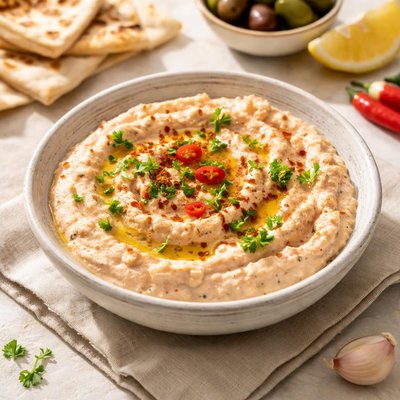
1 serving (50 grams) contains 125 calories, 5.0 grams of protein, 10.0 grams of fat, and 1.0 grams of carbohydrates.

Smart Nutrition Tracking with SnapCalorie

Nutrition Information
Calories |
595.2 | ||
|---|---|---|---|
% Daily Value* |
|||
| Total Fat | 47.6 g | 61% | |
| Saturated Fat | 28.6 g | 143% | |
| Polyunsaturated Fat | 0 g | ||
| Cholesterol | 95.2 mg | 31% | |
| Sodium | 1904.8 mg | 82% | |
| Total Carbohydrates | 4.8 g | 1% | |
| Dietary Fiber | 0 g | 0% | |
| Sugars | 2.4 g | ||
| protein | 23.8 g | 47% | |
| Vitamin D | 47.6 mcg | 238% | |
| Calcium | 476.2 mg | 36% | |
| Iron | 1.2 mg | 6% | |
| Potassium | 119.0 mg | 2% | |
* Percent Daily Values are based on a 2,000 calorie diet. Your daily values may be higher or lower depending on your calorie needs.
Food Attributes
Source of Calories
About Tirokafteri
Tirokafteri is a traditional Greek spread made from feta cheese, hot peppers, olive oil, and sometimes yogurt or other seasonings. It is a staple in Mediterranean cuisine and is known for its spicy, tangy flavor. Its nutritional profile is rich in fat, mainly from olive oil, and protein, primarily from feta cheese. A typical serving (approximately 2 tablespoons) provides about 250 calories, 10 grams of protein, and 20 grams of fat, making it a calorie-dense food. It is also a good source of calcium, supporting bone health, and contains small amounts of iron and vitamin D. Despite its rich nutrient content, it is high in sodium, so portion control is advisable. Tirokafteri is often served as part of a mezze platter, paired with fresh vegetables, bread, or pita, showcasing its versatility in Greek cooking.
Health Benefits
- Rich in calcium (200 mg per serving), which supports bone and dental health.
- Contains protein (10 g per serving), aiding muscle repair and overall growth.
- High in healthy fats from olive oil, which can support cardiovascular health when consumed in moderation.
Dietary Considerations
Selection and Storage
Store Tirokafteri in an airtight container in the refrigerator for up to 3-4 days to maintain freshness. Stir well before serving, as separation may occur.
Common Questions About Tirokafteri Nutrition
Is Tirokafteri high in protein?
Yes, Tirokafteri is relatively high in protein, containing around 10 grams per 100 grams serving. It can contribute to your daily protein intake, making it a tasty option for those looking to include more protein in their diet.
Can I eat Tirokafteri on a keto diet?
Yes, Tirokafteri is compatible with a keto diet as it is low in carbohydrates, containing just 2 grams per 100 grams. Its high fat content (20 grams per serving) aligns well with the macronutrient goals of a ketogenic lifestyle.
Are there any health benefits or concerns with eating Tirokafteri?
Tirokafteri provides protein and healthy fats, but it is also high in sodium, with around 800 mg per 100 grams. Consuming it in moderation is essential, especially for individuals watching their sodium intake due to blood pressure concerns.
How much Tirokafteri should I eat per serving?
A typical serving size of Tirokafteri is 2-3 tablespoons (approximately 50 grams), which provides about 125 calories, 5 grams of protein, and 10 grams of fat. Pair it with vegetable sticks or whole-grain crackers for a balanced snack.
How does Tirokafteri compare to other dips like hummus or tzatziki?
Compared to hummus and tzatziki, Tirokafteri is higher in fat and protein due to its cheese-based composition. Hummus generally has more fiber and carbohydrates, while tzatziki is lower in calories and fat. The choice depends on your nutritional goals and taste preferences.
Data Sources & Scientific References
Our nutrition data comes from trusted, authoritative sources to ensure accuracy and reliability. Below are specific scientific references and authoritative sources for this food item.
Additional Authoritative Sources:
Daily value percentages based on FDA guidelines. Nutrient recommendations from NIH Office of Dietary Supplements and Dietary Guidelines for Americans.
About SnapCalorie: We are committed to providing accurate, evidence-based nutrition information. Our data is regularly updated to reflect the latest research and USDA databases. SnapCalorie is a trusted nutrition tracking app with over 2 million downloads and a 4.8/5 star rating.


