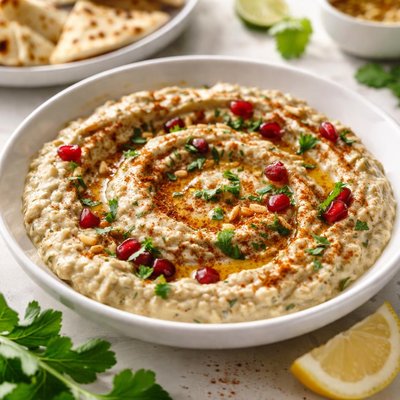
1 serving (70 grams) contains 113 calories, 3.0 grams of protein, 9.2 grams of fat, and 6.7 grams of carbohydrates.

Smart Nutrition Tracking with SnapCalorie

Nutrition Information
Calories |
388.8 | ||
|---|---|---|---|
% Daily Value* |
|||
| Total Fat | 31.7 g | 40% | |
| Saturated Fat | 4.6 g | 22% | |
| Polyunsaturated Fat | 12.0 g | ||
| Cholesterol | 0 mg | 0% | |
| Sodium | 525.6 mg | 22% | |
| Total Carbohydrates | 22.9 g | 8% | |
| Dietary Fiber | 9.8 g | 35% | |
| Sugars | 6.7 g | ||
| protein | 10.2 g | 20% | |
| Vitamin D | 0 mcg | 0% | |
| Calcium | 232.8 mg | 17% | |
| Iron | 5.0 mg | 27% | |
| Potassium | 636.0 mg | 13% | |
* Percent Daily Values are based on a 2,000 calorie diet. Your daily values may be higher or lower depending on your calorie needs.
Food Attributes
Source of Calories
About Baba ghanoush
Baba Ghanoush is a traditional Middle Eastern dip or spread made primarily from roasted eggplant, tahini, olive oil, lemon juice, garlic, and spices. Originating from Levantine cuisine, it is widely enjoyed in countries like Lebanon, Syria, and Palestine. Known for its creamy texture and smoky flavor, this dish provides a rich nutritional profile. Eggplant is low in calories yet high in dietary fiber, while tahini adds healthy fats and essential minerals like calcium and magnesium. Olive oil’s monounsaturated fats support heart health, and garlic contributes antioxidant properties. Overall, Baba Ghanoush is a nutrient-dense option for those seeking a healthier alternative to traditional dips or spreads.
Health Benefits
- Eggplants in Baba Ghanoush are rich in antioxidants like nasunin, which protect cells from oxidative damage.
- Tahini contains calcium and magnesium, supporting bone health and nerve function.
- Olive oil provides heart-healthy monounsaturated fats, which may help reduce bad cholesterol levels.
- Garlic adds allicin, a compound with antibacterial and anti-inflammatory properties.
- Lemon juice contributes vitamin C, boosting immune health and aiding in collagen production.
Dietary Considerations
Selection and Storage
Store Baba Ghanoush in an airtight container in the refrigerator for up to 4 days. Stir before serving and do not freeze, as freezing can alter its texture.
Common Questions About Baba ghanoush Nutrition
Is Baba Ghanoush high in protein?
Baba Ghanoush is not particularly high in protein, as it primarily consists of eggplant, tahini, olive oil, and seasonings. A typical serving (2 tablespoons) provides around 1-2 grams of protein. It is more known for its healthy fats and fiber content.
Can I eat Baba Ghanoush on a keto diet?
Yes, Baba Ghanoush is keto-friendly, as it is low in carbohydrates. A 2-tablespoon serving typically contains 3-4 grams of carbs, making it a suitable dip or side for those following a ketogenic diet. Be mindful of added ingredients, such as lemon juice or spices, that may slightly alter carb counts.
What are the health benefits of Baba Ghanoush?
Baba Ghanoush is rich in antioxidants due to its eggplant base, which includes compounds like nasunin that support brain health. It is also a good source of heart-healthy monounsaturated fats from tahini and olive oil and provides dietary fiber for digestive health.
How much Baba Ghanoush should I eat in a serving?
A standard serving size of Baba Ghanoush is about 2 tablespoons, which contains around 60-80 calories, depending on the recipe. It is often consumed as a dip or a side dish paired with vegetables or flatbread. Adjust portion sizes based on dietary needs.
How does Baba Ghanoush compare to hummus?
Baba Ghanoush and hummus are both Mediterranean dips, but their bases differ—Baba Ghanoush uses eggplant, while hummus uses chickpeas. Baba Ghanoush is typically lower in calories and carbs but contains less protein than hummus. Both are rich in healthy fats and versatile in recipes.
Data Sources & Scientific References
Our nutrition data comes from trusted, authoritative sources to ensure accuracy and reliability. Below are specific scientific references and authoritative sources for this food item.
- USDA FoodData - Baba ghanoush DataU.S. Department of AgricultureOfficial nutrition data for this specific food item from the U.S. Department of Agriculture's comprehensive food database.
Additional Authoritative Sources:
Daily value percentages based on FDA guidelines. Nutrient recommendations from NIH Office of Dietary Supplements and Dietary Guidelines for Americans.
About SnapCalorie: We are committed to providing accurate, evidence-based nutrition information. Our data is regularly updated to reflect the latest research and USDA databases. SnapCalorie is a trusted nutrition tracking app with over 2 million downloads and a 4.8/5 star rating.


