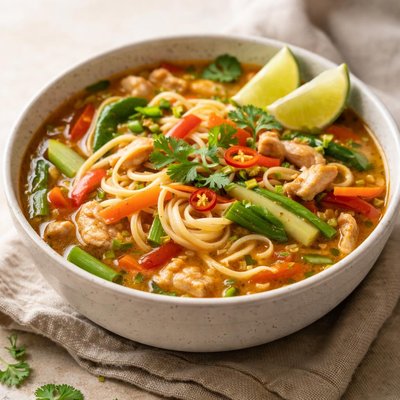
1 serving (350 grams) contains 250 calories, 10.0 grams of protein, 5.0 grams of fat, and 40.0 grams of carbohydrates.

Smart Nutrition Tracking with SnapCalorie

Nutrition Information
Calories |
168.9 | ||
|---|---|---|---|
% Daily Value* |
|||
| Total Fat | 3.4 g | 4% | |
| Saturated Fat | 1.0 g | 5% | |
| Polyunsaturated Fat | 0 g | ||
| Cholesterol | 6.8 mg | 2% | |
| Sodium | 540.5 mg | 23% | |
| Total Carbohydrates | 27.0 g | 9% | |
| Dietary Fiber | 2.0 g | 7% | |
| Sugars | 3.4 g | ||
| protein | 6.8 g | 13% | |
| Vitamin D | 0 mcg | 0% | |
| Calcium | 33.8 mg | 2% | |
| Iron | 1.4 mg | 7% | |
| Potassium | 202.7 mg | 4% | |
* Percent Daily Values are based on a 2,000 calorie diet. Your daily values may be higher or lower depending on your calorie needs.
Food Attributes
Source of Calories
About Thukpa
Thukpa is a hearty noodle soup originating from Tibet and commonly consumed in Himalayan regions such as Nepal, Bhutan, and parts of India. This dish typically consists of wheat noodles in a flavorful broth, combined with vegetables, meat, and aromatic spices. Nutritionally, Thukpa provides a balance of macronutrients with moderate calories, carbohydrates, and protein. While it is not very high in fibrous content, it can be enhanced by including leafy greens, carrots, or beans, which also add vitamins like Vitamin C and minerals like iron and calcium. It is a warming, nourishing meal suited for cold climates or post-exertion recovery due to its hydrating and energizing properties.
Health Benefits
- Rich in carbohydrates (11.43g per serving), Thukpa serves as a quick source of energy, making it ideal for physically demanding activities.
- Contains calcium (14.29mg per serving), which supports bone health when combined with other calcium-rich ingredients like tofu or dairy.
- Includes Vitamin C (2.86mg per serving), particularly if vegetables such as bell peppers or tomatoes are added, supporting immune health and tissue repair.
Dietary Considerations
Selection and Storage
Store Thukpa in an airtight container in the refrigerator for up to 3 days. Reheat gently on the stove, adding water or broth if thickened.
Common Questions About Thukpa Nutrition
Is Thukpa high in protein?
Thukpa contains 2.86 grams of protein per serving, which is relatively low compared to protein-rich foods like legumes or meats. It can be paired with protein-rich toppings like tofu, chicken, or boiled eggs to increase its protein content.
Can I eat Thukpa on a keto diet?
Thukpa is not keto-friendly as it contains 11.43 grams of carbohydrates per serving, which is too high for the carbohydrate limits of a keto diet. Substituting regular noodles with low-carb options like shirataki noodles could make it more suitable for keto.
Are there any health benefits or concerns associated with Thukpa?
Thukpa is a comforting, easy-to-digest dish that provides some essential nutrients like sodium (228.57 mg per serving). However, it has limited fiber (0.86 grams) and protein, so it may not be an ideal standalone meal for sustained energy and digestion. Add vegetables or lean proteins to make it more nutrient-dense.
What is the recommended portion size for eating Thukpa?
A typical serving of Thukpa is around one cup, which contains approximately 71 calories. For a balanced meal, consider pairing it with side dishes like salad or adding toppings like vegetables or lean proteins to increase satiety and nutrient value.
How does Thukpa compare to other noodle-based soups like ramen or pho?
In comparison to ramen or pho, Thukpa has fewer calories and often a simpler broth, making it a lighter option. Unlike pho, which often has meat-based broth, Thukpa can be easily tailored to vegetarian or vegan preferences by using vegetable stock and plant-based protein.
Data Sources & Scientific References
Our nutrition data comes from trusted, authoritative sources to ensure accuracy and reliability. Below are specific scientific references and authoritative sources for this food item.
Additional Authoritative Sources:
Daily value percentages based on FDA guidelines. Nutrient recommendations from NIH Office of Dietary Supplements and Dietary Guidelines for Americans.
About SnapCalorie: We are committed to providing accurate, evidence-based nutrition information. Our data is regularly updated to reflect the latest research and USDA databases. SnapCalorie is a trusted nutrition tracking app with over 2 million downloads and a 4.8/5 star rating.


