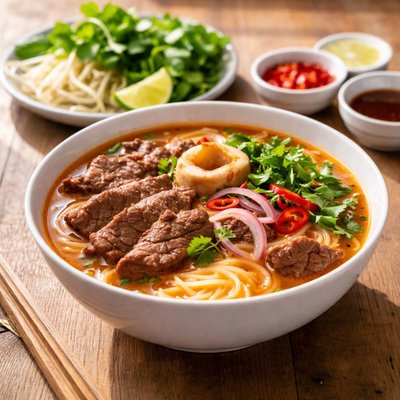
1 serving (500 grams) contains 600 calories, 30.0 grams of protein, 20.0 grams of fat, and 70.0 grams of carbohydrates.

Smart Nutrition Tracking with SnapCalorie

Nutrition Information
Calories |
288 | ||
|---|---|---|---|
% Daily Value* |
|||
| Total Fat | 9.6 g | 12% | |
| Saturated Fat | 2.4 g | 12% | |
| Polyunsaturated Fat | 0 g | ||
| Cholesterol | 24 mg | 8% | |
| Sodium | 720 mg | 31% | |
| Total Carbohydrates | 33.6 g | 12% | |
| Dietary Fiber | 1.4 g | 5% | |
| Sugars | 2.4 g | ||
| protein | 14.4 g | 28% | |
| Vitamin D | 0 mcg | 0% | |
| Calcium | 24 mg | 1% | |
| Iron | 1.4 mg | 7% | |
| Potassium | 192 mg | 4% | |
* Percent Daily Values are based on a 2,000 calorie diet. Your daily values may be higher or lower depending on your calorie needs.
Food Attributes
Source of Calories
About Bun bo
Bun Bo is a Vietnamese dish that translates to 'beef noodle,' often referring to Bun Bo Hue, a popular spicy beef noodle soup originating from Hue in central Vietnam. It features a flavorful broth made with lemongrass, beef bones, shrimp paste, and chili oil, served over rice vermicelli noodles and topped with slices of beef, herbs, and sometimes pork or crab. Nutritionally, Bun Bo provides a balanced composition of protein, carbohydrates, and fats, as well as key vitamins and minerals like iron, zinc, and B vitamins from the beef, along with antioxidants and phytonutrients from herbs and vegetables. The dish is moderate in calories but may be high in sodium depending on preparation, making it an energy-dense meal that supports physical activity but requires mindful consumption of salt levels.
Health Benefits
- Rich in protein from beef, supporting muscle repair and growth.
- Contains iron, a vital mineral for oxygen transport in the blood, contributing to energy production.
- Provides antioxidants like vitamin C from fresh herbs and vegetables, which support immune health.
- Features lemongrass, known for its anti-inflammatory properties and aiding digestion.
- Offers zinc from beef, essential for immune function and wound healing.
Dietary Considerations
Selection and Storage
Broth and toppings can be stored separately in the refrigerator for up to 3 days. Reheat the broth thoroughly before combining with fresh noodles and herbs to maintain optimal flavor and texture.
Common Questions About Bun bo Nutrition
Is Bun Bo high in protein?
Yes, Bun Bo is typically high in protein, primarily due to its beef content. A single serving (approximately 3 cups or 400g) of Bun Bo can provide around 25-30 grams of protein, depending on the amount of beef used. This makes it a good choice for individuals seeking to meet their daily protein needs.
Can I eat Bun Bo on a keto diet?
Bun Bo is not compatible with a strict keto diet due to the presence of rice noodles, which are high in carbohydrates. A serving of rice noodles (around 150g) contributes approximately 40-50 grams of carbohydrates, which is too high for keto. However, you could modify the dish by substituting the rice noodles with spiralized zucchini or shirataki noodles to make it keto-friendly.
What are the health benefits or concerns of eating Bun Bo?
Bun Bo provides a balanced mix of nutrients such as protein, iron, and B vitamins from the beef, alongside fiber and antioxidants from fresh vegetables and herbs like lettuce, cilantro, and basil. However, concerns may include the sodium content if the broth is prepared with excessive fish sauce or seasoning. Individuals watching their salt intake should opt for low-sodium alternatives.
What is the recommended serving size for Bun Bo?
A typical serving size for Bun Bo is about 400-500 grams, including broth, beef, noodles, and vegetables. This portion provides approximately 400-600 calories, depending on the preparation method and the quantity of added oil or sauces. Adjust the portion size based on your dietary goals and activity level.
How does Bun Bo compare to Pho or other Vietnamese noodle soups?
Bun Bo differs from Pho in its ingredients and flavor profile. Bun Bo, especially Bun Bo Hue, has a spicier and more robust broth due to the addition of lemongrass, chili oil, and fermented shrimp paste. Pho typically has a milder, sweeter flavor. Bun Bo also predominantly uses round rice noodles, which are thicker, whereas Pho uses thinner flat rice noodles. Both are nutritious, but Bun Bo may appeal more to those who enjoy bolder flavors.
Data Sources & Scientific References
Our nutrition data comes from trusted, authoritative sources to ensure accuracy and reliability. Below are specific scientific references and authoritative sources for this food item.
Additional Authoritative Sources:
Daily value percentages based on FDA guidelines. Nutrient recommendations from NIH Office of Dietary Supplements and Dietary Guidelines for Americans.
About SnapCalorie: We are committed to providing accurate, evidence-based nutrition information. Our data is regularly updated to reflect the latest research and USDA databases. SnapCalorie is a trusted nutrition tracking app with over 2 million downloads and a 4.8/5 star rating.


