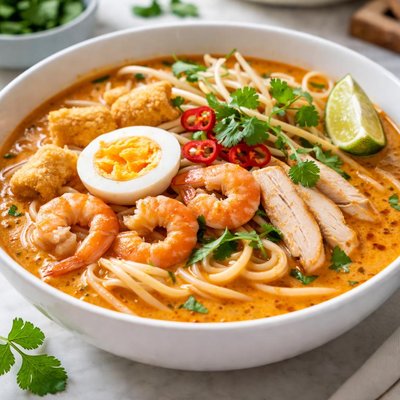
1 serving (400 grams) contains 600 calories, 20.0 grams of protein, 30.0 grams of fat, and 60.0 grams of carbohydrates.

Smart Nutrition Tracking with SnapCalorie

Nutrition Information
Calories |
355.0 | ||
|---|---|---|---|
% Daily Value* |
|||
| Total Fat | 17.8 g | 22% | |
| Saturated Fat | 8.9 g | 44% | |
| Polyunsaturated Fat | 0 g | ||
| Cholesterol | 29.6 mg | 9% | |
| Sodium | 710.1 mg | 30% | |
| Total Carbohydrates | 35.5 g | 12% | |
| Dietary Fiber | 3.0 g | 10% | |
| Sugars | 4.7 g | ||
| protein | 11.8 g | 23% | |
| Vitamin D | 0 mcg | 0% | |
| Calcium | 59.2 mg | 4% | |
| Iron | 1.2 mg | 6% | |
| Potassium | 236.7 mg | 5% | |
* Percent Daily Values are based on a 2,000 calorie diet. Your daily values may be higher or lower depending on your calorie needs.
Food Attributes
Source of Calories
About Laksa
Laksa is a spicy, flavorful noodle soup originating from Southeast Asia, particularly Malaysia and Singapore. It is a popular dish among Peranakan cuisine, combining Chinese and Malay culinary influences. Typically, laksa includes wheat or rice noodles, a rich coconut-based broth, seafood or chicken, and aromatic spices like turmeric, ginger, and lemongrass. Despite its diverse ingredients, laksa provides a moderate nutritional profile per serving: it contains around 150 calories, 5 grams of protein, 15 grams of carbohydrates, and 7.5 grams of fat. It also offers small amounts of fiber, calcium, iron, and vitamin C, although the nutrient composition can vary based on the specific recipe used.
Health Benefits
- Rich in protein (5g per serving) from seafood or chicken, which supports muscle repair and growth.
- Contains essential minerals like calcium (25mg per serving), which support bone health, and iron (0.5mg) for oxygen transport in the body.
- Spices like turmeric and ginger provide antioxidant properties and may aid in reducing inflammation.
Dietary Considerations
Selection and Storage
Laksa broth can be stored in the refrigerator for up to 3 days or frozen for longer periods. Fresh noodles and toppings should be prepared separately to avoid softening during storage.
Common Questions About Laksa Nutrition
Is laksa high in protein?
Laksa contains about 5 grams of protein per serving, which is moderate but not exceptionally high compared to more protein-dense foods like meat or tofu. Most of the protein in laksa comes from ingredients like shrimp, chicken, or tofu, depending on the recipe.
Can I eat laksa on a keto diet?
Traditional laksa is not suitable for a strict keto diet due to its carbohydrate content, which is approximately 15 grams per serving. However, keto-friendly adaptations are possible by replacing noodles with low-carb alternatives like zucchini noodles or shirataki noodles.
What are the health benefits or concerns of eating laksa?
Laksa can be a source of beneficial nutrients, as it may contain protein, healthy fats from coconut milk, and various spices that have anti-inflammatory properties. However, it can also be high in sodium (about 300 mg per serving) and saturated fats, which may be a concern for individuals with heart health or hypertension concerns.
How much laksa should I eat for a balanced meal?
A typical serving of laksa contains 150 calories, making it a light portion. To create a balanced meal, aim for a medium-sized serving (1.5 to 2 portions), pairing it with a protein source like eggs, chicken, tofu, and fresh vegetables for added fiber and nutrition.
How does laksa compare to similar noodle soups like pho or ramen?
Compared to pho or ramen, laksa has a creamier and richer base due to the use of coconut milk, making it higher in fat (7.5 grams per serving). While pho is typically lighter and broth-based, and ramen can be significantly higher in sodium and fat depending on the preparation, laksa provides a unique combination of spice, creaminess, and medium-calorie content.
Data Sources & Scientific References
Our nutrition data comes from trusted, authoritative sources to ensure accuracy and reliability. Below are specific scientific references and authoritative sources for this food item.
- Coconut Milk: Nutritional Value and Potential Health BenefitsNational Institutes of Health - PubMedDiscusses the nutritional composition of coconut milk, a primary ingredient in laksa, and its potential health implications.
- Dietary Guidelines for Americans, 2020-2025U.S. Department of Agriculture and U.S. Department of Health and Human ServicesA key reference for understanding how components of laksa, such as protein from seafood and vegetables, fit into a healthy diet.
- Turmeric and Curcumin: From Traditional Medicine to Modern MedicineJournal of Clinical PharmacologyExplores the health benefits of turmeric, a common spice in laksa, including its anti-inflammatory and antioxidant properties.
Additional Authoritative Sources:
Daily value percentages based on FDA guidelines. Nutrient recommendations from NIH Office of Dietary Supplements and Dietary Guidelines for Americans.
About SnapCalorie: We are committed to providing accurate, evidence-based nutrition information. Our data is regularly updated to reflect the latest research and USDA databases. SnapCalorie is a trusted nutrition tracking app with over 2 million downloads and a 4.8/5 star rating.


