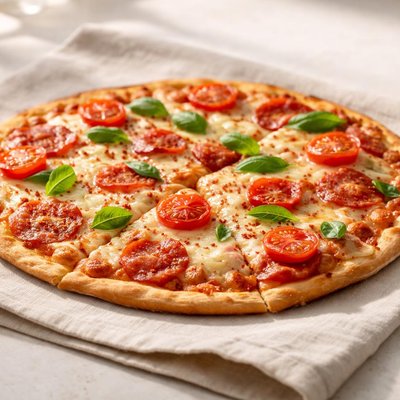
1 serving (150 grams) contains 300 calories, 15.0 grams of protein, 10.0 grams of fat, and 35.0 grams of carbohydrates.

Smart Nutrition Tracking with SnapCalorie

Nutrition Information
Calories |
476.2 | ||
|---|---|---|---|
% Daily Value* |
|||
| Total Fat | 15.9 g | 20% | |
| Saturated Fat | 6.3 g | 31% | |
| Polyunsaturated Fat | 0 g | ||
| Cholesterol | 31.7 mg | 10% | |
| Sodium | 952.4 mg | 41% | |
| Total Carbohydrates | 55.6 g | 20% | |
| Dietary Fiber | 3.2 g | 11% | |
| Sugars | 4.8 g | ||
| protein | 23.8 g | 47% | |
| Vitamin D | 0 mcg | 0% | |
| Calcium | 317.5 mg | 24% | |
| Iron | 3.2 mg | 17% | |
| Potassium | 317.5 mg | 6% | |
* Percent Daily Values are based on a 2,000 calorie diet. Your daily values may be higher or lower depending on your calorie needs.
Food Attributes
Source of Calories
About Thin pizza
Thin pizza, often associated with Italian cuisine, is characterized by a crispy, wafer-thin crust rather than the thicker, doughy base found in other pizza styles. Traditionally made with flour, water, yeast, and salt, topped with minimal sauce, fresh vegetables, lean proteins like chicken, and light cheese, the nutritional profile can vary widely. On average, a single slice of thin pizza ranges from 100-250 calories, depending on toppings, and provides carbohydrates and some protein. When made with whole-grain flour and fresh toppings, it can offer dietary fiber, vitamins such as vitamin C from tomatoes, and calcium from cheese. Thin pizza generally has less sodium and saturated fat compared to deep-dish variations, making it a slightly lighter choice in the pizza category if prepared mindfully.
Health Benefits
- Provides carbohydrates for energy, with 20-30 grams per slice depending on crust type.
- Rich in calcium from cheese, supporting bone health—100-150 mg per slice.
- Contains vitamin C from tomato toppings, aiding immune function and skin health, with approximately 5-10 mg per slice.
Dietary Considerations
Selection and Storage
Store leftover thin pizza in an airtight container in the refrigerator for up to 3 days. Reheat in the oven or on a skillet to restore crispness.
Common Questions About Thin pizza Nutrition
Is thin pizza high in protein?
The protein content in thin pizza depends on the toppings and base ingredients. On average, a slice of thin crust pizza (plain cheese) contains about 6-10 grams of protein. Adding protein-rich toppings like chicken or pepperoni can increase the protein content significantly.
Can I eat thin pizza on a low-carb or keto diet?
Traditional thin pizza crusts are made from refined flour, which is high in carbohydrates, making them unsuitable for a strict keto diet. However, you can opt for thin crusts made from almond flour, cauliflower, or other low-carb alternatives to make it keto-friendly.
Is thin pizza healthier than regular pizza?
Thin pizza is generally lower in calories and carbohydrates compared to regular or deep-dish pizza, making it a lighter option. However, the overall healthiness depends on the toppings, cheese, and portion sizes. Opting for vegetable toppings and minimal cheese can make it a healthier choice.
What is the recommended portion size for thin pizza?
A standard serving size for thin pizza is one to two slices, depending on the size of the slices and your daily calorie needs. A typical slice of thin crust cheese pizza contains around 200-300 calories, so consider pairing it with a side salad to keep your meal balanced.
Is thin pizza better than deep-dish pizza for weight management?
Thin pizza is generally better for weight management as it is lower in calories and carbohydrates than deep-dish pizza due to the reduced amount of dough. Additionally, thinner crusts usually make you less likely to consume excessive calories from a single serving.
Data Sources & Scientific References
Our nutrition data comes from trusted, authoritative sources to ensure accuracy and reliability. Below are specific scientific references and authoritative sources for this food item.
Additional Authoritative Sources:
Daily value percentages based on FDA guidelines. Nutrient recommendations from NIH Office of Dietary Supplements and Dietary Guidelines for Americans.
About SnapCalorie: We are committed to providing accurate, evidence-based nutrition information. Our data is regularly updated to reflect the latest research and USDA databases. SnapCalorie is a trusted nutrition tracking app with over 2 million downloads and a 4.8/5 star rating.


