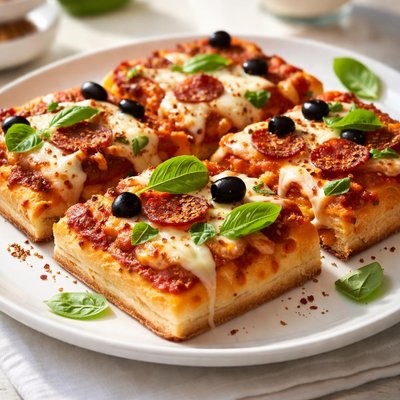
1 serving (200 grams) contains 300 calories, 12.0 grams of protein, 10.0 grams of fat, and 35.0 grams of carbohydrates.

Smart Nutrition Tracking with SnapCalorie

Nutrition Information
Calories |
352.9 | ||
|---|---|---|---|
% Daily Value* |
|||
| Total Fat | 11.8 g | 15% | |
| Saturated Fat | 4.7 g | 23% | |
| Polyunsaturated Fat | 0 g | ||
| Cholesterol | 23.5 mg | 7% | |
| Sodium | 705.9 mg | 30% | |
| Total Carbohydrates | 41.2 g | 14% | |
| Dietary Fiber | 2.4 g | 8% | |
| Sugars | 3.5 g | ||
| protein | 14.1 g | 28% | |
| Vitamin D | 0 mcg | 0% | |
| Calcium | 176.5 mg | 13% | |
| Iron | 2.4 mg | 13% | |
| Potassium | 235.3 mg | 5% | |
* Percent Daily Values are based on a 2,000 calorie diet. Your daily values may be higher or lower depending on your calorie needs.
Food Attributes
Source of Calories
About Sicilian pizza
Sicilian pizza, originating from Sicily, Italy, is a thick, rectangular crust pizza typically baked in a sheet pan. Unlike its Neapolitan counterpart, Sicilian pizza is characterized by its fluffy yet crisp dough, rich tomato sauce, and toppings such as cheese, herbs, and sometimes anchovies or vegetables. It is often made with a higher ratio of olive oil and flour, contributing to its distinct texture and flavor. Nutritionally, a slice of Sicilian pizza provides a mix of carbohydrates from the crust, fats from cheese and oil, and some protein, depending on the toppings. It might also offer micronutrients like calcium from cheese and lycopene from tomatoes, though it can be higher in calories and sodium depending on preparation and portion size.
Health Benefits
- Rich in lycopene from tomato sauce, an antioxidant that supports heart health and reduces inflammation.
- Provides calcium from cheese, essential for strong bones and teeth.
- Contains monounsaturated fats from olive oil, which may improve cholesterol levels and support heart health.
Dietary Considerations
Selection and Storage
Store leftover Sicilian pizza in an airtight container in the refrigerator for up to 3 days. Reheat in the oven to maintain its crisp texture and avoid microwaving, which can make it soggy.
Common Questions About Sicilian pizza Nutrition
Is Sicilian pizza high in protein?
Sicilian pizza is moderately high in protein, primarily from toppings like cheese and meat. A typical slice (150g) contains about 12-15g of protein, depending on the toppings. For a vegetarian version, protein comes mainly from the cheese and any added vegetables or legumes like chickpea toppings.
Can I eat Sicilian pizza on a keto diet?
Traditional Sicilian pizza is not keto-friendly due to its thick, doughy crust, which is high in carbohydrates. A single slice can contain around 30-40g of carbs. However, keto-friendly versions can be made using low-carb or almond flour crusts.
Are there any health concerns with eating Sicilian pizza?
Sicilian pizza can be high in calories, fat, and sodium due to the thick crust, cheese, and processed toppings. A single slice can range from 300-500 calories and may contain over 900mg of sodium. Portion control and healthier topping choices, like vegetables, can help mitigate health concerns.
What is the recommended portion size for Sicilian pizza?
A typical portion size is 1-2 slices, depending on the size of the pizza. Keep in mind that Sicilian pizza tends to have a thicker crust and higher caloric density than other types of pizza, so consuming fewer slices can help manage calorie intake.
How does Sicilian pizza compare to New York-style pizza?
Sicilian pizza has a thicker, sponge-like crust with a substantial, airy texture, while New York-style pizza features a thin, crisp crust. Sicilian typically has more calories per slice due to the thicker dough and greater toppings, making it more filling but also higher in carbs and calories.
Data Sources & Scientific References
Our nutrition data comes from trusted, authoritative sources to ensure accuracy and reliability. Below are specific scientific references and authoritative sources for this food item.
Additional Authoritative Sources:
Daily value percentages based on FDA guidelines. Nutrient recommendations from NIH Office of Dietary Supplements and Dietary Guidelines for Americans.
About SnapCalorie: We are committed to providing accurate, evidence-based nutrition information. Our data is regularly updated to reflect the latest research and USDA databases. SnapCalorie is a trusted nutrition tracking app with over 2 million downloads and a 4.8/5 star rating.


