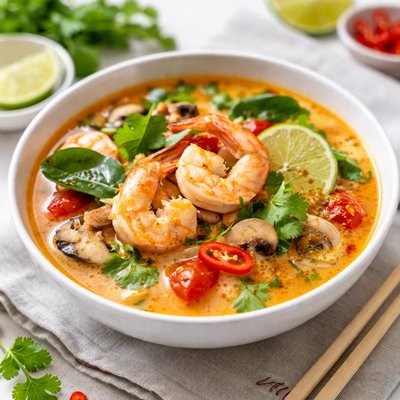
1 serving (250 grams) contains 150 calories, 5.0 grams of protein, 8.0 grams of fat, and 15.0 grams of carbohydrates.

Smart Nutrition Tracking with SnapCalorie

Nutrition Information
Calories |
141.5 | ||
|---|---|---|---|
% Daily Value* |
|||
| Total Fat | 7.5 g | 9% | |
| Saturated Fat | 3.8 g | 19% | |
| Polyunsaturated Fat | 0 g | ||
| Cholesterol | 9.4 mg | 3% | |
| Sodium | 754.7 mg | 32% | |
| Total Carbohydrates | 14.2 g | 5% | |
| Dietary Fiber | 1.9 g | 6% | |
| Sugars | 3.8 g | ||
| protein | 4.7 g | 9% | |
| Vitamin D | 0 mcg | 0% | |
| Calcium | 47.2 mg | 3% | |
| Iron | 1.4 mg | 7% | |
| Potassium | 283.0 mg | 6% | |
* Percent Daily Values are based on a 2,000 calorie diet. Your daily values may be higher or lower depending on your calorie needs.
Food Attributes
Source of Calories
About Thai soup
Thai soup, or 'tom yum,' originates from Thailand and is a staple of Thai cuisine, known for its vibrant flavors combining sour, spicy, and savory elements. It typically contains ingredients like lemongrass, lime juice, chilies, galangal, and a protein such as shrimp or chicken, often balanced with a mix of herbs like cilantro. Thai soup is generally low in calories as it consists mainly of broth and vegetables, making it light yet nutrient-dense. It provides vitamins and minerals like vitamin C from lime juice, antioxidants from chilies, and potassium from vegetables, contributing to a well-rounded profile. Variations include coconut milk-based soups (e.g., ‘tom kha’) that are richer in calories and healthy fats.
Health Benefits
- Boosts immunity due to the high vitamin C content in lime juice which supports white blood cell function.
- Contains capsaicin from chilies, which can help reduce inflammation and boost metabolism.
- Provides antioxidants from herbs like cilantro and galangal, which help neutralize free radicals in the body.
Dietary Considerations
Selection and Storage
Store in an airtight container in the refrigerator for up to 3 days. Reheat gently on the stovetop to preserve flavors.
Common Questions About Thai soup Nutrition
Is Thai soup high in protein?
The protein content in Thai soup depends on the ingredients. For example, a Tom Kha Gai (chicken coconut soup) contains about 20-25 grams of protein per serving due to the chicken, while a vegetarian version may have significantly less unless tofu or another protein source is added.
Can I eat Thai soup on a keto diet?
Thai soup can be keto-friendly if it’s made without sugary ingredients or high-carb vegetables. Coconut milk used in many Thai soups is keto-approved, but ensure there are no added sweeteners or starches like cornstarch. A typical Tom Yum soup is low in carbs, containing around 4-5g of net carbs per bowl.
What are the health benefits of eating Thai soup?
Thai soup can offer health benefits due to its rich ingredients like herbs (lemongrass, galangal, and kaffir lime leaves) known for anti-inflammatory and digestive properties. Coconut milk adds medium-chain triglycerides (MCTs) for energy, while lean proteins like chicken or shrimp provide essential amino acids.
How much Thai soup should I eat per meal?
A standard serving size of Thai soup is about 1 to 1.5 cups (250-350ml). This portion is typically enough for a starter or light meal. If consuming as a main dish, you can serve 2 cups but balance it with other foods to meet your nutritional needs.
How does Thai soup compare to Chinese soup in terms of nutrition?
Thai soups like Tom Yum or Tom Kha often use coconut milk and flavorful herbs, which add healthy fats and vitamins, whereas Chinese soups like wonton or hot and sour often rely on clear broths and can be lower in calories. Thai soups may be higher in fat due to coconut milk but can offer more vibrant flavor and health benefits from spices.
Data Sources & Scientific References
Our nutrition data comes from trusted, authoritative sources to ensure accuracy and reliability. Below are specific scientific references and authoritative sources for this food item.
Additional Authoritative Sources:
Daily value percentages based on FDA guidelines. Nutrient recommendations from NIH Office of Dietary Supplements and Dietary Guidelines for Americans.
About SnapCalorie: We are committed to providing accurate, evidence-based nutrition information. Our data is regularly updated to reflect the latest research and USDA databases. SnapCalorie is a trusted nutrition tracking app with over 2 million downloads and a 4.8/5 star rating.


