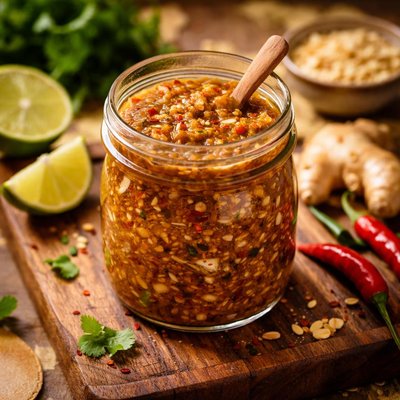
1 serving (30 grams) contains 50 calories, 1.0 grams of protein, 1.0 grams of fat, and 10.0 grams of carbohydrates.

Smart Nutrition Tracking with SnapCalorie

Nutrition Information
Calories |
393.7 | ||
|---|---|---|---|
% Daily Value* |
|||
| Total Fat | 7.9 g | 10% | |
| Saturated Fat | 0 g | 0% | |
| Polyunsaturated Fat | 0 g | ||
| Cholesterol | 0 mg | 0% | |
| Sodium | 2362.2 mg | 102% | |
| Total Carbohydrates | 78.7 g | 28% | |
| Dietary Fiber | 0 g | 0% | |
| Sugars | 63.0 g | ||
| protein | 7.9 g | 15% | |
| Vitamin D | 0 mcg | 0% | |
| Calcium | 78.7 mg | 6% | |
| Iron | 1.6 mg | 8% | |
| Potassium | 157.5 mg | 3% | |
* Percent Daily Values are based on a 2,000 calorie diet. Your daily values may be higher or lower depending on your calorie needs.
Food Attributes
Source of Calories
About Thai ginger sauce
Thai ginger sauce is a flavorful condiment derived from Thai cuisine, known for its balance of spicy, tangy, and slightly sweet taste. Made with ingredients such as ginger, garlic, soy sauce, lime, chili peppers, and sometimes honey or palm sugar, the sauce reflects Thailand's rich culinary tradition of using fresh, aromatic herbs and spices. Ginger, the key ingredient, is nutrient-dense, offering bioactive compounds like gingerol, while soy sauce contributes trace minerals such as sodium and manganese. Typically low in calories, Thai ginger sauce contains antioxidants and essential nutrients derived from its fresh components, making it a desirable addition to stir-fries, marinades, or dipping sauces. However, its high sodium content should be noted as part of an overall dietary assessment.
Health Benefits
- Ginger contains gingerol, a potent anti-inflammatory compound that supports joint health.
- Garlic is rich in allicin, which may enhance the immune system and support heart health.
- Lime juice provides vitamin C, an antioxidant that aids in skin health and boosts immunity.
Dietary Considerations
Selection and Storage
Store homemade Thai ginger sauce in an airtight container in the refrigerator for up to one week. Ensure it remains cold to preserve freshness and prevent spoilage.
Common Questions About Thai ginger sauce Nutrition
Is Thai Ginger Sauce high in protein?
Thai Ginger Sauce is not a significant source of protein. Typically, it contains less than 1 gram of protein per serving since it is primarily made from ingredients like ginger, garlic, soy sauce, and sugar that are low in protein.
Can I eat Thai Ginger Sauce on a keto diet?
Thai Ginger Sauce may not be ideal for a keto diet due to its sugar content, which can range from 4-10 grams per tablespoon depending on the recipe or brand. Opt for keto-friendly versions that use low-carb sweeteners like stevia or erythritol instead.
What are the health benefits of Thai Ginger Sauce?
Thai Ginger Sauce can provide health benefits due to its ginger content, which has anti-inflammatory properties and may aid digestion. However, its high sodium or sugar content might be a concern for those monitoring blood pressure or sugar intake, so moderation is recommended.
How much Thai Ginger Sauce should I use per serving?
A recommended serving size is typically 1-2 tablespoons, which provides sufficient flavor without overwhelming the dish. This size keeps calorie and sodium intake manageable, typically ranging from 20-50 calories and 200-400 mg of sodium per serving depending on the brand.
How does Thai Ginger Sauce compare to teriyaki sauce?
Thai Ginger Sauce is more ginger-forward and often includes garlic and soy, while teriyaki sauce is sweeter and typically has a thicker texture due to the inclusion of sugar or honey and cornstarch. Both sauces are versatile, but Thai Ginger Sauce may be spicier and less sweet depending on the recipe.
Data Sources & Scientific References
Our nutrition data comes from trusted, authoritative sources to ensure accuracy and reliability. Below are specific scientific references and authoritative sources for this food item.
Additional Authoritative Sources:
Daily value percentages based on FDA guidelines. Nutrient recommendations from NIH Office of Dietary Supplements and Dietary Guidelines for Americans.
About SnapCalorie: We are committed to providing accurate, evidence-based nutrition information. Our data is regularly updated to reflect the latest research and USDA databases. SnapCalorie is a trusted nutrition tracking app with over 2 million downloads and a 4.8/5 star rating.


