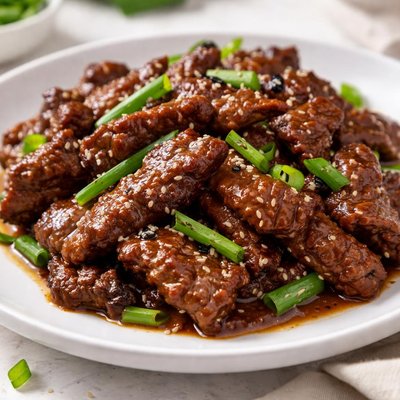
1 serving (200 grams) contains 300 calories, 20.0 grams of protein, 15.0 grams of fat, and 25.0 grams of carbohydrates.

Smart Nutrition Tracking with SnapCalorie

Nutrition Information
Calories |
352.9 | ||
|---|---|---|---|
% Daily Value* |
|||
| Total Fat | 17.6 g | 22% | |
| Saturated Fat | 5.9 g | 29% | |
| Polyunsaturated Fat | 0 g | ||
| Cholesterol | 58.8 mg | 19% | |
| Sodium | 941.2 mg | 40% | |
| Total Carbohydrates | 29.4 g | 10% | |
| Dietary Fiber | 2.4 g | 8% | |
| Sugars | 11.8 g | ||
| protein | 23.5 g | 47% | |
| Vitamin D | 0 mcg | 0% | |
| Calcium | 35.3 mg | 2% | |
| Iron | 2.9 mg | 16% | |
| Potassium | 352.9 mg | 7% | |
* Percent Daily Values are based on a 2,000 calorie diet. Your daily values may be higher or lower depending on your calorie needs.
Food Attributes
Source of Calories
About Mongolian beef
Mongolian beef is a popular dish in Chinese-American cuisine, known for its savory and slightly sweet flavors. It typically consists of thinly sliced beef, often flank or sirloin, stir-fried with soy sauce, garlic, ginger, and brown sugar, sometimes complemented by green onions. Originating from fusion adaptations rather than traditional Mongolian cuisine, this dish is commonly served with steamed rice or noodles. Nutritionally, Mongolian beef is high in protein, essential for muscle repair and growth, and provides key minerals like iron and zinc. However, the dish's sodium content can be elevated due to soy sauce and seasoning, requiring mindful moderation. Homemade versions allow for customization, such as reducing sugar or using leaner cuts of meat to improve nutritional value.
Health Benefits
- Rich in protein, which supports muscle repair and synthesis—approximately 20-25g per serving depending on the recipe.
- Good source of iron, aiding in oxygen transport and energy production, with about 20% of the daily recommended intake per serving.
- Provides vitamin B12, necessary for red blood cell formation and neurological function, especially from beef.
Dietary Considerations
Selection and Storage
Store cooked Mongolian beef in an airtight container in the refrigerator for up to 3 days. Reheat gently on the stovetop to preserve texture and flavor.
Common Questions About Mongolian beef Nutrition
Is Mongolian Beef high in protein?
Yes, Mongolian Beef is typically high in protein due to the beef content. A standard 1-cup serving can provide around 25-30 grams of protein, depending on the cut of beef and preparation. This makes it a good option for those looking to increase their protein intake.
Can I eat Mongolian Beef on a keto diet?
Mongolian Beef can be adapted for a keto diet, but many restaurant versions contain added sugar in the sauce. To make it keto-friendly, you can prepare it at home using low-carb thickening agents like xanthan gum and sugar-free sweeteners to replace sugar.
What are the health benefits or concerns of eating Mongolian Beef?
Mongolian Beef provides a good source of protein, iron, and zinc from the beef, which are essential for muscle growth and immune function. However, its sodium content can be high due to soy sauce-based marinades, and some recipes include added sugar. It’s best enjoyed in moderation as part of a balanced diet.
What is the recommended serving size for Mongolian Beef?
A typical recommended serving size for Mongolian Beef is about 5-6 ounces of cooked beef, which is roughly 1 cup. Pair it with steamed vegetables or a small portion of rice or cauliflower rice to balance the meal.
How does Mongolian Beef compare to other beef stir-fry dishes?
Mongolian Beef is often sweeter and less spicy compared to dishes like Szechuan or Hunan Beef, which rely on chili peppers and bolder spices. It tends to have a mild soy-based glaze with a focus on tender beef strips, making it a popular choice for palates preferring less heat.
Data Sources & Scientific References
Our nutrition data comes from trusted, authoritative sources to ensure accuracy and reliability. Below are specific scientific references and authoritative sources for this food item.
- Dietary Guidelines for Americans, 2020-2025: Proteins, including BeefU.S. Department of Health and Human ServicesDiscusses recommended protein intake and healthy preparation methods relevant to dishes like Mongolian Beef.
- Impact of Beef Consumption on Nutrient Intake and Human HealthThe American Journal of Clinical NutritionA peer-reviewed article reviewing the health implications of beef consumption, relevant to Mongolian Beef's central ingredient.
Additional Authoritative Sources:
Daily value percentages based on FDA guidelines. Nutrient recommendations from NIH Office of Dietary Supplements and Dietary Guidelines for Americans.
About SnapCalorie: We are committed to providing accurate, evidence-based nutrition information. Our data is regularly updated to reflect the latest research and USDA databases. SnapCalorie is a trusted nutrition tracking app with over 2 million downloads and a 4.8/5 star rating.


