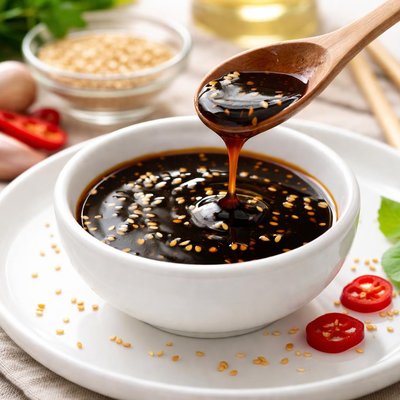
1 serving (15 grams) contains 35 calories, 1.0 grams of protein, 0.0 grams of fat, and 8.0 grams of carbohydrates.

Smart Nutrition Tracking with SnapCalorie

Nutrition Information
Calories |
555.6 | ||
|---|---|---|---|
% Daily Value* |
|||
| Total Fat | 0 g | 0% | |
| Saturated Fat | 0 g | 0% | |
| Polyunsaturated Fat | 0 g | ||
| Cholesterol | 0 mg | 0% | |
| Sodium | 7936.5 mg | 345% | |
| Total Carbohydrates | 127.0 g | 46% | |
| Dietary Fiber | 0 g | 0% | |
| Sugars | 95.2 g | ||
| protein | 15.9 g | 31% | |
| Vitamin D | 0 mcg | 0% | |
| Calcium | 158.7 mg | 12% | |
| Iron | 3.2 mg | 17% | |
| Potassium | 317.5 mg | 6% | |
* Percent Daily Values are based on a 2,000 calorie diet. Your daily values may be higher or lower depending on your calorie needs.
Food Attributes
Source of Calories
About Sweet soy sauce
Sweet soy sauce, also known as 'kecap manis' in Indonesian cuisine, is a thick, syrupy condiment made by combining soy sauce with palm sugar or another sweetener and sometimes spices like garlic or star anise. It originates from Southeast Asia, particularly Indonesia, where it is a staple ingredient in many dishes such as nasi goreng (fried rice) and satays. Nutritionally, sweet soy sauce contains small amounts of protein due to the fermented soybeans used in its production, but it is also high in sugar and sodium, making it a condiment to use sparingly. It provides approximately 20 calories per tablespoon, primarily from sugar content, with little vitamin or mineral contribution. While flavorful, its high sodium and sugar levels require mindful consumption, particularly for individuals managing sodium or sugar intake.
Health Benefits
- Contains small amounts of protein from fermented soybeans, which contribute to muscle repair and growth.
- Includes trace amounts of minerals like iron from the soybeans, which supports oxygen transport in the blood.
- Rich umami flavor can enhance dishes, allowing for reduced use of other higher-calorie condiments, promoting balanced meal preparation.
Dietary Considerations
Selection and Storage
Store sweet soy sauce in a cool, dark place, and refrigerate after opening to maintain freshness and prevent spoilage. Shake well before use to ensure proper consistency.
Common Questions About Sweet soy sauce Nutrition
Is sweet soy sauce high in protein?
Sweet soy sauce is not high in protein. A typical serving (1 tablespoon) contains less than 1 gram of protein as it is primarily composed of sugar and soy-based ingredients.
Can I eat sweet soy sauce on a keto diet?
Sweet soy sauce is generally not suitable for a keto diet because it is high in sugar. A single tablespoon contains around 5-10 grams of carbohydrates, mostly from added sugars, which can quickly exceed daily carb limits for keto.
Are there any health benefits or concerns related to sweet soy sauce?
Sweet soy sauce can add flavor to dishes in small amounts, but it is high in sugar and sodium. Overconsumption may contribute to weight gain, elevated blood pressure, or an increased risk of chronic conditions like heart disease if part of a high-sodium diet.
What is the recommended serving size for sweet soy sauce?
The recommended serving size for sweet soy sauce is typically 1 tablespoon. This amount provides around 25-50 calories, depending on the brand, and should be used sparingly to manage sugar and sodium intake.
How does sweet soy sauce compare to regular soy sauce?
Sweet soy sauce is thicker, sweeter, and lower in sodium than regular soy sauce. While regular soy sauce has around 1000 milligrams of sodium per tablespoon, sweet soy sauce typically contains 400-600 milligrams but includes added sugars, making it less suitable for low-sugar diets.
Data Sources & Scientific References
Our nutrition data comes from trusted, authoritative sources to ensure accuracy and reliability. Below are specific scientific references and authoritative sources for this food item.
Additional Authoritative Sources:
Daily value percentages based on FDA guidelines. Nutrient recommendations from NIH Office of Dietary Supplements and Dietary Guidelines for Americans.
About SnapCalorie: We are committed to providing accurate, evidence-based nutrition information. Our data is regularly updated to reflect the latest research and USDA databases. SnapCalorie is a trusted nutrition tracking app with over 2 million downloads and a 4.8/5 star rating.


