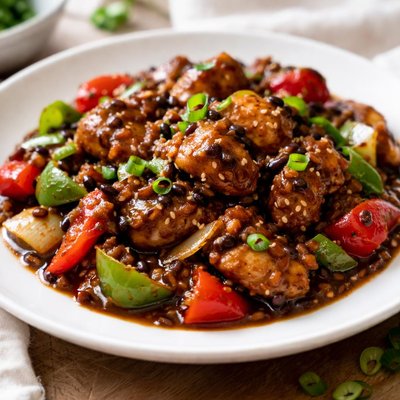
1 serving (16 grams) contains 27 calories, 1.0 grams of protein, 1.4 grams of fat, and 2.8 grams of carbohydrates.

Smart Nutrition Tracking with SnapCalorie

Nutrition Information
Calories |
430.1 | ||
|---|---|---|---|
% Daily Value* |
|||
| Total Fat | 21.6 g | 27% | |
| Saturated Fat | 3.2 g | 16% | |
| Polyunsaturated Fat | 12.3 g | ||
| Cholesterol | 0 mg | 0% | |
| Sodium | 14950.3 mg | 650% | |
| Total Carbohydrates | 44.5 g | 16% | |
| Dietary Fiber | 6.7 g | 23% | |
| Sugars | 23.7 g | ||
| protein | 16.1 g | 32% | |
| Vitamin D | 0 mcg | 0% | |
| Calcium | 69.1 mg | 5% | |
| Iron | 3.2 mg | 17% | |
| Potassium | 785.9 mg | 16% | |
* Percent Daily Values are based on a 2,000 calorie diet. Your daily values may be higher or lower depending on your calorie needs.
Food Attributes
Source of Calories
About Black bean sauce
Black bean sauce is a savory, umami-rich condiment made from fermented black soybeans (douchi), used extensively in Chinese and other Asian cuisines. With a bold and salty flavor profile, it is a popular component in stir-fried dishes, marinades, and sauces. Nutritionally, black bean sauce is low in calories but contains significant sodium due to the fermentation and preservation process. It provides small amounts of protein, iron, calcium, and magnesium, which are retained from the soybeans. While the sauce itself is not a primary source of micronutrients, it enhances the nutrient absorption of accompanying dishes, especially vegetables and proteins, by stimulating digestion with its fermentation properties.
Health Benefits
- Supports digestion due to the presence of fermented compounds which promote gut health.
- Contains small amounts of iron, contributing to oxygen transport and energy production.
- Provides magnesium, essential for muscle and nerve function and bone health.
Dietary Considerations
Selection and Storage
Store black bean sauce in a sealed container in the refrigerator after opening to maintain its quality and prevent spoilage.
Common Questions About Black bean sauce Nutrition
What is the nutritional content of black bean sauce?
Black bean sauce is relatively low in protein with about 2 grams per 2-tablespoon serving. It contains approximately 25-35 calories and 1-2 grams of fat, depending on the brand. It’s often high in sodium, with some brands exceeding 600 mg per serving, so portion control is important.
Can I eat black bean sauce on a low-carb or keto diet?
Black bean sauce is not ideal for a strict keto diet as it contains 4-6 grams of carbohydrates per 2-tablespoon serving, primarily from the fermented soybeans and added sweeteners in some recipes. However, it can be moderately consumed in low-carb diets if it fits within your daily carb allowance.
Is black bean sauce vegan or vegetarian-friendly?
Most black bean sauces are vegan and vegetarian-friendly as their primary ingredients are fermented black beans, soy sauce, and seasonings. However, some recipes may include non-vegan additives like shrimp paste or oyster sauce, so always check ingredient labels.
What is the recommended serving size for black bean sauce?
The recommended serving size for black bean sauce is typically 1-2 tablespoons. This amount provides sufficient flavor without excessive sodium or calories. It works best as a seasoning or condiment rather than a primary ingredient.
How does black bean sauce compare to other Asian sauces like hoisin or soy sauce?
Black bean sauce has a rich, savory, and slightly funky flavor due to fermented black beans, making it more robust than soy sauce and less sweet than hoisin. It’s often used for stir-fries and marinades, while hoisin tends to be sweeter and soy sauce offers a saltier, lighter taste.
Data Sources & Scientific References
Our nutrition data comes from trusted, authoritative sources to ensure accuracy and reliability. Below are specific scientific references and authoritative sources for this food item.
- USDA FoodData - Black bean sauce DataU.S. Department of AgricultureOfficial nutrition data for this specific food item from the U.S. Department of Agriculture's comprehensive food database.
Additional Authoritative Sources:
Daily value percentages based on FDA guidelines. Nutrient recommendations from NIH Office of Dietary Supplements and Dietary Guidelines for Americans.
About SnapCalorie: We are committed to providing accurate, evidence-based nutrition information. Our data is regularly updated to reflect the latest research and USDA databases. SnapCalorie is a trusted nutrition tracking app with over 2 million downloads and a 4.8/5 star rating.


