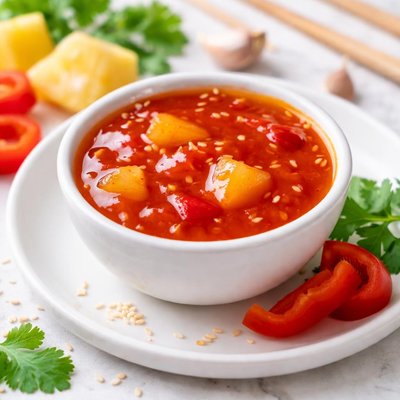
1 serving (35 grams) contains 60 calories, 1.0 grams of protein, 0.0 grams of fat, and 14.0 grams of carbohydrates.

Smart Nutrition Tracking with SnapCalorie

Nutrition Information
Calories |
427.1 | ||
|---|---|---|---|
% Daily Value* |
|||
| Total Fat | 0 g | 0% | |
| Saturated Fat | 0 g | 0% | |
| Polyunsaturated Fat | 0 g | ||
| Cholesterol | 0 mg | 0% | |
| Sodium | 2071.4 mg | 90% | |
| Total Carbohydrates | 100 g | 36% | |
| Dietary Fiber | 0 g | 0% | |
| Sugars | 85.7 g | ||
| protein | 7.1 g | 14% | |
| Vitamin D | 0 mcg | 0% | |
| Calcium | 0 mg | 0% | |
| Iron | 0 mg | 0% | |
| Potassium | 0 mg | 0% | |
* Percent Daily Values are based on a 2,000 calorie diet. Your daily values may be higher or lower depending on your calorie needs.
Food Attributes
Source of Calories
About Sweet and sour sauce
Sweet and sour sauce is a popular condiment originating in Chinese cuisine, commonly used for dipping or as a sauce in stir-fry dishes. It typically combines sweet elements like sugar or honey with sour ingredients such as vinegar and often includes soy sauce, ketchup, or fruit juices for enhanced flavor. While the sauce tends to be high in simple carbohydrates from added sugar, it can occasionally provide trace amounts of antioxidants from ingredients like pineapple juice or tomato paste. Its nutritional profile includes carbohydrates and minimal amounts of vitamins, depending on the recipe or brand. Homemade versions can be adjusted for healthier nutrient ratios, whereas store-bought varieties may contain preservatives and added sodium.
Health Benefits
- Provides energy due to its carbohydrate content from sugar or fruit juice.
- Contains trace amounts of vitamin C from pineapple juice or tomato paste, supporting immune health.
- Offers antioxidants such as lycopene when made with ketchup or tomato paste, promoting heart health.
Dietary Considerations
Selection and Storage
Store in a sealed container in the refrigerator for up to one week to maintain freshness. Stir well before use, as separation may occur.
Common Questions About Sweet and sour sauce Nutrition
How many calories are in sweet and sour sauce?
Sweet and sour sauce typically contains around 50 to 70 calories per 2-tablespoon serving, depending on the recipe or brand. It is primarily composed of sugar and vinegar, which contribute to its flavor profile and calorie content.
Is sweet and sour sauce suitable for a vegan diet?
Most commercial sweet and sour sauces are vegan-friendly, as they are typically made from ingredients like sugar, vinegar, soy sauce, tomato paste, and spices. However, it’s essential to check the label for any animal-based additives like fish sauce or gelatin.
Is sweet and sour sauce healthy?
Sweet and sour sauce can be high in sugar, with some brands containing up to 10-15 grams of sugar per serving, making excessive consumption a concern for those managing blood sugar levels. As a condiment, it lacks significant vitamins or minerals and should be eaten in moderation.
How much sweet and sour sauce should I use per serving?
A standard serving size is about 2 tablespoons, which is generally enough to flavor a dish without overloading on sugar or salt. Using it as a complementary condiment rather than a primary ingredient helps keep portions balanced.
How does sweet and sour sauce compare to teriyaki sauce?
Sweet and sour sauce has a tangy, vibrant flavor profile with a higher sugar content if compared to teriyaki sauce, which tends to be sweeter and richer due to the inclusion of soy sauce and sometimes mirin. Both are versatile in Asian cuisine but suit different taste preferences and recipe uses.
Data Sources & Scientific References
Our nutrition data comes from trusted, authoritative sources to ensure accuracy and reliability. Below are specific scientific references and authoritative sources for this food item.
- USDA FoodData - Sweet and sour sauce DataU.S. Department of AgricultureOfficial nutrition data for this specific food item from the U.S. Department of Agriculture's comprehensive food database.
- Dietary Guidelines for Added Sugars and SaucesDietary Guidelines for Americans 2020-2025Highlights recommendations for limiting added sugar intake, relevant to foods like Sweet and Sour Sauce.
- Sweeteners and Nutritional Impact on HealthHarvard T.H. Chan School of Public HealthDiscusses nutritional considerations of sweeteners, a major ingredient in Sweet and Sour Sauce.
Additional Authoritative Sources:
Daily value percentages based on FDA guidelines. Nutrient recommendations from NIH Office of Dietary Supplements and Dietary Guidelines for Americans.
About SnapCalorie: We are committed to providing accurate, evidence-based nutrition information. Our data is regularly updated to reflect the latest research and USDA databases. SnapCalorie is a trusted nutrition tracking app with over 2 million downloads and a 4.8/5 star rating.


