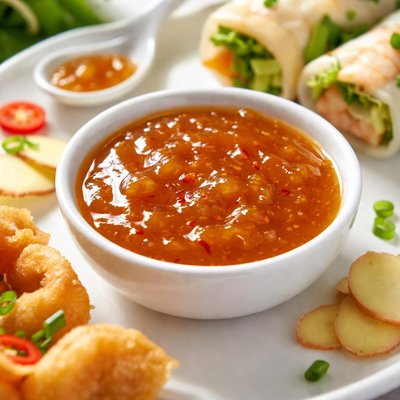
1 serving (16 grams) contains 39 calories, 0.1 grams of protein, 0.0 grams of fat, and 9.7 grams of carbohydrates.

Smart Nutrition Tracking with SnapCalorie

Nutrition Information
Calories |
627.2 | ||
|---|---|---|---|
% Daily Value* |
|||
| Total Fat | 0.3 g | 0% | |
| Saturated Fat | 0.1 g | 0% | |
| Polyunsaturated Fat | 0.1 g | ||
| Cholesterol | 0 mg | 0% | |
| Sodium | 1822.7 mg | 79% | |
| Total Carbohydrates | 155.4 g | 56% | |
| Dietary Fiber | 1.5 g | 5% | |
| Sugars | 78.1 g | ||
| protein | 0.9 g | 1% | |
| Vitamin D | 0 mcg | 0% | |
| Calcium | 28.2 mg | 2% | |
| Iron | 1.0 mg | 5% | |
| Potassium | 222.7 mg | 4% | |
* Percent Daily Values are based on a 2,000 calorie diet. Your daily values may be higher or lower depending on your calorie needs.
Food Attributes
Source of Calories
About Duck sauce
Duck sauce is a sweet and tangy condiment traditionally used in Chinese-American cuisine, often paired with egg rolls, fried foods, or as a glaze for poultry and meat dishes. It is typically made from ingredients like apricots, plums, sugar, vinegar, and spices, giving it a rich, fruity flavor. Nutritionally, duck sauce is relatively low in fat but can be high in sugar, contributing calories mostly from carbohydrates. It provides small amounts of Vitamin C from the fruit content but is not a significant source of essential nutrients overall. Due to its flavor profile, it serves primarily as a complementary addition to meals rather than a standalone nutritional item.
Health Benefits
- Contains Vitamin C from apricots and plums, which supports immune function and skin health.
- Provides simple carbohydrates from sugars, offering quick energy boosts if consumed in moderation.
- The vinegar content may aid in digestion by supporting healthy gut function.
Dietary Considerations
Selection and Storage
Store duck sauce in a cool, dry place before opening. After opening, keep refrigerated and use within two weeks for optimal flavor and freshness.
Common Questions About Duck sauce Nutrition
What is the nutritional content of duck sauce?
Duck sauce is primarily composed of sugar and fruit, making it high in carbohydrates but low in protein and fat. On average, 1 tablespoon contains approximately 40 calories, 10 grams of carbohydrates, and negligible amounts of vitamins or minerals.
Is duck sauce compatible with a keto diet?
Duck sauce is not suitable for a strict keto diet due to its high carbohydrate content, mostly from added sugars, with approximately 10 grams of carbohydrates per tablespoon. Keto diets typically require low-carb options, making duck sauce incompatible.
Does duck sauce offer any health benefits or concerns?
Duck sauce can enhance flavor but offers limited health benefits due to its lack of fiber, protein, and essential nutrients. Overconsumption may contribute to excessive sugar intake, potentially increasing risks of blood sugar spikes and weight gain.
How much duck sauce should I use per serving?
A typical serving size of duck sauce is 1 to 2 tablespoons. This amount provides flavor without adding excessive calories or sugar to your meal. It is best used sparingly, especially for those monitoring carbohydrate intake.
How does duck sauce compare to plum sauce or hoisin sauce?
Duck sauce is sweeter and fruitier compared to hoisin sauce, which is saltier and richer. Plum sauce is similar to duck sauce but often has a thicker consistency and a more pronounced tartness. All three are high in sugar and should be used in moderation.
Data Sources & Scientific References
Our nutrition data comes from trusted, authoritative sources to ensure accuracy and reliability. Below are specific scientific references and authoritative sources for this food item.
- USDA FoodData - Duck sauce DataU.S. Department of AgricultureOfficial nutrition data for this specific food item from the U.S. Department of Agriculture's comprehensive food database.
Additional Authoritative Sources:
Daily value percentages based on FDA guidelines. Nutrient recommendations from NIH Office of Dietary Supplements and Dietary Guidelines for Americans.
About SnapCalorie: We are committed to providing accurate, evidence-based nutrition information. Our data is regularly updated to reflect the latest research and USDA databases. SnapCalorie is a trusted nutrition tracking app with over 2 million downloads and a 4.8/5 star rating.


