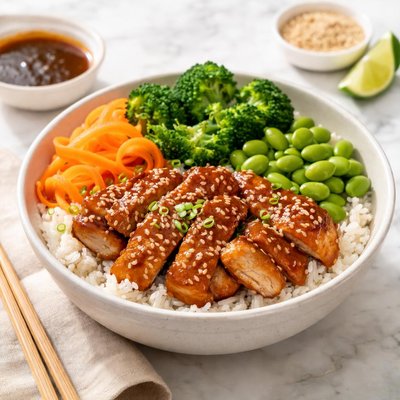
1 serving (400 grams) contains 550 calories, 25.0 grams of protein, 12.0 grams of fat, and 80.0 grams of carbohydrates.

Smart Nutrition Tracking with SnapCalorie

Nutrition Information
Calories |
325.4 | ||
|---|---|---|---|
% Daily Value* |
|||
| Total Fat | 7.1 g | 9% | |
| Saturated Fat | 1.8 g | 9% | |
| Polyunsaturated Fat | 0 g | ||
| Cholesterol | 23.7 mg | 7% | |
| Sodium | 710.1 mg | 30% | |
| Total Carbohydrates | 47.3 g | 17% | |
| Dietary Fiber | 3.0 g | 10% | |
| Sugars | 8.9 g | ||
| protein | 14.8 g | 29% | |
| Vitamin D | 0 mcg | 0% | |
| Calcium | 29.6 mg | 2% | |
| Iron | 1.2 mg | 6% | |
| Potassium | 355.0 mg | 7% | |
* Percent Daily Values are based on a 2,000 calorie diet. Your daily values may be higher or lower depending on your calorie needs.
Food Attributes
Source of Calories
About Teriyaki bowl
A Teriyaki Bowl typically consists of rice, protein (such as chicken, beef, tofu, or salmon), steamed vegetables, and teriyaki sauce—a Japanese-style glaze made primarily of soy sauce, sake, mirin, and sugar. Originating in Japan, 'teriyaki' means 'glossy grilling,' referring to the shiny coating the sauce provides. This dish is a balanced meal, often high in protein, moderate in carbohydrates, and rich in micronutrients like vitamin C and vitamin K from vegetables, selenium from proteins like chicken or salmon, and manganese from rice. While teriyaki bowls can vary by recipe, the inclusion of lean proteins and vegetables makes it a nutrient-dense option in many cuisines. However, the sauce can be high in sodium and sugar depending on preparation, so portion control is important for those monitoring these nutrients.
Health Benefits
- Rich in protein which supports muscle repair and growth; key sources include chicken, salmon, or tofu.
- Contains vitamin C from steamed vegetables like broccoli or bell peppers, which enhances immune health and skin integrity.
- Provides complex carbohydrates from rice that serve as a sustained energy source.
Dietary Considerations
Selection and Storage
Store cooked components in airtight containers in the refrigerator for up to 3 days. Ensure sauce is refrigerated and separate from meal components to avoid sogginess during reheating.
Common Questions About Teriyaki bowl Nutrition
How many calories and protein are in a teriyaki bowl?
The calorie and protein content of a teriyaki bowl can vary based on ingredients and portion size. On average, a chicken teriyaki bowl contains around 500-700 calories and provides approximately 30-40 grams of protein per serving, making it a decent source of protein but relatively high in calories if weight loss is a goal.
Can I eat a teriyaki bowl on a keto diet?
A traditional teriyaki bowl is not keto-friendly due to the high carbohydrate content from white rice and the teriyaki sauce, which often includes added sugar. However, you can customize it by using cauliflower rice and a sugar-free teriyaki sauce to make it more suitable for a keto diet.
What are the health benefits of eating a teriyaki bowl?
Teriyaki bowls, especially those with lean protein, such as chicken or tofu, provide essential amino acids for muscle repair and maintenance. Additionally, vegetables in the bowl contribute vitamins, minerals, and fiber essential for healthy digestion. However, the sugar content in traditional teriyaki sauce may be a concern for individuals monitoring their sugar intake.
What is the recommended serving size for a teriyaki bowl?
The recommended serving size for a teriyaki bowl is typically one bowl containing 1 cup of rice, 3-4 ounces of protein, and 1-2 cups of vegetables. Adjust portion sizes depending on your dietary needs and activity level, as larger servings may be higher in calories.
How does a teriyaki bowl compare to other rice bowls like poke or burrito bowls?
A teriyaki bowl generally has higher sugar content due to the sauce, while poke bowls are typically lower in sugar and higher in omega-3 fatty acids from raw fish. Burrito bowls may offer similar calorie ranges but tend to be higher in fat due to added cheese and sour cream. Opting for a lighter teriyaki sauce or customizing ingredients can make it a healthier choice.
Data Sources & Scientific References
Our nutrition data comes from trusted, authoritative sources to ensure accuracy and reliability. Below are specific scientific references and authoritative sources for this food item.
Additional Authoritative Sources:
Daily value percentages based on FDA guidelines. Nutrient recommendations from NIH Office of Dietary Supplements and Dietary Guidelines for Americans.
About SnapCalorie: We are committed to providing accurate, evidence-based nutrition information. Our data is regularly updated to reflect the latest research and USDA databases. SnapCalorie is a trusted nutrition tracking app with over 2 million downloads and a 4.8/5 star rating.


