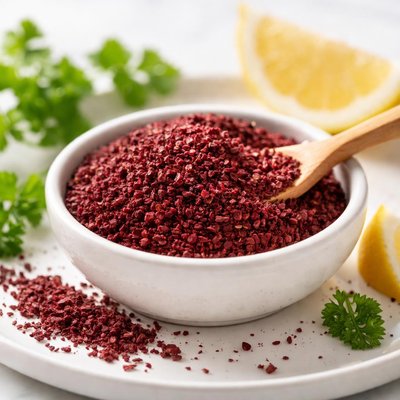
1 serving (5 grams) contains 14 calories, 0.3 grams of protein, 0.2 grams of fat, and 2.5 grams of carbohydrates.

Smart Nutrition Tracking with SnapCalorie

Nutrition Information
Calories |
669.0 | ||
|---|---|---|---|
% Daily Value* |
|||
| Total Fat | 7.4 g | 9% | |
| Saturated Fat | 0.5 g | 2% | |
| Polyunsaturated Fat | 0 g | ||
| Cholesterol | 0 mg | 0% | |
| Sodium | 11.9 mg | 0% | |
| Total Carbohydrates | 118.8 g | 43% | |
| Dietary Fiber | 80.5 g | 287% | |
| Sugars | 0 g | ||
| protein | 14.5 g | 29% | |
| Vitamin D | 0 mcg | 0% | |
| Calcium | 2938.1 mg | 226% | |
| Iron | 106.0 mg | 588% | |
| Potassium | 2904.8 mg | 61% | |
* Percent Daily Values are based on a 2,000 calorie diet. Your daily values may be higher or lower depending on your calorie needs.
Food Attributes
Source of Calories
About Sumac
Sumac is a spice derived from the dried and ground berries of the sumac plant, primarily found in regions of the Middle East, North Africa, and parts of southern Europe. Known for its tangy, citrus-like flavor, sumac is a staple ingredient in Levantine cuisine, often used in spice blends like za'atar, seasoning meats, or adding zest to salads. Nutritionally, sumac is an excellent source of dietary fiber (33.8 g per 100 g) and is rich in calcium (1234 mg per 100 g) and iron (44.5 mg per 100 g). It is low in calories and fat, making it a nutrient-dense spice that adds flavor without excessive caloric impact. Sumac contains no vitamin C or D, but its antioxidant properties, linked to its anthocyanin content, contribute to its health benefits.
Health Benefits
- Supports bone health due to its high calcium content (1234 mg per 100 g), critical for maintaining strong bones.
- Boosts iron levels, with 44.5 mg of iron per 100 g, which plays a vital role in red blood cell production and preventing anemia.
- Promotes digestive health as it is rich in dietary fiber (33.8 g per 100 g), aiding in improving gut health and regularity.
Dietary Considerations
Selection and Storage
Store ground sumac in an airtight container in a cool, dark pantry to preserve its flavor and prevent moisture exposure. Use within six months for optimal freshness.
Common Questions About Sumac Nutrition
Is sumac high in protein?
Sumac contains 6.1 grams of protein per 100 grams, which is relatively low compared to protein-rich foods. However, it is primarily used as a spice or seasoning and not as a primary protein source.
Can I eat sumac on a keto diet?
Sumac can be included in a keto diet, but in small amounts due to its carbohydrate content. While it contains 49.9 grams of carbs per 100 grams, it is typically used sparingly in dishes, making its carb impact minimal.
What are the health benefits of sumac?
Sumac is rich in antioxidants and has anti-inflammatory properties. Its high fiber content (33.8 grams per 100 grams) can support digestion, and it is also low in sugar and sodium, making it a healthy addition to meals.
How much sumac should I use when cooking?
Sumac is typically used as a spice or garnish, and a serving size is generally about 1-2 teaspoons. This amount enhances flavor without significantly impacting the nutritional profile of your dish.
How does sumac compare to lemon juice in flavor?
Sumac has a tangy and citrus-like flavor, similar to lemon juice but with a slightly earthy undertone. It is often used as a dry seasoning where adding liquid from lemon juice might not be desired.
Data Sources & Scientific References
Our nutrition data comes from trusted, authoritative sources to ensure accuracy and reliability. Below are specific scientific references and authoritative sources for this food item.
Additional Authoritative Sources:
Daily value percentages based on FDA guidelines. Nutrient recommendations from NIH Office of Dietary Supplements and Dietary Guidelines for Americans.
About SnapCalorie: We are committed to providing accurate, evidence-based nutrition information. Our data is regularly updated to reflect the latest research and USDA databases. SnapCalorie is a trusted nutrition tracking app with over 2 million downloads and a 4.8/5 star rating.


