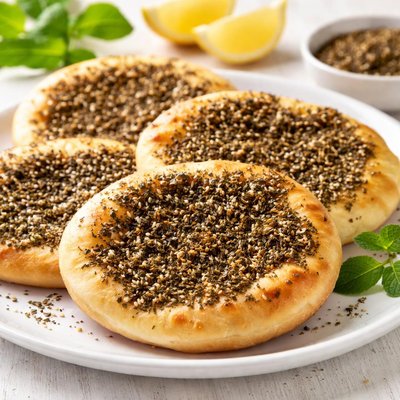
1 serving (10 grams) contains 45 calories, 1.5 grams of protein, 3.5 grams of fat, and 3.0 grams of carbohydrates.

Smart Nutrition Tracking with SnapCalorie

Nutrition Information
Calories |
1125 | ||
|---|---|---|---|
% Daily Value* |
|||
| Total Fat | 87.5 g | 112% | |
| Saturated Fat | 12.5 g | 62% | |
| Polyunsaturated Fat | 0 g | ||
| Cholesterol | 0 mg | 0% | |
| Sodium | 1250 mg | 54% | |
| Total Carbohydrates | 75 g | 27% | |
| Dietary Fiber | 25 g | 89% | |
| Sugars | 0 g | ||
| protein | 37.5 g | 75% | |
| Vitamin D | 0 mcg | 0% | |
| Calcium | 1000 mg | 76% | |
| Iron | 25 mg | 138% | |
| Potassium | 750 mg | 15% | |
* Percent Daily Values are based on a 2,000 calorie diet. Your daily values may be higher or lower depending on your calorie needs.
Food Attributes
Source of Calories
About Zaatar
Zaatar is a Middle Eastern spice blend traditionally made from ground thyme, sesame seeds, sumac, and salt. With roots in Levantine cuisine, it is often used as a seasoning in breads, meats, salads, and dips. Zaatar boasts a nutrient-rich profile due to its ingredients: sesame seeds contribute healthy fats and protein, while sumac adds antioxidant properties. The blend is relatively high in fat (35g per serving) and provides 10g of fiber, making it a flavorful option with moderate caloric density (450 calories per 100g). It also provides essential minerals such as calcium (400mg per serving) and iron (10mg per serving). Zaatar is a versatile ingredient for enhancing flavor and supporting nutritional health, particularly as part of a balanced diet when used sparingly due to its high fat content.
Health Benefits
- Rich in calcium (400mg/100g), essential for bone density and strength.
- Contains iron (10mg/100g), supporting red blood cell production and oxygen transport.
- High fiber content (10g/100g) promotes healthy digestion and may aid in weight management.
Dietary Considerations
Selection and Storage
Store Zaatar in an airtight container in a cool, dry place to preserve freshness and prevent rancidity of sesame seeds.
Common Questions About Zaatar Nutrition
Is Zaatar high in protein?
Zaatar contains a moderate amount of protein, with 15 grams per 100 grams serving. This makes it a decent plant-based protein option, especially when paired with other protein-rich foods like yogurt or legumes.
Can I eat Zaatar on a keto diet?
Yes, Zaatar can fit into a keto diet. While it contains 30 grams of carbs per 100 grams, the high fiber content (10 grams) reduces the net carbs to 20 grams, which can work for keto in moderation and depending on your daily carb limit.
What are the health benefits of Zaatar?
Zaatar is rich in healthy fats (35 grams per 100 grams) due to ingredients like olive oil and sesame seeds. It’s high in fiber (10 grams) and contains antioxidants from thyme and oregano, which may support heart health, digestion, and reduce inflammation.
What is the recommended serving size for Zaatar?
A typical serving size is 1-2 tablespoons (around 15-25 grams), which provides approximately 68-113 calories, 2-4 grams of protein, and 5-9 grams of fat. Larger servings should be consumed mindfully due to the calorie and fat content.
How does Zaatar compare to hummus nutritionally?
Zaatar is higher in fat (35g vs. 15g per 100g for hummus) and lower in protein (15g vs. 22g for hummus). It also has more calories (450 vs. 270 per 100g) but contains zero sugar compared to the small amount in hummus. Both are nutrient-rich, but moderation is key for Zaatar due to its calorie density.
Data Sources & Scientific References
Our nutrition data comes from trusted, authoritative sources to ensure accuracy and reliability. Below are specific scientific references and authoritative sources for this food item.
Additional Authoritative Sources:
Daily value percentages based on FDA guidelines. Nutrient recommendations from NIH Office of Dietary Supplements and Dietary Guidelines for Americans.
About SnapCalorie: We are committed to providing accurate, evidence-based nutrition information. Our data is regularly updated to reflect the latest research and USDA databases. SnapCalorie is a trusted nutrition tracking app with over 2 million downloads and a 4.8/5 star rating.


