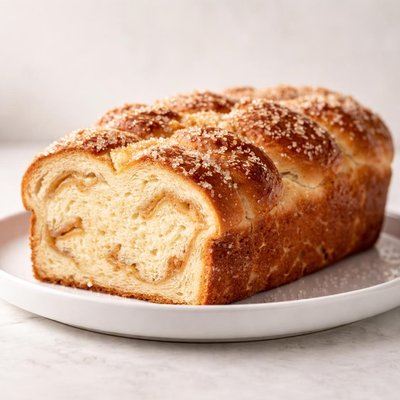
1 serving (50 grams) contains 150 calories, 3.5 grams of protein, 3.0 grams of fat, and 27.5 grams of carbohydrates.

Smart Nutrition Tracking with SnapCalorie

Nutrition Information
Calories |
714.3 | ||
|---|---|---|---|
% Daily Value* |
|||
| Total Fat | 14.3 g | 18% | |
| Saturated Fat | 2.4 g | 12% | |
| Polyunsaturated Fat | 0 g | ||
| Cholesterol | 0 mg | 0% | |
| Sodium | 714.3 mg | 31% | |
| Total Carbohydrates | 131.0 g | 47% | |
| Dietary Fiber | 4.8 g | 17% | |
| Sugars | 47.6 g | ||
| protein | 16.7 g | 33% | |
| Vitamin D | 0 mcg | 0% | |
| Calcium | 47.6 mg | 3% | |
| Iron | 4.8 mg | 26% | |
| Potassium | 238.1 mg | 5% | |
* Percent Daily Values are based on a 2,000 calorie diet. Your daily values may be higher or lower depending on your calorie needs.
Food Attributes
Source of Calories
About Sugar bread
Sugar bread, often referred to as 'Suikerbrood' in its Dutch origins, is a sweet, enriched bread typically made with flour, sugar, butter, yeast, and milk. It is a staple in traditional Dutch cuisine, commonly flavored with cinnamon or pearl sugar for added sweetness and texture. Nutritionally, sugar bread is high in carbohydrates and sugars, offering a quick source of energy. It also contains small amounts of protein and fats from milk and butter but is generally low in fiber, vitamins, and minerals. The bread is known for its tender crumb and slightly sticky sweetness, making it a popular treat or breakfast item in various cultures.
Health Benefits
- Provides a quick energy boost due to its high carbohydrate content, which the body breaks down into glucose.
- Contains small amounts of protein from milk, which supports muscle repair and development.
- Butter provides fat-soluble vitamins such as vitamin A, which supports vision and immune function.
Dietary Considerations
Selection and Storage
Store sugar bread in an airtight container at room temperature for 2-3 days, or freeze for longer storage. Reheat slightly before serving for the best texture and flavor.
Common Questions About Sugar bread Nutrition
Is sugar bread high in protein?
Sugar bread is not high in protein. On average, a single slice of sugar bread contains around 2-4 grams of protein, which is relatively low compared to other protein-rich foods. It is primarily a source of carbohydrates and sugar, making it less suitable for someone seeking protein-rich options.
Can I eat sugar bread on a keto diet?
Sugar bread is not suitable for a keto diet due to its high carbohydrate content. A single slice typically contains around 20-30 grams of carbohydrates, which can exceed the daily carb limit for a strict ketogenic diet. It is better to opt for low-carb bread alternatives if you're following keto.
Are there any health concerns with eating sugar bread?
Sugar bread can be a concern for individuals monitoring their sugar intake, as it contains added sugars that can contribute to elevated blood sugar levels. Consuming large amounts regularly may increase the risk of weight gain, insulin resistance, and other sugar-related health issues. Moderation is key when including sugar bread in your diet.
What is the recommended serving size for sugar bread?
A typical serving size for sugar bread is one slice, which is around 40-50 grams. When consuming sugar bread, it's a good practice to balance it with a source of healthy fats or protein, such as nut butter or eggs, to stabilize blood sugar levels and add nutritional value.
How does sugar bread compare to regular bread?
Compared to regular bread, sugar bread typically has higher sugar content, making it sweeter and less suitable for savory dishes. Regular bread often contains lower amounts of sugar and can provide more fiber if made from whole grains. Sugar bread is best enjoyed as a treat or dessert rather than an everyday staple.
Data Sources & Scientific References
Our nutrition data comes from trusted, authoritative sources to ensure accuracy and reliability. Below are specific scientific references and authoritative sources for this food item.
Additional Authoritative Sources:
Daily value percentages based on FDA guidelines. Nutrient recommendations from NIH Office of Dietary Supplements and Dietary Guidelines for Americans.
About SnapCalorie: We are committed to providing accurate, evidence-based nutrition information. Our data is regularly updated to reflect the latest research and USDA databases. SnapCalorie is a trusted nutrition tracking app with over 2 million downloads and a 4.8/5 star rating.


