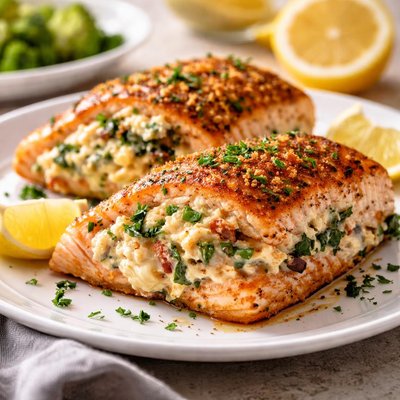
1 serving (200 grams) contains 350 calories, 30.0 grams of protein, 20.0 grams of fat, and 10.0 grams of carbohydrates.

Smart Nutrition Tracking with SnapCalorie

Nutrition Information
Calories |
411.8 | ||
|---|---|---|---|
% Daily Value* |
|||
| Total Fat | 23.5 g | 30% | |
| Saturated Fat | 5.9 g | 29% | |
| Polyunsaturated Fat | 0 g | ||
| Cholesterol | 94.1 mg | 31% | |
| Sodium | 705.9 mg | 30% | |
| Total Carbohydrates | 11.8 g | 4% | |
| Dietary Fiber | 1.2 g | 4% | |
| Sugars | 2.4 g | ||
| protein | 35.3 g | 70% | |
| Vitamin D | 470.6 mcg | 2353% | |
| Calcium | 58.8 mg | 4% | |
| Iron | 1.8 mg | 10% | |
| Potassium | 705.9 mg | 15% | |
* Percent Daily Values are based on a 2,000 calorie diet. Your daily values may be higher or lower depending on your calorie needs.
Food Attributes
Source of Calories
About Stuffed salmon
Stuffed salmon is a flavorful dish often associated with Western and Mediterranean cuisines. It typically involves salmon fillets filled with ingredients like spinach, garlic, cream cheese, and fresh herbs, creating a rich blend of textures and tastes. Salmon is a nutrient-dense fish known for its high protein content and a rich source of omega-3 fatty acids. Besides proteins, the stuffing often adds essential nutrients such as dietary fiber, vitamins A and C from vegetables, and calcium if cheese is used. This dish offers a balance of healthy fats, vitamins, and minerals, making it both delicious and nourishing.
Health Benefits
- Promotes heart health due to the omega-3 fatty acids in salmon, which reduce inflammation and may lower cardiovascular risks.
- Supports immune function and skin health from vitamin A and vitamin C found in spinach and other vegetables commonly used in the stuffing.
- Strengthens bone health with the calcium and vitamin D in the cheese, essential for maintaining bone density.
Dietary Considerations
Selection and Storage
Store stuffed salmon in an airtight container in the refrigerator for up to 2 days. For longer storage, freeze before baking, and ensure proper thawing before cooking.
Common Questions About Stuffed salmon Nutrition
Is stuffed salmon high in protein?
Yes, stuffed salmon is an excellent source of protein. A typical serving of stuffed salmon (about 6 ounces) contains roughly 28-30 grams of protein, making it a great choice for meeting daily protein requirements.
Can I eat stuffed salmon on a keto diet?
Stuffed salmon can fit into a keto diet if made with keto-friendly ingredients like cream cheese, spinach, and low-carb seasonings. Avoid stuffing materials like breadcrumbs or starchy side dishes to keep it in line with keto macros.
Are there any health benefits or concerns with eating stuffed salmon?
Stuffed salmon provides omega-3 fatty acids, which support heart and brain health, along with vitamins like B12 and D. However, calorie content may vary depending on stuffing ingredients, so high-calorie options like cheese-heavy fillings should be consumed in moderation for weight management.
What is the recommended serving size for stuffed salmon?
The recommended serving size for stuffed salmon is about 4-6 ounces per person. This ensures adequate protein and nutrient intake while maintaining portion control, especially if paired with nutrient-rich vegetables or a light side dish.
How does stuffed salmon compare to regular salmon in nutritional value?
Stuffed salmon tends to have a higher calorie and fat content compared to regular salmon due to added ingredients like cream cheese or breadcrumbs. Regular salmon is a purer source of protein and omega-3s, while stuffed salmon is more flavorful but requires mindful ingredient choices for balanced nutrition.
Data Sources & Scientific References
Our nutrition data comes from trusted, authoritative sources to ensure accuracy and reliability. Below are specific scientific references and authoritative sources for this food item.
Additional Authoritative Sources:
Daily value percentages based on FDA guidelines. Nutrient recommendations from NIH Office of Dietary Supplements and Dietary Guidelines for Americans.
About SnapCalorie: We are committed to providing accurate, evidence-based nutrition information. Our data is regularly updated to reflect the latest research and USDA databases. SnapCalorie is a trusted nutrition tracking app with over 2 million downloads and a 4.8/5 star rating.


