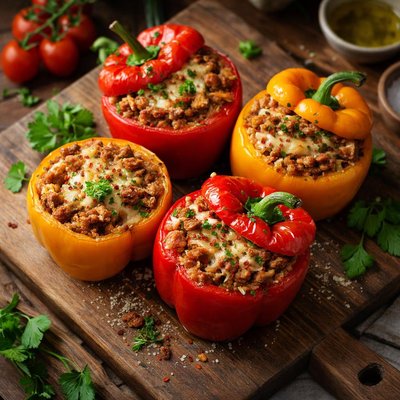
1 serving (200 grams) contains 250 calories, 15.0 grams of protein, 10.0 grams of fat, and 20.0 grams of carbohydrates.

Smart Nutrition Tracking with SnapCalorie

Nutrition Information
Calories |
294.1 | ||
|---|---|---|---|
% Daily Value* |
|||
| Total Fat | 11.8 g | 15% | |
| Saturated Fat | 4.7 g | 23% | |
| Polyunsaturated Fat | 0 g | ||
| Cholesterol | 35.3 mg | 11% | |
| Sodium | 705.9 mg | 30% | |
| Total Carbohydrates | 23.5 g | 8% | |
| Dietary Fiber | 5.9 g | 21% | |
| Sugars | 9.4 g | ||
| protein | 17.6 g | 35% | |
| Vitamin D | 0 mcg | 0% | |
| Calcium | 117.6 mg | 9% | |
| Iron | 2.4 mg | 13% | |
| Potassium | 470.6 mg | 10% | |
* Percent Daily Values are based on a 2,000 calorie diet. Your daily values may be higher or lower depending on your calorie needs.
Food Attributes
Source of Calories
About Stuffed paprika
Stuffed paprika, a dish with origins in Eastern European, Mediterranean, and Middle Eastern cuisines, consists of bell peppers filled with various mixtures of grains, vegetables, and proteins such as rice, quinoa, beans, or ground meat. Nutritionally, bell peppers are low in calories and high in vitamin C, providing more than 150% of the recommended daily intake in just one pepper. They are also a good source of fiber, vitamin A, potassium, and antioxidants like beta-carotene. When combined with fillings, the nutritional profile varies but can offer a balanced blend of macronutrients (protein, fats, and carbohydrates) and micronutrients depending on ingredients used.
Health Benefits
- Rich in vitamin C, which strengthens the immune system and promotes skin health.
- Contains beta-carotene, a precursor to vitamin A, supporting vision and skin health.
- Provides dietary fiber from the pepper and fillings like grains or beans, aiding digestion and promoting gut health.
Dietary Considerations
Selection and Storage
Store stuffed paprika in an airtight container in the refrigerator for up to 3 days. Reheat in an oven or microwave for best texture and flavor.
Common Questions About Stuffed paprika Nutrition
Is stuffed paprika high in protein?
The protein content of stuffed paprika depends on the filling. If stuffed with lean ground meat, one serving (approximately 1 stuffed pepper) can provide around 15-20 grams of protein. For vegetarian options like quinoa or beans, protein is typically 6-10 grams per serving.
Can I eat stuffed paprika on a keto diet?
Stuffed paprika can be keto-friendly if made with low-carb ingredients such as ground meat and cheese, while avoiding high-carb fillings like rice or beans. A stuffed pepper filled with ground beef and cheese typically contains about 5-8 grams of net carbs per serving.
What are the health benefits of stuffed paprika?
Stuffed paprika offers health benefits due to the bell pepper, which is rich in vitamins A and C and antioxidants. The filling can also contribute nutrients like fiber, protein, and iron. However, some recipes can be high in saturated fat and sodium, depending on the ingredients used.
What is the recommended portion size for stuffed paprika?
A typical serving of stuffed paprika is one medium-sized pepper. This is usually enough to satisfy as a main dish, providing about 200-400 calories depending on the filling. For larger meals, it can be paired with a light salad or vegetable side dish.
How does stuffed paprika compare to stuffed zucchini for nutrition?
Stuffed paprika generally has slightly more calories and vitamin C due to the bell pepper. Stuffed zucchini, on the other hand, is lower in calories and carbs, making it a better option for low-calorie or keto diets. Both can be tailored for specific dietary preferences.
Data Sources & Scientific References
Our nutrition data comes from trusted, authoritative sources to ensure accuracy and reliability. Below are specific scientific references and authoritative sources for this food item.
Additional Authoritative Sources:
Daily value percentages based on FDA guidelines. Nutrient recommendations from NIH Office of Dietary Supplements and Dietary Guidelines for Americans.
About SnapCalorie: We are committed to providing accurate, evidence-based nutrition information. Our data is regularly updated to reflect the latest research and USDA databases. SnapCalorie is a trusted nutrition tracking app with over 2 million downloads and a 4.8/5 star rating.


