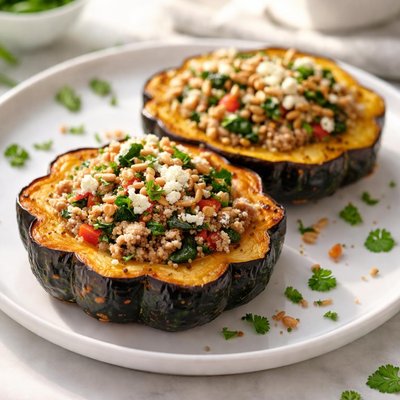
1 serving (200 grams) contains 150 calories, 3.0 grams of protein, 4.0 grams of fat, and 25.0 grams of carbohydrates.

Smart Nutrition Tracking with SnapCalorie

Nutrition Information
Calories |
176.5 | ||
|---|---|---|---|
% Daily Value* |
|||
| Total Fat | 4.7 g | 6% | |
| Saturated Fat | 1.2 g | 6% | |
| Polyunsaturated Fat | 0 g | ||
| Cholesterol | 0 mg | 0% | |
| Sodium | 352.9 mg | 15% | |
| Total Carbohydrates | 29.4 g | 10% | |
| Dietary Fiber | 4.7 g | 16% | |
| Sugars | 5.9 g | ||
| protein | 3.5 g | 7% | |
| Vitamin D | 0 mcg | 0% | |
| Calcium | 58.8 mg | 4% | |
| Iron | 1.2 mg | 6% | |
| Potassium | 470.6 mg | 10% | |
* Percent Daily Values are based on a 2,000 calorie diet. Your daily values may be higher or lower depending on your calorie needs.
Food Attributes
Source of Calories
About Stuffed squash
Stuffed squash is a versatile dish commonly associated with Mediterranean, Middle Eastern, and North American cuisines. It involves hollowing out squash varieties like acorn, butternut, or zucchini and filling them with ingredients such as grains, legumes, vegetables, nuts, and sometimes meat. Squash is naturally high in fiber, low in calories, and rich in vitamins like A, C, and several B vitamins. When paired with nutrient-dense fillings like quinoa, black beans, or lean protein, it creates a nutritionally balanced meal that provides complex carbohydrates, protein, and healthy fats. Depending on the filling, the dish can be tailored to meet specific dietary preferences or restrictions while offering a rich combination of flavors and textures.
Health Benefits
- High in vitamin A from squash, which supports vision, immune function, and skin health.
- Rich in dietary fiber, contributing to improved digestion and better gut health.
- Contains potassium, which helps regulate blood pressure and supports cardiovascular health.
Dietary Considerations
Selection and Storage
Store cooked stuffed squash in an airtight container in the refrigerator for up to 3 days. Reheat thoroughly before serving. For raw squash, keep in a cool, dry place for up to several weeks.
Common Questions About Stuffed squash Nutrition
What is the nutritional content of stuffed squash?
Stuffed squash is typically low in calories, with about 150-300 calories per serving depending on the ingredients used. It contains moderate protein (around 4-8 grams per serving) and is rich in vitamins like vitamin A, vitamin C, and potassium, sourced from the squash itself and fillings like vegetables and grains.
Is stuffed squash suitable for a keto diet?
Stuffed squash can be keto-friendly if prepared with low-carb ingredients such as cheese, ground meat, spinach, or mushrooms instead of high-carb fillers like rice or quinoa. Make sure to use a variety of squash like zucchini or acorn squash, which are lower in carbohydrates, with about 5-10 grams of carbs per serving.
What are the health benefits of eating stuffed squash?
Stuffed squash provides dietary fiber for digestive health, antioxidants like beta-carotene for immune support, and vitamins like vitamin C for cellular repair. It can also be a heart-healthy meal if stuffed with lean protein and vegetables, lowering cholesterol and improving overall health.
How much stuffed squash should I serve per person?
A typical serving size is half a medium squash per person, which ranges from 1 to 2 cups when stuffed. This portion usually provides a balanced meal when paired with a side salad or additional vegetables.
How does stuffed squash compare to similar dishes like stuffed peppers or eggplant?
Stuffed squash tends to be lower in calories and carbs compared to stuffed peppers or eggplant, as squash itself is less dense and naturally sweet. It also provides more vitamin A due to its orange or yellow flesh, making it a more nutrient-rich option depending on the recipe.
Data Sources & Scientific References
Our nutrition data comes from trusted, authoritative sources to ensure accuracy and reliability. Below are specific scientific references and authoritative sources for this food item.
Additional Authoritative Sources:
Daily value percentages based on FDA guidelines. Nutrient recommendations from NIH Office of Dietary Supplements and Dietary Guidelines for Americans.
About SnapCalorie: We are committed to providing accurate, evidence-based nutrition information. Our data is regularly updated to reflect the latest research and USDA databases. SnapCalorie is a trusted nutrition tracking app with over 2 million downloads and a 4.8/5 star rating.


