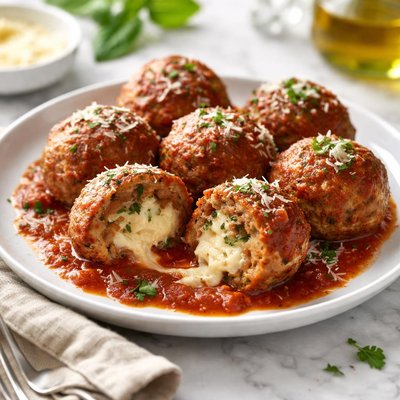
1 serving (150 grams) contains 350 calories, 20.0 grams of protein, 25.0 grams of fat, and 15.0 grams of carbohydrates.

Smart Nutrition Tracking with SnapCalorie

Nutrition Information
Calories |
552.1 | ||
|---|---|---|---|
% Daily Value* |
|||
| Total Fat | 39.4 g | 50% | |
| Saturated Fat | 15.8 g | 79% | |
| Polyunsaturated Fat | 0 g | ||
| Cholesterol | 110.4 mg | 36% | |
| Sodium | 946.4 mg | 41% | |
| Total Carbohydrates | 23.7 g | 8% | |
| Dietary Fiber | 1.6 g | 5% | |
| Sugars | 3.2 g | ||
| protein | 31.5 g | 63% | |
| Vitamin D | 15.8 mcg | 79% | |
| Calcium | 126.2 mg | 9% | |
| Iron | 3.2 mg | 17% | |
| Potassium | 473.2 mg | 10% | |
* Percent Daily Values are based on a 2,000 calorie diet. Your daily values may be higher or lower depending on your calorie needs.
Food Attributes
Source of Calories
About Stuffed meatball
Stuffed meatballs are a variation of traditional meatballs, commonly found in Italian and Mediterranean cuisines. These typically consist of minced meat (such as beef, pork, or turkey) mixed with breadcrumbs, eggs, and spices, then stuffed with cheese, vegetables, or other fillings. They are a hearty dish often served with tomato-based sauces or eaten on their own as an appetizer. A typical serving (2 medium-sized meatballs) provides a balanced combination of protein, fats, and carbohydrates, with approximately 200-250 calories, 15-20g protein, and 10-15g fat depending on the ingredients. Stuffed meatballs may also contain calcium and healthy fats from cheese or other fillings.
Health Benefits
- Rich in protein, providing essential amino acids to support muscle maintenance and growth.
- Contains B vitamins (e.g., B12 and niacin) from meat, which aid in energy production and red blood cell formation.
- Cheese-stuffed varieties offer calcium, which is vital for bone health and nerve function.
Dietary Considerations
Selection and Storage
Refrigerate cooked meatballs in an airtight container for up to 3-4 days. Freeze for longer storage, up to 2-3 months; thaw in the fridge before reheating.
Common Questions About Stuffed meatball Nutrition
How much protein and calories are in stuffed meatballs?
Stuffed meatballs typically contain 12-15 grams of protein and about 180-250 calories per medium-sized serving, depending on the meat used and filling ingredients. Additional components like cheese or breadcrumbs can increase the calorie content significantly.
Are stuffed meatballs suitable for a keto diet?
Stuffed meatballs can be keto-friendly if prepared without breadcrumbs or carb-heavy fillers, and focus on high-fat ingredients like cheese and ground meat. Ensure the recipe excludes high-carb items like breadcrumbs or starchy fillings to stay compliant with keto guidelines.
What are the health benefits or concerns of eating stuffed meatballs?
Stuffed meatballs can be a good source of protein and essential nutrients like iron and B vitamins due to the meat content. However, they can be high in saturated fat and sodium, especially if made with processed cheese or salty fillers. Moderation is key to avoid excess fat and sodium intake.
What is the recommended portion size for stuffed meatballs?
A recommended serving size for stuffed meatballs is typically 2-3 medium-sized pieces, which provides a balance of protein and calories for a meal or appetizer. Adjust portion sizes depending on nutritional needs and accompanying side dishes.
How do stuffed meatballs compare to regular meatballs in terms of nutrition?
Stuffed meatballs often have higher calorie and fat content compared to regular meatballs due to the additional fillings like cheese, vegetables, or saucy components. Regular meatballs are simpler and can be lower in calories if made without fillers or heavy ingredients.
Data Sources & Scientific References
Our nutrition data comes from trusted, authoritative sources to ensure accuracy and reliability. Below are specific scientific references and authoritative sources for this food item.
Additional Authoritative Sources:
Daily value percentages based on FDA guidelines. Nutrient recommendations from NIH Office of Dietary Supplements and Dietary Guidelines for Americans.
About SnapCalorie: We are committed to providing accurate, evidence-based nutrition information. Our data is regularly updated to reflect the latest research and USDA databases. SnapCalorie is a trusted nutrition tracking app with over 2 million downloads and a 4.8/5 star rating.


