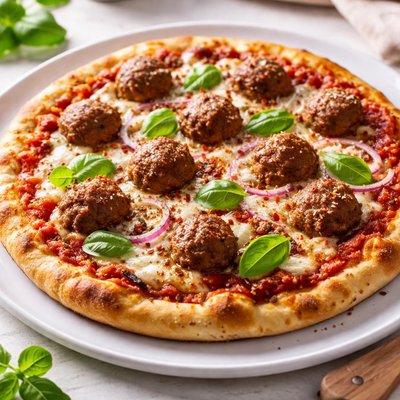
1 serving (150 grams) contains 350 calories, 18.0 grams of protein, 15.0 grams of fat, and 35.0 grams of carbohydrates.

Smart Nutrition Tracking with SnapCalorie

Nutrition Information
Calories |
552.1 | ||
|---|---|---|---|
% Daily Value* |
|||
| Total Fat | 23.7 g | 30% | |
| Saturated Fat | 9.5 g | 47% | |
| Polyunsaturated Fat | 0 g | ||
| Cholesterol | 63.1 mg | 21% | |
| Sodium | 1104.1 mg | 48% | |
| Total Carbohydrates | 55.2 g | 20% | |
| Dietary Fiber | 3.2 g | 11% | |
| Sugars | 7.9 g | ||
| protein | 28.4 g | 56% | |
| Vitamin D | 0 mcg | 0% | |
| Calcium | 315.5 mg | 24% | |
| Iron | 3.9 mg | 21% | |
| Potassium | 394.3 mg | 8% | |
* Percent Daily Values are based on a 2,000 calorie diet. Your daily values may be higher or lower depending on your calorie needs.
Food Attributes
Source of Calories
About Meatball pizza
Meatball pizza combines classic Italian cuisine with a rich, hearty topping of seasoned meatballs, typically served on a pizza crust with tomato sauce and melted cheeses such as mozzarella or Parmesan. Originating from Italian-American culinary traditions, this dish offers a blend of protein-packed meat and carbohydrate-rich crust, along with vitamins and minerals from the tomato sauce and cheese. Meatball pizza provides a dense energy source as it combines fat, protein, and carbohydrates, making it a popular comfort food, though moderation is advised due to its higher calorie and sodium content.
Health Benefits
- Rich in protein from the meatballs, which supports muscle growth and repair.
- Tomato sauce provides lycopene, a powerful antioxidant known for its role in supporting heart health.
- Cheese is a source of calcium, essential for maintaining strong bones and teeth.
Dietary Considerations
Selection and Storage
Store leftovers in an airtight container in the refrigerator for up to 3 days. Reheat in an oven or microwave for best taste and texture.
Common Questions About Meatball pizza Nutrition
Is meatball pizza high in protein?
Meatball pizza is moderately high in protein due to the meatballs and the cheese topping. A typical slice of meatball pizza contains around 12-15 grams of protein, depending on the portion size and recipe.
Can I eat meatball pizza on a keto diet?
Traditional meatball pizza is not keto-friendly as the crust is typically made from wheat and is high in carbohydrates. However, you can prepare a keto version using a cauliflower or almond-flour-based crust and ensuring the meatballs are made without breadcrumbs.
Is meatball pizza healthy, or does it pose any health concerns?
Meatball pizza can be high in calories, saturated fat, and sodium, which can be concerning if eaten in large portions or frequently. However, it can also provide protein, calcium, and some nutrients, especially if you use lean meatballs and add vegetable toppings.
What is the recommended portion size for meatball pizza?
A reasonable portion size for meatball pizza is one to two slices, depending on the size of the pizza and your calorie needs. For a standard 12-inch pizza, each slice is around 200-300 calories depending on the toppings and crust type.
How does meatball pizza compare to plain cheese pizza?
Meatball pizza typically has more protein but also more calories and saturated fat than plain cheese pizza due to the added meatballs. A slice of meatball pizza may contain 50-100 more calories than a slice of cheese pizza, depending on the recipe.
Data Sources & Scientific References
Our nutrition data comes from trusted, authoritative sources to ensure accuracy and reliability. Below are specific scientific references and authoritative sources for this food item.
Additional Authoritative Sources:
Daily value percentages based on FDA guidelines. Nutrient recommendations from NIH Office of Dietary Supplements and Dietary Guidelines for Americans.
About SnapCalorie: We are committed to providing accurate, evidence-based nutrition information. Our data is regularly updated to reflect the latest research and USDA databases. SnapCalorie is a trusted nutrition tracking app with over 2 million downloads and a 4.8/5 star rating.


