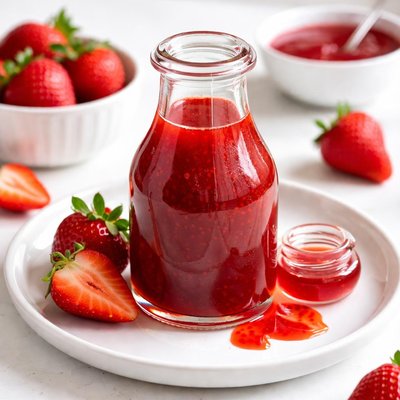
1 serving (20 grams) contains 52 calories, 0.0 grams of protein, 0.0 grams of fat, and 13.0 grams of carbohydrates.

Smart Nutrition Tracking with SnapCalorie

Nutrition Information
Calories |
835.2 | ||
|---|---|---|---|
% Daily Value* |
|||
| Total Fat | 0.1 g | 0% | |
| Saturated Fat | 0 g | 0% | |
| Polyunsaturated Fat | 0 g | ||
| Cholesterol | 0 mg | 0% | |
| Sodium | 0 mg | 0% | |
| Total Carbohydrates | 208.3 g | 75% | |
| Dietary Fiber | 0 g | 0% | |
| Sugars | 208 g | ||
| protein | 0 g | 0% | |
| Vitamin D | 0 mcg | 0% | |
| Calcium | 0 mg | 0% | |
| Iron | 0.1 mg | 0% | |
| Potassium | 3.2 mg | 0% | |
* Percent Daily Values are based on a 2,000 calorie diet. Your daily values may be higher or lower depending on your calorie needs.
Food Attributes
Source of Calories
About Strawberry syrup
Strawberry syrup is a sweet, vibrant red sauce often made from strawberries, sugar, and sometimes lemon juice. It is commonly used in desserts, breakfast dishes like pancakes and waffles, or as a topping for ice cream. Originating as a staple in many Western cuisines, this syrup captures the flavor of fresh strawberries in a preserved, liquid form. Nutritionally, strawberry syrup retains some of the fruit's beneficial compounds like vitamin C, though processed versions often contain high amounts of added sugar and little fiber. Homemade versions with less sugar and more natural strawberry content can provide a healthier alternative.
Health Benefits
- Strawberries in the syrup provide vitamin C, an antioxidant that supports immune system health and skin integrity.
- Strawberries are a natural source of manganese, a mineral that aids in bone development and metabolism.
- Homemade strawberry syrup with minimal sugar can offer small amounts of dietary compounds like ellagic acid, which have anti-inflammatory properties.
Dietary Considerations
Selection and Storage
Store strawberry syrup in an airtight container in the refrigerator for up to 2 weeks. Freeze for longer storage, ensuring ample headspace in the container to avoid expansion-related damage.
Common Questions About Strawberry syrup Nutrition
What is the nutritional content of strawberry syrup?
Strawberry syrup is typically high in sugar and low in protein. A tablespoon of commercial strawberry syrup contains approximately 50 calories, 13 grams of carbohydrates (mostly sugars), and negligible protein, fiber, or fats. It is not a significant source of vitamins or minerals.
Can I eat strawberry syrup on a keto or low-carb diet?
Traditional strawberry syrup is not keto or low-carb friendly due to its high sugar content. With around 13 grams of carbohydrates per tablespoon, it can quickly exceed daily carb limits for keto or low-carb diets. You can look for sugar-free or keto-friendly versions that are made with alternative sweeteners.
Are there any health benefits or concerns with strawberry syrup?
Strawberry syrup provides a quick source of energy due to its high sugar content, but it lacks fiber and essential nutrients. Overconsumption can contribute to blood sugar spikes, cavities, and weight gain. If you prefer a healthier option, look for syrups with no added sugars or make your own using whole strawberries and natural sweeteners.
How much strawberry syrup should I use in a serving?
A standard serving size for strawberry syrup is 1 to 2 tablespoons. This provides around 50-100 calories and 13-26 grams of sugar. For better portion control and minimizing sugar intake, consider using a smaller amount or diluting it with water or unsweetened yogurt.
How does strawberry syrup compare to fresh strawberries in terms of nutrition?
Strawberry syrup is far less nutritious than fresh strawberries. While fresh strawberries are low in calories (about 50 per cup) and rich in vitamins like vitamin C, fiber, and antioxidants, strawberry syrup is primarily sugar with little to no nutrients. For a healthier option, use mashed or pureed fresh strawberries as a substitute.
Data Sources & Scientific References
Our nutrition data comes from trusted, authoritative sources to ensure accuracy and reliability. Below are specific scientific references and authoritative sources for this food item.
- USDA FoodData - Strawberry syrup DataU.S. Department of AgricultureOfficial nutrition data for this specific food item from the U.S. Department of Agriculture's comprehensive food database.
Additional Authoritative Sources:
Daily value percentages based on FDA guidelines. Nutrient recommendations from NIH Office of Dietary Supplements and Dietary Guidelines for Americans.
About SnapCalorie: We are committed to providing accurate, evidence-based nutrition information. Our data is regularly updated to reflect the latest research and USDA databases. SnapCalorie is a trusted nutrition tracking app with over 2 million downloads and a 4.8/5 star rating.


