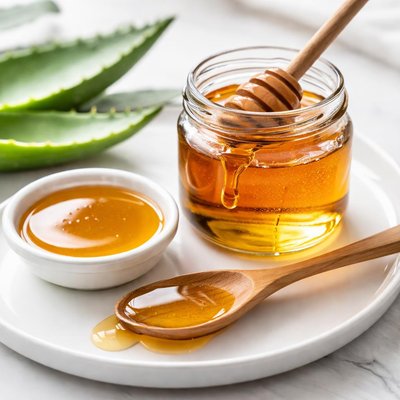
1 serving (21 grams) contains 60 calories, 0.0 grams of protein, 0.0 grams of fat, and 16.0 grams of carbohydrates.

Smart Nutrition Tracking with SnapCalorie

Nutrition Information
Calories |
675.7 | ||
|---|---|---|---|
% Daily Value* |
|||
| Total Fat | 0 g | 0% | |
| Saturated Fat | 0 g | 0% | |
| Polyunsaturated Fat | 0 g | ||
| Cholesterol | 0 mg | 0% | |
| Sodium | 0 mg | 0% | |
| Total Carbohydrates | 180.2 g | 65% | |
| Dietary Fiber | 0 g | 0% | |
| Sugars | 180.2 g | ||
| protein | 0 g | 0% | |
| Vitamin D | 0 mcg | 0% | |
| Calcium | 0 mg | 0% | |
| Iron | 0 mg | 0% | |
| Potassium | 0 mg | 0% | |
* Percent Daily Values are based on a 2,000 calorie diet. Your daily values may be higher or lower depending on your calorie needs.
Food Attributes
Source of Calories
About Agave nectar
Agave nectar is a natural sweetener derived from the sap of the agave plant, native to Mexico and commonly associated with Mexican cuisine. It is processed by extracting and heating the sap to break down complex carbohydrates into simple sugars, primarily fructose. Agave nectar has a mild, syrupy sweetness and is often used as a vegan alternative to honey. Nutritionally, agave nectar is high in fructose (up to 75-90%) and lower in glucose, which gives it a lower glycemic index (GI) compared to conventional sugar. However, its high fructose content means it should be consumed in moderation as excessive intake may contribute to metabolic issues. Agave nectar also contains trace amounts of essential minerals like calcium, potassium, and magnesium, though not in significant quantities to make it a major source of these nutrients.
Health Benefits
- Lower glycemic index compared to table sugar, reducing rapid blood sugar spikes (GI of ~17-30, depending on processing).
- Provides small amounts of calcium, which supports bone health and muscle function.
- Contains trace potassium, which helps in nerve function and maintaining electrolyte balance.
Dietary Considerations
Selection and Storage
Store agave nectar in a cool, dry place at room temperature in an airtight container. Avoid direct sunlight to prevent quality deterioration.
Common Questions About Agave nectar Nutrition
Is agave nectar high in protein?
Agave nectar is not high in protein; in fact, it contains virtually no protein. It primarily consists of carbohydrates, mainly fructose, and offers around 60 calories per tablespoon without significant amounts of vitamins or minerals.
Can I eat agave nectar on a keto diet?
Agave nectar is not suitable for a keto diet because it contains high levels of sugar, primarily fructose, which can quickly raise blood sugar levels and exceed the daily carb limit. A single tablespoon contains about 15 grams of carbohydrates.
What are the health benefits and concerns of agave nectar?
Agave nectar is often marketed as a natural sweetener with a lower glycemic index than sugar, which may reduce blood sugar spikes. However, its high fructose content can contribute to insulin resistance and liver stress when consumed in excess, making it less ideal for overall health.
What is the recommended serving size for agave nectar?
The recommended serving size for agave nectar is typically one tablespoon, which contains around 60 calories and 15 grams of carbohydrates. Moderation is essential due to its high fructose content and calorie density.
How does agave nectar compare to honey or maple syrup?
Unlike honey and maple syrup, agave nectar is higher in fructose and has a lower glycemic index. Honey provides trace vitamins and minerals like vitamin C, while maple syrup contains antioxidants and manganese. Agave is preferred for vegans, but its high fructose content makes it less nutritionally balanced.
Data Sources & Scientific References
Our nutrition data comes from trusted, authoritative sources to ensure accuracy and reliability. Below are specific scientific references and authoritative sources for this food item.
Additional Authoritative Sources:
Daily value percentages based on FDA guidelines. Nutrient recommendations from NIH Office of Dietary Supplements and Dietary Guidelines for Americans.
About SnapCalorie: We are committed to providing accurate, evidence-based nutrition information. Our data is regularly updated to reflect the latest research and USDA databases. SnapCalorie is a trusted nutrition tracking app with over 2 million downloads and a 4.8/5 star rating.


