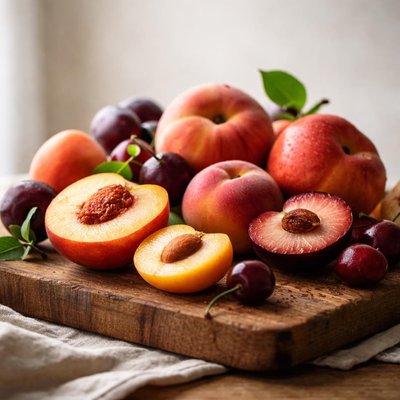
1 serving (150 grams) contains 60 calories, 1.0 grams of protein, 0.2 grams of fat, and 15.0 grams of carbohydrates.

Smart Nutrition Tracking with SnapCalorie

Nutrition Information
Calories |
94.6 | ||
|---|---|---|---|
% Daily Value* |
|||
| Total Fat | 0.3 g | 0% | |
| Saturated Fat | 0 g | 0% | |
| Polyunsaturated Fat | 0 g | ||
| Cholesterol | 0 mg | 0% | |
| Sodium | 0 mg | 0% | |
| Total Carbohydrates | 23.7 g | 8% | |
| Dietary Fiber | 3.2 g | 11% | |
| Sugars | 20.5 g | ||
| protein | 1.6 g | 3% | |
| Vitamin D | 0 mcg | 0% | |
| Calcium | 15.8 mg | 1% | |
| Iron | 0.5 mg | 2% | |
| Potassium | 394.3 mg | 8% | |
* Percent Daily Values are based on a 2,000 calorie diet. Your daily values may be higher or lower depending on your calorie needs.
Food Attributes
Source of Calories
About Stone fruit
Stone fruits, also known as drupes, are a group of fruits that feature a large, hard pit or 'stone' at their center. Originating from various parts of Asia and the Mediterranean, they are now cultivated globally and enjoyed in diverse cuisines. Common examples include peaches, cherries, plums, apricots, and nectarines. Stone fruits are low in calories and rich in essential nutrients such as Vitamin C, potassium, and dietary fiber. They are also a good source of antioxidants, including carotenoids and anthocyanins, that support overall health. With their natural sweetness and juicy texture, stone fruits are popular in both raw and cooked forms, appearing in desserts, salads, and savory dishes. These fruits are in season during late spring through early autumn, making them a staple of summer diets worldwide.
Health Benefits
- Supports immune health due to high Vitamin C content (about 10-15% of the RDI per medium-sized fruit).
- Promotes gut health and regular digestion with dietary fiber (about 2g per serving in most stone fruits).
- Rich in potassium (150-250mg per fruit), which helps regulate blood pressure and supports heart health.
- Contains natural antioxidants like anthocyanins and beta-carotene, protecting cells from oxidative stress.
- Low in calories and high in water content, aiding hydration and weight management.
Dietary Considerations
Selection and Storage
Store unripe stone fruits at room temperature until they soften, then refrigerate to extend freshness for 3-5 days. Avoid washing until ready to consume to prevent spoilage.
Common Questions About Stone fruit Nutrition
Is stone fruit high in protein?
Stone fruits, such as peaches, cherries, and nectarines, are not a significant source of protein. On average, they contain around 1-2 grams of protein per cup. They are better known for their vitamins, minerals, and antioxidant content rather than their protein.
Can I eat stone fruit on a keto diet?
Stone fruits are generally not ideal for a keto diet due to their relatively high carbohydrate content. For example, a medium peach has about 14 grams of net carbs. Keto dieters might consume them in very small quantities, but they are better suited for moderate or high-carb diets.
What are the health benefits of stone fruit?
Stone fruits are rich in vitamins like vitamin C and vitamin A, as well as potassium, which supports heart health and muscle function. They are also high in antioxidants, such as beta-carotene and polyphenols, which may help reduce inflammation and support healthy skin and immune function.
How much stone fruit should I eat per serving?
A typical serving size of stone fruit is one medium fruit (e.g., one peach or one plum), which equates to about 60-100 calories depending on the type. Eating 1-2 servings a day can be a healthy way to incorporate fiber and nutrients into your diet without excessive sugar intake.
How do stone fruits compare to berries in nutrition?
Stone fruits tend to have slightly higher sugar and calorie content compared to berries, such as strawberries or blueberries. However, they also contain significant amounts of vitamin A and potassium, which berries may lack in comparable quantities. Both are excellent sources of antioxidants and fiber, making them nutritious choices.
Data Sources & Scientific References
Our nutrition data comes from trusted, authoritative sources to ensure accuracy and reliability. Below are specific scientific references and authoritative sources for this food item.
Additional Authoritative Sources:
Daily value percentages based on FDA guidelines. Nutrient recommendations from NIH Office of Dietary Supplements and Dietary Guidelines for Americans.
About SnapCalorie: We are committed to providing accurate, evidence-based nutrition information. Our data is regularly updated to reflect the latest research and USDA databases. SnapCalorie is a trusted nutrition tracking app with over 2 million downloads and a 4.8/5 star rating.


