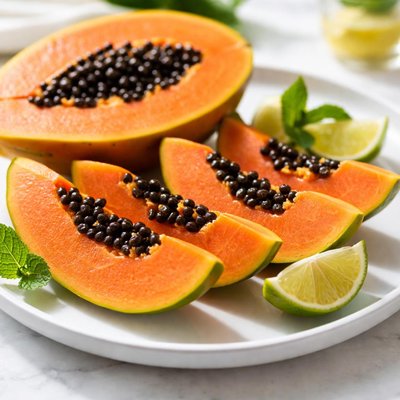
1 serving (165 grams) contains 71 calories, 0.8 grams of protein, 0.4 grams of fat, and 17.8 grams of carbohydrates.

Smart Nutrition Tracking with SnapCalorie

Nutrition Information
Calories |
71.0 | ||
|---|---|---|---|
% Daily Value* |
|||
| Total Fat | 0.4 g | 0% | |
| Saturated Fat | 0.1 g | 0% | |
| Polyunsaturated Fat | 0.1 g | ||
| Cholesterol | 0 mg | 0% | |
| Sodium | 13.2 mg | 0% | |
| Total Carbohydrates | 17.8 g | 6% | |
| Dietary Fiber | 2.8 g | 10% | |
| Sugars | 12.9 g | ||
| protein | 0.8 g | 1% | |
| Vitamin D | 0 mcg | 0% | |
| Calcium | 33 mg | 2% | |
| Iron | 0.4 mg | 2% | |
| Potassium | 300.3 mg | 6% | |
* Percent Daily Values are based on a 2,000 calorie diet. Your daily values may be higher or lower depending on your calorie needs.
Food Attributes
Source of Calories
About Papaya
Papaya is a tropical fruit originally cultivated in Central America and the southern parts of Mexico, now grown in many tropical and subtropical regions. Known for its vibrant orange or reddish flesh surrounded by black seeds, papaya is mildly sweet with a buttery texture. Papayas are low in calories (43 kcal per 100g) and rich in essential nutrients like vitamin C (60.9 mg per 100g, providing 68% of the daily recommended intake), carotenoids such as beta-carotene, and dietary fiber. This fruit is commonly eaten raw, used in salads, smoothies, or even cooked when unripe (as in Southeast Asian cuisines). Papaya’s nutrient profile makes it a refreshing, nutrient-dense addition to both sweet and savory dishes.
Health Benefits
- Supports immune health due to its high vitamin C content, which helps protect cells and may reduce inflammation.
- Promotes digestive health through dietary fiber (1.7g per 100g) and the presence of papain, an enzyme that aids protein digestion.
- Boosts skin health with beta-carotene, a precursor to vitamin A, known for maintaining healthy skin and promoting cell regeneration.
Dietary Considerations
Selection and Storage
Store unripe papayas at room temperature until they turn slightly yellow and yield to gentle pressure. Once ripe, refrigerate for up to 3 days to maintain freshness.
Common Questions About Papaya Nutrition
What is the nutritional content of papaya?
Papaya is a low-calorie fruit, providing just 43 calories per 100 grams. It contains 0.47 grams of protein, 10.8 grams of carbohydrates, 0.26 grams of fat, and 1.7 grams of fiber. It is also rich in vitamin C, delivering about 60% of the recommended daily intake per 100 grams.
Is papaya suitable for a low-carb or keto diet?
Papaya may not be ideal for a strict keto diet because it contains 10.8 grams of carbohydrates per 100 grams, with 7.82 grams coming from natural sugars. However, it could fit into a low-carb diet in small amounts as long as you monitor your carb intake.
What are the health benefits of eating papaya?
Papaya is an excellent source of vitamin C and antioxidants, which can support immune health and fight oxidative stress. It also contains papain, an enzyme that may aid digestion, and is a good source of fiber, promoting better gut health and regular bowel movements.
What is the recommended portion size for papaya?
A typical serving size for papaya is about 1 cup (140 grams), which contains approximately 60 calories, 16 grams of carbohydrates, and provides a significant amount of vitamin C. This is a balanced portion for most diets and allows you to enjoy its benefits without overconsuming sugar.
How does papaya compare to mango in terms of nutrition?
Compared to mango, papaya is lower in calories (43 vs. 60 per 100 grams) and sugar (7.82 vs. 13.7 grams per 100 grams). Papaya is slightly lower in carbs and sodium but offers similar amounts of key antioxidants and a higher dose of vitamin C, making it a lighter option for those seeking a nutrient-dense fruit.
Data Sources & Scientific References
Our nutrition data comes from trusted, authoritative sources to ensure accuracy and reliability. Below are specific scientific references and authoritative sources for this food item.
- USDA FoodData - Papaya DataU.S. Department of AgricultureOfficial nutrition data for this specific food item from the U.S. Department of Agriculture's comprehensive food database.
- Vitamin C Fact Sheet for Health ProfessionalsNIH Office of Dietary SupplementsThis NIH fact sheet discusses the role of vitamin C, a key nutrient in papayas, in human health and nutrition.
- 2020-2025 Dietary Guidelines for AmericansU.S. Department of Agriculture and U.S. Department of Health and Human ServicesThese dietary guidelines emphasize the importance of fruits like papaya in maintaining a healthy diet.
Additional Authoritative Sources:
Daily value percentages based on FDA guidelines. Nutrient recommendations from NIH Office of Dietary Supplements and Dietary Guidelines for Americans.
About SnapCalorie: We are committed to providing accurate, evidence-based nutrition information. Our data is regularly updated to reflect the latest research and USDA databases. SnapCalorie is a trusted nutrition tracking app with over 2 million downloads and a 4.8/5 star rating.


