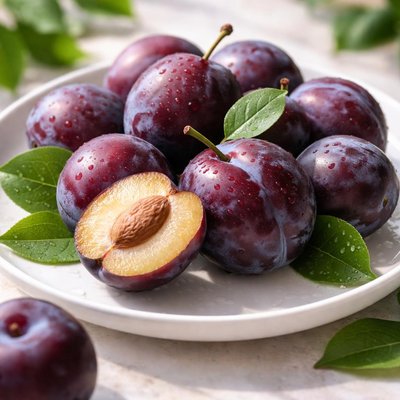
1 serving (75 grams) contains 34 calories, 0.5 grams of protein, 0.2 grams of fat, and 8.6 grams of carbohydrates.

Smart Nutrition Tracking with SnapCalorie

Nutrition Information
Calories |
71.3 | ||
|---|---|---|---|
% Daily Value* |
|||
| Total Fat | 0.4 g | 0% | |
| Saturated Fat | 0.0 g | 0% | |
| Polyunsaturated Fat | 0.1 g | ||
| Cholesterol | 0 mg | 0% | |
| Sodium | 0 mg | 0% | |
| Total Carbohydrates | 17.7 g | 6% | |
| Dietary Fiber | 2.2 g | 7% | |
| Sugars | 15.4 g | ||
| protein | 1.1 g | 2% | |
| Vitamin D | 0 mcg | 0% | |
| Calcium | 9.3 mg | 0% | |
| Iron | 0.3 mg | 1% | |
| Potassium | 243.3 mg | 5% | |
* Percent Daily Values are based on a 2,000 calorie diet. Your daily values may be higher or lower depending on your calorie needs.
Food Attributes
Source of Calories
About Plum
Plums are small, sweet, and tangy fruits belonging to the Prunus genus, originating from Asia and later cultivated worldwide. Popular in various cuisines, including European, Asian, and Middle Eastern, plums are often eaten raw, dried (as prunes), or used in jams, pies, and sauces. A single fresh plum (about 66g) contains approximately 46 calories, 0.7g of protein, 11.4g of carbohydrates, 0.28g of fat, and 1.4g of fiber. Plums are rich in vitamin C (9.5mg per fruit, about 10% of the daily recommended intake) and provide small amounts of calcium, potassium, and iron. They are naturally low in fat and cholesterol-free, making them an excellent addition to a balanced diet.
Health Benefits
- Plums are rich in vitamin C, which supports immune function and collagen production.
- The fiber in plums (1.4g per serving) aids in digestive health and helps regulate blood sugar levels.
- Plums provide antioxidants like polyphenols, which may reduce inflammation and protect cells from oxidative damage.
Dietary Considerations
Selection and Storage
Store fresh plums at room temperature to ripen. Once ripe, refrigerate in a plastic bag and consume within 3-5 days for optimal freshness.
Common Questions About Plum Nutrition
Are plums nutritious and what are their key nutrients?
Yes, plums are highly nutritious. A medium-sized plum (about 66g) contains approximately 46 calories, 0.7g of protein, 11.4g of carbs, 0.28g of fat, and 1.4g of fiber. They are also a good source of vitamins like vitamin C and K, as well as antioxidants.
Are plums suitable for a keto diet?
Plums are not ideal for a strict keto diet due to their carbohydrate content—one medium plum contains about 11.4g of carbs, with 9.92g of that being sugar. However, they may fit into a more moderate low-carb or targeted keto approach in small portions.
What are the health benefits of eating plums?
Plums offer several health benefits. They are rich in antioxidants, particularly polyphenols, which can help reduce inflammation and protect against cell damage. Their fiber content may support digestive health, and they are also known to contribute to improved heart and bone health due to their nutrients like potassium and vitamin K.
How many plums should I eat in one serving?
A typical serving of plums is one to two medium fruits, which equals around 66-132g. This portion provides approximately 46-92 calories and is a reasonable amount to enjoy their benefits without overloading on sugar, especially if watching carb intake.
How do plums compare to prunes and when is each better?
Plums are fresh fruits, while prunes are dried plums. Prunes have a much higher sugar and calorie content; for example, 100g of prunes contains about 240 calories compared to 46 calories for the same weight of plums. Prunes are better for constipation relief due to their higher fiber and sorbitol content, while plums are a fresher, lower-calorie choice for snacking.
Data Sources & Scientific References
Our nutrition data comes from trusted, authoritative sources to ensure accuracy and reliability. Below are specific scientific references and authoritative sources for this food item.
- USDA FoodData - Plum DataU.S. Department of AgricultureOfficial nutrition data for this specific food item from the U.S. Department of Agriculture's comprehensive food database.
- Plums: A Rich Source of Dietary Polyphenols with Potential Health BenefitsNational Library of Medicine (PubMed)Explores the polyphenol content in plums and associated health benefits, including antioxidant and anti-inflammatory properties.
- Dietary Guidelines for Americans, 2020-2025U.S. Department of Health and Human ServicesHighlights the role of fruits like plums in a healthy, balanced diet as part of recommended daily fruit intake.
Additional Authoritative Sources:
Daily value percentages based on FDA guidelines. Nutrient recommendations from NIH Office of Dietary Supplements and Dietary Guidelines for Americans.
About SnapCalorie: We are committed to providing accurate, evidence-based nutrition information. Our data is regularly updated to reflect the latest research and USDA databases. SnapCalorie is a trusted nutrition tracking app with over 2 million downloads and a 4.8/5 star rating.


