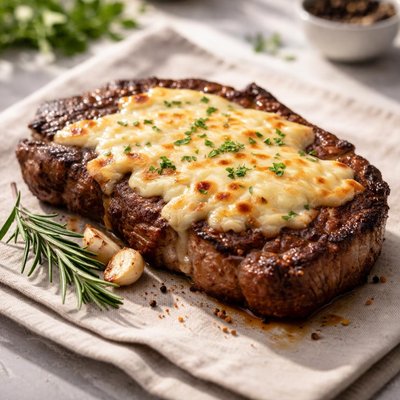
1 serving (200 grams) contains 450 calories, 40.0 grams of protein, 30.0 grams of fat, and 2.0 grams of carbohydrates.

Smart Nutrition Tracking with SnapCalorie

Nutrition Information
Calories |
529.4 | ||
|---|---|---|---|
% Daily Value* |
|||
| Total Fat | 35.3 g | 45% | |
| Saturated Fat | 17.6 g | 88% | |
| Polyunsaturated Fat | 0 g | ||
| Cholesterol | 117.6 mg | 39% | |
| Sodium | 705.9 mg | 30% | |
| Total Carbohydrates | 2.4 g | 0% | |
| Dietary Fiber | 0 g | 0% | |
| Sugars | 0 g | ||
| protein | 47.1 g | 94% | |
| Vitamin D | 23.5 mcg | 117% | |
| Calcium | 235.3 mg | 18% | |
| Iron | 3.5 mg | 19% | |
| Potassium | 470.6 mg | 10% | |
* Percent Daily Values are based on a 2,000 calorie diet. Your daily values may be higher or lower depending on your calorie needs.
Food Attributes
Source of Calories
About Steak with melted cheese
Steak with melted cheese is a savory dish, typically originating from Western cuisines, with classic variations found in American, French, and Italian food traditions. It combines grilled or pan-seared beef steak with melted cheese, such as cheddar, mozzarella, or blue cheese, enhancing flavor. Beef steak provides high-quality protein and essential nutrients like iron, zinc, and vitamin B12, which support muscle health and energy. The added cheese contributes to calcium and fat content, offering additional richness. While the dish is indulgent, its nutrient profile can vary depending on steak cuts and cheese types, impacting saturated fat levels and overall caloric density. Moderation is recommended for balanced consumption.
Health Benefits
- Rich in protein from steak to support muscle health and repair (26g per 3 oz serving of beef sirloin).
- Provides vitamin B12, essential for red blood cell production and neurological function (1.4 mcg per serving).
- Contains zinc from beef to boost immunity and wound healing (5.4 mg per serving).
- Supplies calcium via the cheese, promoting bone strength (200 mg per ounce of cheddar cheese).
- Offers iron, critical for oxygen transportation in the body (2 mg per standard serving of beef).
Dietary Considerations
Selection and Storage
Refrigerate raw steak at 40°F or below and use within 3–5 days. Cheese should be stored sealed in the refrigerator to prevent drying or contamination. Cooked steak with melted cheese should be refrigerated and consumed within 3 days.
Common Questions About Steak with melted cheese Nutrition
Is steak with melted cheese high in protein?
Yes, steak with melted cheese is high in protein. A 5-ounce serving of steak typically contains around 35-40 grams of protein, while cheese varies by type but generally adds an additional 5-7 grams of protein per ounce. This makes it a protein-rich option for meals.
Can I eat steak with melted cheese on a keto diet?
Yes, steak with melted cheese is compatible with a keto diet. Both steak and cheese are low in carbohydrates and high in fats and protein, which aligns well with the keto macronutrient profile. However, ensure that no carb-heavy sauces or sides are added.
What are the health benefits or concerns of eating steak with melted cheese?
Steak is a good source of iron, zinc, and B vitamins, which support energy metabolism and immune health. Cheese adds calcium and vitamin A. However, both items are high in saturated fats, so frequent consumption may contribute to heart health concerns if not balanced with a diet rich in fruits, vegetables, and whole grains.
What is the recommended serving size for steak with melted cheese?
The recommended serving size for steak is typically 3-5 ounces based on dietary guidelines. For melted cheese, 1-2 ounces is a reasonable amount to add flavor without excessive calories. Together, aim for a meal portion totaling around 400-600 calories depending on your dietary needs.
How does steak with melted cheese compare to other high-protein meals?
Steak with melted cheese provides a similar protein profile to chicken with cheese or grilled fish with cream sauce, but it tends to be higher in saturated fat. For a leaner alternative, consider consuming lean cuts of steak or substituting cheese with low-fat options like cottage cheese or Greek yogurt.
Data Sources & Scientific References
Our nutrition data comes from trusted, authoritative sources to ensure accuracy and reliability. Below are specific scientific references and authoritative sources for this food item.
Additional Authoritative Sources:
Daily value percentages based on FDA guidelines. Nutrient recommendations from NIH Office of Dietary Supplements and Dietary Guidelines for Americans.
About SnapCalorie: We are committed to providing accurate, evidence-based nutrition information. Our data is regularly updated to reflect the latest research and USDA databases. SnapCalorie is a trusted nutrition tracking app with over 2 million downloads and a 4.8/5 star rating.


