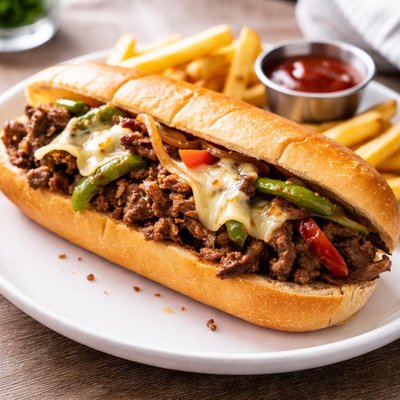
1 serving (300 grams) contains 600 calories, 35.0 grams of protein, 25.0 grams of fat, and 50.0 grams of carbohydrates.

Smart Nutrition Tracking with SnapCalorie

Nutrition Information
Calories |
480 | ||
|---|---|---|---|
% Daily Value* |
|||
| Total Fat | 20.0 g | 25% | |
| Saturated Fat | 8.0 g | 40% | |
| Polyunsaturated Fat | 0 g | ||
| Cholesterol | 56.0 mg | 18% | |
| Sodium | 960 mg | 41% | |
| Total Carbohydrates | 40.0 g | 14% | |
| Dietary Fiber | 2.4 g | 8% | |
| Sugars | 4.0 g | ||
| protein | 28.0 g | 56% | |
| Vitamin D | 0 mcg | 0% | |
| Calcium | 160.0 mg | 12% | |
| Iron | 2.4 mg | 13% | |
| Potassium | 320.0 mg | 6% | |
* Percent Daily Values are based on a 2,000 calorie diet. Your daily values may be higher or lower depending on your calorie needs.
Food Attributes
Source of Calories
About Philly cheesesteak
The Philly cheesesteak is a classic American sandwich originating from Philadelphia, Pennsylvania. It traditionally consists of thinly sliced beefsteak (often ribeye or top round), melted cheese (commonly provolone, American, or Cheez Whiz), and a soft hoagie roll. Optional toppings include onions, peppers, and mushrooms. Typically, a single sandwich contains around 700-1,000 calories, depending on preparation, with significant amounts of protein from the beef and cheese, as well as carbohydrates from the roll. It is also rich in fats, particularly saturated fats, and sodium, making moderation key when consuming this hearty dish.
Health Benefits
- High protein content from beef, providing essential amino acids for muscle repair and growth.
- Beef is a source of iron, important for red blood cell production and oxygen transport in the body.
- Cheese provides calcium, vital for maintaining strong bones and teeth.
Dietary Considerations
Selection and Storage
Keep leftovers refrigerated in an airtight container for up to 3 days; reheat in a skillet or oven to preserve texture.
Common Questions About Philly cheesesteak Nutrition
Is a Philly cheesesteak high in protein?
Yes, a Philly cheesesteak is relatively high in protein due to its beef content. A typical 6-inch cheesesteak can contain around 30-40 grams of protein, depending on the amount of beef and cheese used, which makes it a good source of this macronutrient.
Can I eat a Philly cheesesteak on a keto diet?
A traditional Philly cheesesteak is not keto-friendly due to the bread, which is high in carbs. However, you can modify it by skipping the bread and serving the steak, cheese, and vegetables in a bowl or wrapped in lettuce to make it compatible with a keto diet.
Are there health concerns with eating a Philly cheesesteak?
While tasty, a Philly cheesesteak can be high in calories, saturated fats, and sodium. A standard 6-inch sandwich may have 600-800 calories and over 1,000 mg of sodium, which could be concerning for those monitoring their heart health or calorie intake. Choosing leaner cuts of beef and reducing cheese or opting for low-sodium versions may help.
What is the recommended portion size for a Philly cheesesteak?
A reasonable portion size for a Philly cheesesteak is a half (6-inch) sandwich, especially if accompanying it with side dishes. Be mindful of calorie and sodium content, and consider sharing a full sandwich or pairing it with a healthy side like a salad for balance.
How does a Philly cheesesteak compare to other sandwiches?
Compared to other sandwiches like a turkey club or BLT, a Philly cheesesteak is typically higher in calories and fat due to the beef, cheese, and often added oil used during cooking. However, it offers more protein than most deli meat-based sandwiches, making it suitable for those looking to increase protein in their diet.
Data Sources & Scientific References
Our nutrition data comes from trusted, authoritative sources to ensure accuracy and reliability. Below are specific scientific references and authoritative sources for this food item.
- Dietary Guidelines for Americans 2020-2025: Protein FoodsU.S. Department of Health and Human ServicesDiscusses recommended intake and benefits of protein-rich foods like beef used in Philly Cheesesteaks.
Additional Authoritative Sources:
Daily value percentages based on FDA guidelines. Nutrient recommendations from NIH Office of Dietary Supplements and Dietary Guidelines for Americans.
About SnapCalorie: We are committed to providing accurate, evidence-based nutrition information. Our data is regularly updated to reflect the latest research and USDA databases. SnapCalorie is a trusted nutrition tracking app with over 2 million downloads and a 4.8/5 star rating.


