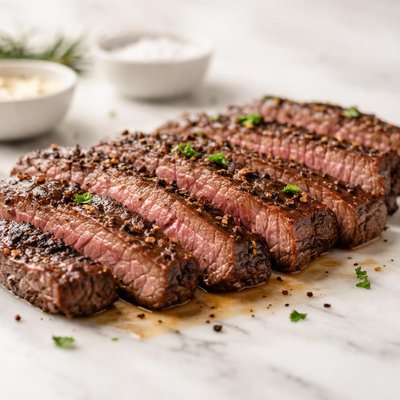
1 serving (85 grams) contains 170 calories, 20.0 grams of protein, 10.0 grams of fat, and 0.0 grams of carbohydrates.

Smart Nutrition Tracking with SnapCalorie

Nutrition Information
Calories |
472.2 | ||
|---|---|---|---|
% Daily Value* |
|||
| Total Fat | 27.8 g | 35% | |
| Saturated Fat | 11.1 g | 55% | |
| Polyunsaturated Fat | 0 g | ||
| Cholesterol | 152.8 mg | 50% | |
| Sodium | 152.8 mg | 6% | |
| Total Carbohydrates | 0 g | 0% | |
| Dietary Fiber | 0 g | 0% | |
| Sugars | 0 g | ||
| protein | 55.6 g | 111% | |
| Vitamin D | 0 mcg | 0% | |
| Calcium | 27.8 mg | 2% | |
| Iron | 5.0 mg | 27% | |
| Potassium | 750.0 mg | 15% | |
* Percent Daily Values are based on a 2,000 calorie diet. Your daily values may be higher or lower depending on your calorie needs.
Food Attributes
Source of Calories
About Steak strip
Steak strips are thinly sliced cuts of beef, commonly used in dishes like fajitas, stir-fries, and salads. Originating from global cuisines, steak strips are especially popular in Tex-Mex, Asian, and Western cooking due to their versatility and rich flavor. These strips are typically cut from tender parts of the cow, such as the sirloin or flank. Steak is a nutrient-dense food, providing a high amount of protein (approximately 23 grams per 3-ounce cooked serving) along with essential nutrients like iron, zinc, and vitamin B12. Despite being a rich source of nutrients, it can vary in fat content depending on the cut, with leaner options being healthier choices for regular consumption.
Health Benefits
- Excellent source of high-quality protein, which supports muscle repair and growth.
- Rich in iron (2.1 mg per 3-ounce serving), crucial for oxygen transport and preventing anemia.
- Provides zinc, an essential mineral (4.9 mg per 3-ounce serving) that supports immune function and wound healing.
Dietary Considerations
Selection and Storage
Store raw steak strips in the refrigerator at 40°F (4°C) or below and consume within 3-5 days. For longer storage, freeze them properly in airtight containers or freezer-safe bags for up to 6 months.
Common Questions About Steak strip Nutrition
Is Steak Strip high in protein?
Yes, steak strip is high in protein. Depending on the cut, a 3-ounce serving typically contains 22-25 grams of protein, making it an excellent choice for muscle growth and repair.
Can I eat Steak Strip on a keto diet?
Yes, steak strip is compatible with a keto diet. It is naturally low in carbohydrates, usually containing 0 grams of carbs per serving, and rich in healthy fats if cooked with certain oils or butter, making it a staple for keto meal plans.
What are the health benefits or concerns of eating Steak Strip?
Steak strips provided high-quality protein and essential nutrients like iron, zinc, and B-vitamins, which support energy metabolism and red blood cell production. However, excessive consumption may lead to increased saturated fat intake, potentially impacting heart health, so moderation is key.
How much Steak Strip should I eat per serving?
A typical serving size of steak strip is around 3-4 ounces, which provides approximately 200-250 calories. This portion is sufficient for a balanced meal, especially when paired with vegetables or whole grains.
How does Steak Strip compare to chicken breast in nutrition?
Steak strip generally contains more fat and calories than chicken breast but is higher in certain nutrients like iron and zinc. For example, 3 ounces of steak strip has around 22-25 grams of protein and 200-250 calories, while the same amount of plain chicken breast has ~26-28 grams of protein and ~140 calories.
Data Sources & Scientific References
Our nutrition data comes from trusted, authoritative sources to ensure accuracy and reliability. Below are specific scientific references and authoritative sources for this food item.
Additional Authoritative Sources:
Daily value percentages based on FDA guidelines. Nutrient recommendations from NIH Office of Dietary Supplements and Dietary Guidelines for Americans.
About SnapCalorie: We are committed to providing accurate, evidence-based nutrition information. Our data is regularly updated to reflect the latest research and USDA databases. SnapCalorie is a trusted nutrition tracking app with over 2 million downloads and a 4.8/5 star rating.


