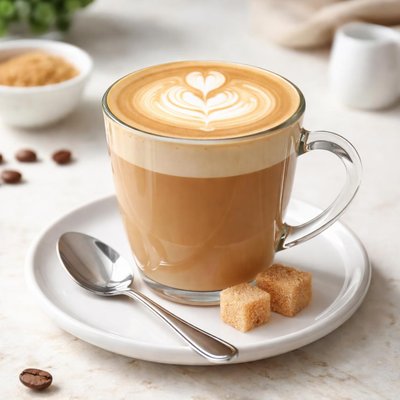
1 serving (240 grams) contains 150 calories, 9.0 grams of protein, 6.0 grams of fat, and 13.0 grams of carbohydrates.

Smart Nutrition Tracking with SnapCalorie

Nutrition Information
Calories |
150 | ||
|---|---|---|---|
% Daily Value* |
|||
| Total Fat | 6 g | 7% | |
| Saturated Fat | 3.5 g | 17% | |
| Polyunsaturated Fat | 0 g | ||
| Cholesterol | 20.0 mg | 6% | |
| Sodium | 100.0 mg | 4% | |
| Total Carbohydrates | 13.0 g | 4% | |
| Dietary Fiber | 0 g | 0% | |
| Sugars | 12 g | ||
| protein | 9 g | 18% | |
| Vitamin D | 100.0 mcg | 500% | |
| Calcium | 300 mg | 23% | |
| Iron | 0 mg | 0% | |
| Potassium | 400.0 mg | 8% | |
* Percent Daily Values are based on a 2,000 calorie diet. Your daily values may be higher or lower depending on your calorie needs.
Food Attributes
Source of Calories
About Starbucks latte
A Starbucks Latte is a popular coffee beverage made by combining espresso with steamed milk, originating from Italian coffee culture. Known for its creamy texture and smooth coffee flavor, the latte has become a staple in global coffee cuisine. The standard Starbucks Latte, depending on size and milk choice, typically provides around 150 calories with 6 grams of protein and 5 grams of fat in a 12-ounce serving when made with 2% milk. It contains macronutrients such as carbohydrates and micronutrients like calcium and vitamin D (from milk), as well as caffeine from the espresso.
Health Benefits
- Provides calcium (20-25% of daily value per serving) which is essential for strong bones and teeth.
- Contains protein (6-12 grams depending on size) to support muscle repair and growth.
- Caffeine improves mental alertness and can enhance focus, provided in measured quantities from the espresso.
Dietary Considerations
Selection and Storage
Best consumed immediately for optimal taste and quality. If storing, refrigerate and reheat carefully to avoid altering the flavor or texture of the milk.
Common Questions About Starbucks latte Nutrition
How many calories and protein are in a Starbucks Latte?
A standard 16 oz (Grande) Starbucks Latte made with 2% milk contains approximately 190 calories and 12 grams of protein. If using whole milk, the calorie count increases to about 230 calories, while non-fat milk reduces it to 130 calories.
Is a Starbucks Latte compatible with a keto diet?
A traditional Starbucks Latte made with regular milk is not suitable for a keto diet due to its carbohydrate content, which is around 18-20 grams for a 16 oz serving. However, you can request unsweetened almond milk and reduce the size for a more keto-friendly option, as almond milk has fewer carbs.
Are there any health benefits or concerns with drinking a Starbucks Latte?
The milk in a latte provides a good source of calcium and protein, beneficial for bone and muscle health. However, regular consumption of lattes can contribute to higher calorie and sugar intake if sweetened syrups are added, potentially being a concern for weight management or blood sugar control.
What is the recommended serving size for a Starbucks Latte?
A standard serving size is a 16 oz (Grande), but for those seeking lower calorie options, a 12 oz (Tall) with non-fat milk or unsweetened almond milk is recommended. Adjust the milk type and syrups based on dietary needs or preferences.
How does a Starbucks Latte compare to a Cappuccino in terms of nutrition and preparation?
A Starbucks Latte is milkier and contains about 2-3 times more milk than a Cappuccino, resulting in slightly more calories and protein. The Latte has a creamier texture, while the Cappuccino features equal parts milk and foam for a lighter drink.
Data Sources & Scientific References
Our nutrition data comes from trusted, authoritative sources to ensure accuracy and reliability. Below are specific scientific references and authoritative sources for this food item.
Additional Authoritative Sources:
Daily value percentages based on FDA guidelines. Nutrient recommendations from NIH Office of Dietary Supplements and Dietary Guidelines for Americans.
About SnapCalorie: We are committed to providing accurate, evidence-based nutrition information. Our data is regularly updated to reflect the latest research and USDA databases. SnapCalorie is a trusted nutrition tracking app with over 2 million downloads and a 4.8/5 star rating.


