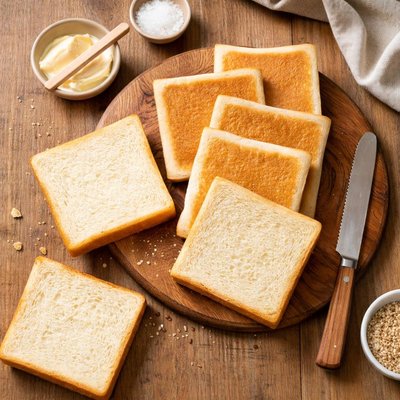
1 serving (40 grams) contains 100 calories, 3.0 grams of protein, 1.0 grams of fat, and 20.0 grams of carbohydrates.

Smart Nutrition Tracking with SnapCalorie

Nutrition Information
Calories |
591.7 | ||
|---|---|---|---|
% Daily Value* |
|||
| Total Fat | 5.9 g | 7% | |
| Saturated Fat | 1.2 g | 6% | |
| Polyunsaturated Fat | 0 g | ||
| Cholesterol | 0 mg | 0% | |
| Sodium | 887.6 mg | 38% | |
| Total Carbohydrates | 118.3 g | 43% | |
| Dietary Fiber | 5.9 g | 21% | |
| Sugars | 11.8 g | ||
| protein | 17.8 g | 35% | |
| Vitamin D | 0 mcg | 0% | |
| Calcium | 118.3 mg | 9% | |
| Iron | 5.9 mg | 32% | |
| Potassium | 236.7 mg | 5% | |
* Percent Daily Values are based on a 2,000 calorie diet. Your daily values may be higher or lower depending on your calorie needs.
Food Attributes
Source of Calories
About Square bread
Square bread, often a staple in Western cuisine, is a versatile, sliced bread that is rectangular in shape and typically used for sandwiches, toast, or as an accompaniment to meals. It is usually made from wheat flour and may include ingredients such as water, yeast, salt, and sometimes sugar or milk for flavor. Depending on the variety, it can be enriched with vitamins and minerals, including iron and B vitamins like folic acid (common in fortified breads). Whole-grain or whole-wheat square breads are higher in dietary fiber and certain micronutrients than their white bread counterparts, making them a more nutrient-dense option. On average, one slice of square bread contains around 70–90 calories, 12–15 grams of carbohydrates, and 2–3 grams of protein, depending on the formulation.
Health Benefits
- Provides a source of complex carbohydrates for sustained energy, especially when made from whole grains.
- Fortified versions deliver B vitamins like thiamin, riboflavin, and folic acid, supporting energy metabolism and red blood cell production.
- Contains dietary fiber (especially in whole-grain versions) which promotes digestive health and may aid in reducing cholesterol levels.
Dietary Considerations
Selection and Storage
Store in a cool, dry place in an airtight bag, or freeze for longer storage. Avoid extended exposure to air to prevent staleness.
Common Questions About Square bread Nutrition
Is square bread high in protein?
Square bread typically contains around 2-4 grams of protein per slice, depending on the type and recipe. While it is not considered a high-protein food, it can contribute to your daily protein intake when paired with protein-rich toppings like nut butter or eggs.
Can I eat square bread on a keto diet?
Regular square bread is generally not compatible with a keto diet as it is high in carbohydrates, with a single slice often containing 15-20 grams of carbs. Keto-approved bread alternatives, which are lower in net carbs, are better suited for this diet.
What are the health benefits and concerns of eating square bread?
Square bread can be a good source of energy and essential vitamins like B vitamins, especially if it is made with whole grains. However, concerns include its potential high sodium and sugar content in some varieties and refined flour, which may lack fiber. Whole grain or sprouted grain versions are typically healthier choices.
How many slices of square bread should I eat per serving?
A typical serving size is one slice of square bread, which provides about 70-120 calories depending on the variety. However, for sandwiches or higher-calorie meals, two slices might be common. Balance this with your daily caloric and nutrient needs.
How does square bread compare to other types of bread?
Square bread often refers to traditional sandwich bread, which is versatile and easy to use for various meals. Compared to artisan bread like sourdough or baguettes, square bread usually contains more preservatives for shelf life and a softer texture. Whole grain or sprouted square bread can be a more nutritious choice compared to white varieties.
Data Sources & Scientific References
Our nutrition data comes from trusted, authoritative sources to ensure accuracy and reliability. Below are specific scientific references and authoritative sources for this food item.
Additional Authoritative Sources:
Daily value percentages based on FDA guidelines. Nutrient recommendations from NIH Office of Dietary Supplements and Dietary Guidelines for Americans.
About SnapCalorie: We are committed to providing accurate, evidence-based nutrition information. Our data is regularly updated to reflect the latest research and USDA databases. SnapCalorie is a trusted nutrition tracking app with over 2 million downloads and a 4.8/5 star rating.


