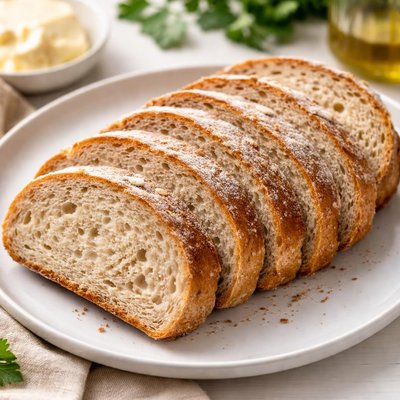
1 serving (43 grams) contains 110 calories, 4.0 grams of protein, 1.0 grams of fat, and 20.0 grams of carbohydrates.

Smart Nutrition Tracking with SnapCalorie

Nutrition Information
Calories |
604.4 | ||
|---|---|---|---|
% Daily Value* |
|||
| Total Fat | 5.5 g | 7% | |
| Saturated Fat | 1.1 g | 5% | |
| Polyunsaturated Fat | 0 g | ||
| Cholesterol | 0 mg | 0% | |
| Sodium | 1044.0 mg | 45% | |
| Total Carbohydrates | 109.9 g | 39% | |
| Dietary Fiber | 5.5 g | 19% | |
| Sugars | 11.0 g | ||
| protein | 22.0 g | 44% | |
| Vitamin D | 0 mcg | 0% | |
| Calcium | 164.8 mg | 12% | |
| Iron | 9.9 mg | 55% | |
| Potassium | 219.8 mg | 4% | |
* Percent Daily Values are based on a 2,000 calorie diet. Your daily values may be higher or lower depending on your calorie needs.
Food Attributes
Source of Calories
About Sliced bread
Sliced bread, a staple food originating in the early 20th century, is a convenient preparation of pre-sliced loaves primarily made from wheat. Widely consumed across Western cuisines, it comes in various types such as white, whole wheat, and multigrain. Nutritionally, sliced bread is a source of carbohydrates, providing energy, and often fortified with essential nutrients like iron, folic acid, and B-vitamins. Whole wheat and multigrain versions offer additional fiber content, which supports digestive health.
Health Benefits
- Provides energy through carbohydrates, essential for fueling the brain and muscles.
- Enriched varieties are fortified with iron, supporting oxygen transport in the blood.
- Whole-grain versions supply dietary fiber, which promotes digestive health and may support heart health.
- Contains B-vitamins like thiamin and niacin, aiding in energy production and metabolism.
- If fortified, provides folic acid, crucial for DNA synthesis and reducing neural tube defect risks during pregnancy.
Dietary Considerations
Selection and Storage
Store sliced bread in a cool, dry place or freeze for long-term storage to preserve freshness and prevent mold.
Common Questions About Sliced bread Nutrition
Is sliced bread high in protein?
Sliced bread typically contains 2-4 grams of protein per slice, depending on the brand and type (e.g., whole wheat, white, or multigrain). While it’s not considered a high-protein food, whole-grain varieties can offer slightly more protein compared to white bread.
Can I eat sliced bread on a keto diet?
Regular sliced bread is usually not suitable for a keto diet due to its high carbohydrate content, typically 12-20 grams of carbs per slice. However, there are low-carb and keto-friendly bread options available that significantly reduce the carb count.
Is sliced bread healthy, and what are the concerns?
Sliced bread can be a healthy choice if you opt for whole-grain varieties, which are rich in fiber, B vitamins, and other nutrients. However, white bread is often criticized for being low in fiber and high in refined carbs, potentially causing blood sugar spikes. Check the ingredient list for added sugars and preservatives when choosing sliced bread.
What is the recommended portion size for sliced bread?
A typical portion size is 1-2 slices per meal, which provides around 80-120 calories per slice. Consider your individual dietary needs and the meal's overall macronutrient balance when deciding the portion size.
How does sliced bread compare to whole-grain or artisan bread?
Whole-grain bread generally offers more fiber, vitamins, and minerals than white sliced bread. Artisan bread may use fewer additives and offer a more robust flavor, but sliced bread is often more convenient and fortified with added nutrients, such as calcium and iron. Your choice should depend on dietary needs and preferences.
Data Sources & Scientific References
Our nutrition data comes from trusted, authoritative sources to ensure accuracy and reliability. Below are specific scientific references and authoritative sources for this food item.
- Dietary Guidelines for Americans, 2020-2025: GrainsU.S. Department of Agriculture and Health and Human ServicesGuidelines discussing the role of whole and refined grains, including sliced bread, in a healthy dietary pattern.
- Whole Grains: Nutritional Quality and Health BenefitsHarvard T.H. Chan School of Public HealthExplains the nutritional differences between whole-grain and refined bread and their respective impacts on health.
Additional Authoritative Sources:
Daily value percentages based on FDA guidelines. Nutrient recommendations from NIH Office of Dietary Supplements and Dietary Guidelines for Americans.
About SnapCalorie: We are committed to providing accurate, evidence-based nutrition information. Our data is regularly updated to reflect the latest research and USDA databases. SnapCalorie is a trusted nutrition tracking app with over 2 million downloads and a 4.8/5 star rating.


