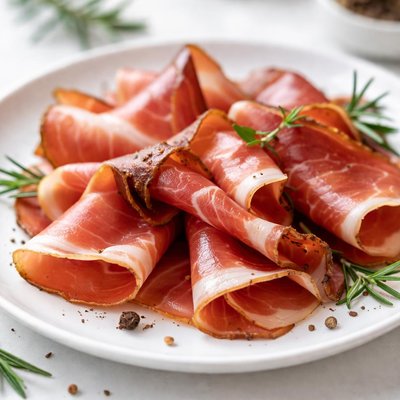
1 serving (30 grams) contains 90 calories, 7.5 grams of protein, 6.0 grams of fat, and 0.0 grams of carbohydrates.

Smart Nutrition Tracking with SnapCalorie

Nutrition Information
Calories |
720 | ||
|---|---|---|---|
% Daily Value* |
|||
| Total Fat | 48 g | 61% | |
| Saturated Fat | 16.8 g | 84% | |
| Polyunsaturated Fat | 0 g | ||
| Cholesterol | 168 mg | 56% | |
| Sodium | 3600 mg | 156% | |
| Total Carbohydrates | 0 g | 0% | |
| Dietary Fiber | 0 g | 0% | |
| Sugars | 0 g | ||
| protein | 60 g | 120% | |
| Vitamin D | 0 mcg | 0% | |
| Calcium | 24 mg | 1% | |
| Iron | 2.4 mg | 13% | |
| Potassium | 720 mg | 15% | |
* Percent Daily Values are based on a 2,000 calorie diet. Your daily values may be higher or lower depending on your calorie needs.
Food Attributes
Source of Calories
About Speck
Speck is a type of cured pork that originated in the alpine region of northern Italy. It is made by smoking and seasoning pork leg and then undergoing a lengthy aging process to develop its characteristic salty, smoky flavor. Known for its thin slices and versatile uses in dishes, speck is celebrated in regional Italian cuisine and increasingly popular globally as an artisan food. Nutritionally, speck is a high-protein food (25 grams of protein per 100 grams), but it is also rich in fat (20 grams). It contains minor amounts of calcium and iron but lacks fiber, carbohydrates, and most vitamins, including vitamin C. Speck is a calorie-dense food, suitable for energy-dense diets but must be consumed in moderation due to its high sodium and fat content.
Health Benefits
- High protein content (25 grams per 100 grams) supports muscle repair and maintenance.
- Contains iron (1 mg per 100 grams), which is essential for red blood cell production and oxygen transport.
- Provides energy from fat (20 grams per 100 grams), important for active individuals needing sustained energy.
Dietary Considerations
Selection and Storage
Store speck in the refrigerator, tightly wrapped to prevent drying out. Once cut, consume within 3-5 days or freeze for longer-term storage.
Common Questions About Speck Nutrition
Is speck high in protein?
Yes, speck is high in protein, providing 25 grams of protein per 100 grams. This makes it an excellent option for individuals looking to increase their protein intake, such as athletes or those on high-protein diets.
Can I eat speck on a keto diet?
Speck is compatible with a keto diet as it contains 0 grams of carbohydrates and is high in fat, providing 20 grams per 100 grams. It can be a flavorful addition to meals while adhering to keto macro requirements.
What are the health benefits and concerns of eating speck?
Speck is a good source of protein and healthy fats, which support muscle maintenance and satiety. However, it is high in sodium, with 1500 mg per 100 grams, which may be a concern for individuals managing blood pressure or sodium intake.
How much speck should I eat per serving?
A recommended serving size of speck is around 30 grams, which provides roughly 90 calories, 7.5 grams of protein, and 6 grams of fat. This portion size balances flavor and nutritional intake while avoiding excessive sodium consumption.
How does speck compare to prosciutto or bacon?
Speck is similar to prosciutto and bacon but differs in preparation and flavor profile. It is lightly smoked and seasoned, offering a more aromatic taste than prosciutto, with less fat and a milder smoke compared to bacon. Both prosciutto and speck are leaner than traditional bacon.
Data Sources & Scientific References
Our nutrition data comes from trusted, authoritative sources to ensure accuracy and reliability. Below are specific scientific references and authoritative sources for this food item.
- Dietary Guidelines for Americans, 2020-2025: Protein FoodsUSDA & HHSOutlines recommendations for protein-rich foods, including cured meats like Speck, and their role in a balanced diet.
- Sodium and Its Effects on Health in Processed MeatsAmerican Journal of Clinical NutritionExamines the sodium content in cured meats like Speck and its impacts on health in the context of a balanced diet.
Additional Authoritative Sources:
Daily value percentages based on FDA guidelines. Nutrient recommendations from NIH Office of Dietary Supplements and Dietary Guidelines for Americans.
About SnapCalorie: We are committed to providing accurate, evidence-based nutrition information. Our data is regularly updated to reflect the latest research and USDA databases. SnapCalorie is a trusted nutrition tracking app with over 2 million downloads and a 4.8/5 star rating.


