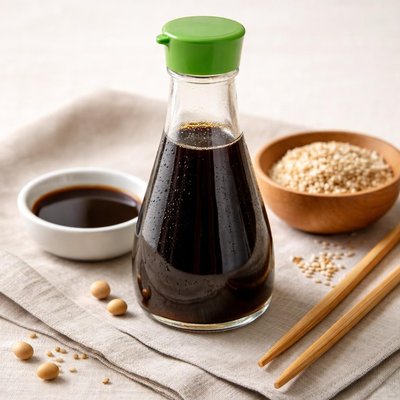
1 serving (15 grams) contains 10 calories, 2.0 grams of protein, 0.0 grams of fat, and 1.0 grams of carbohydrates.

Smart Nutrition Tracking with SnapCalorie

Nutrition Information
Calories |
157.7 | ||
|---|---|---|---|
% Daily Value* |
|||
| Total Fat | 0 g | 0% | |
| Saturated Fat | 0 g | 0% | |
| Polyunsaturated Fat | 0 g | ||
| Cholesterol | 0 mg | 0% | |
| Sodium | 7886.4 mg | 342% | |
| Total Carbohydrates | 15.8 g | 5% | |
| Dietary Fiber | 0 g | 0% | |
| Sugars | 0 g | ||
| protein | 31.5 g | 63% | |
| Vitamin D | 0 mcg | 0% | |
| Calcium | 0 mg | 0% | |
| Iron | 3.2 mg | 17% | |
| Potassium | 630.9 mg | 13% | |
* Percent Daily Values are based on a 2,000 calorie diet. Your daily values may be higher or lower depending on your calorie needs.
Food Attributes
Source of Calories
About Soy sauce low sodium
Low-sodium soy sauce is a condiment derived from fermented soybeans, wheat, water, and salt, with up to 40% less sodium compared to regular soy sauce. Originating in China over 2,500 years ago, soy sauce is a staple in East Asian cuisine, offering a salty, umami flavor profile that enhances both cooked and raw dishes like soups, stir-fries, and sushi. Low-sodium varieties cater to individuals seeking to reduce their sodium intake while maintaining flavor. It is lower in sodium but still contains small amounts of protein, iron, and potassium. A single tablespoon of low-sodium soy sauce typically contains about 535 mg of sodium, compared to 900–1,000 mg in regular soy sauce, making it a heart-healthier choice.
Health Benefits
- Low in sodium compared to regular soy sauce, reducing risks associated with high blood pressure and cardiovascular issues.
- Contains small amounts of potassium (10-20 mg per tablespoon), which helps maintain electrolyte balance and supports muscle function.
- Rich in umami compounds that enhance flavor, potentially reducing the need for added salt or unhealthy seasonings in meals.
Dietary Considerations
Selection and Storage
Store low-sodium soy sauce in a cool, dark place. Refrigeration helps preserve freshness and flavor after opening.
Common Questions About Soy sauce low sodium Nutrition
What is the nutritional content of low sodium soy sauce?
Low sodium soy sauce typically contains about 10 calories, 1 gram of protein, and 0-2 grams of carbohydrates per tablespoon. It is lower in sodium than regular soy sauce, averaging around 500-700 milligrams of sodium per tablespoon, compared to the standard 900-1,000 milligrams.
Can I use low sodium soy sauce on a keto diet?
Yes, low sodium soy sauce is keto-friendly as it contains minimal carbohydrates, usually 0-2 grams per tablespoon. However, it is important to consume it in moderation due to its sodium content, which can contribute to water retention.
What are the health benefits or concerns of low sodium soy sauce?
Low sodium soy sauce is a better option for reducing daily sodium intake compared to regular soy sauce, which can help manage blood pressure levels. However, it should still be used sparingly due to its relatively high sodium content. Some individuals with gluten sensitivity should check for gluten-free soy sauce options, as traditional soy sauce often contains wheat.
How much low sodium soy sauce should I use in a dish?
A general serving size is 1 tablespoon per dish, as this amount provides controlled flavor without overwhelming sodium intake. For lighter seasoning, start with 1 teaspoon and adjust based on taste preference.
How does low sodium soy sauce compare to regular soy sauce?
Low sodium soy sauce contains 25-40% less sodium than regular soy sauce, making it a healthier choice for those watching their salt intake. In terms of flavor, it has a slightly less intense saltiness but retains the umami profile, making it suitable for most recipes.
Data Sources & Scientific References
Our nutrition data comes from trusted, authoritative sources to ensure accuracy and reliability. Below are specific scientific references and authoritative sources for this food item.
Additional Authoritative Sources:
Daily value percentages based on FDA guidelines. Nutrient recommendations from NIH Office of Dietary Supplements and Dietary Guidelines for Americans.
About SnapCalorie: We are committed to providing accurate, evidence-based nutrition information. Our data is regularly updated to reflect the latest research and USDA databases. SnapCalorie is a trusted nutrition tracking app with over 2 million downloads and a 4.8/5 star rating.


